Activities for Busy, High-Energy Toddlers (and Early ADHD Signs)

ADDITIONAL NEEDS · AGES 1 TO 4

Activities for Busy, High-Energy Toddlers (and Early ADHD Signs)

ADHD activities for toddlers that work with a high-energy child, not against them: burn-off games, stop-and-go play and short focus bursts to try today.

  • Free to download
  • No account needed
  • No screen time for your child
QR code to download Mooshie MomentsOn a laptop?
Scan to get Mooshie on your iPhone.
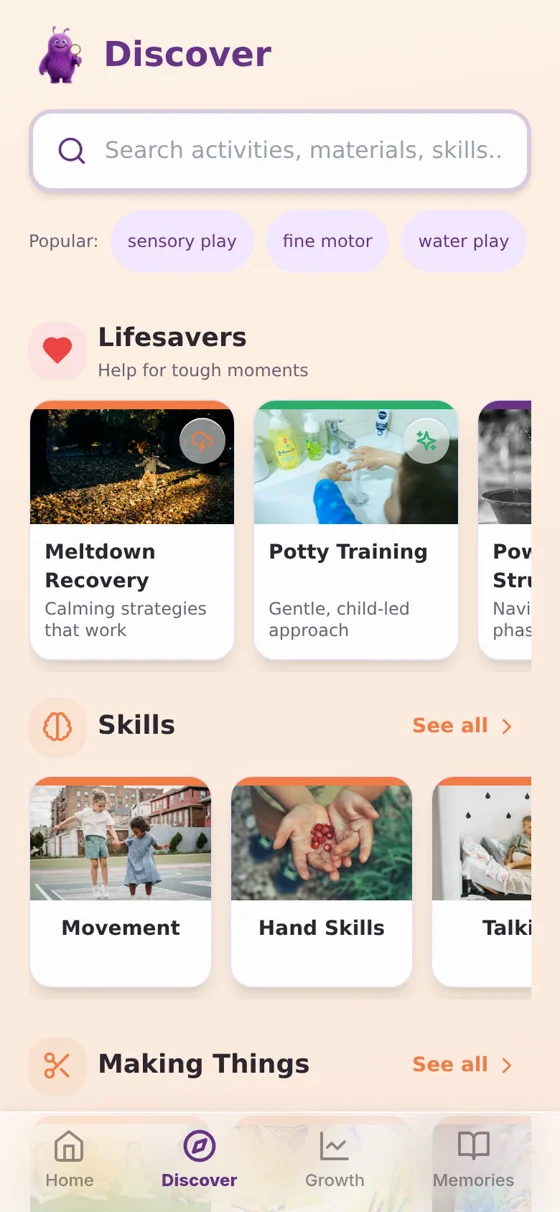
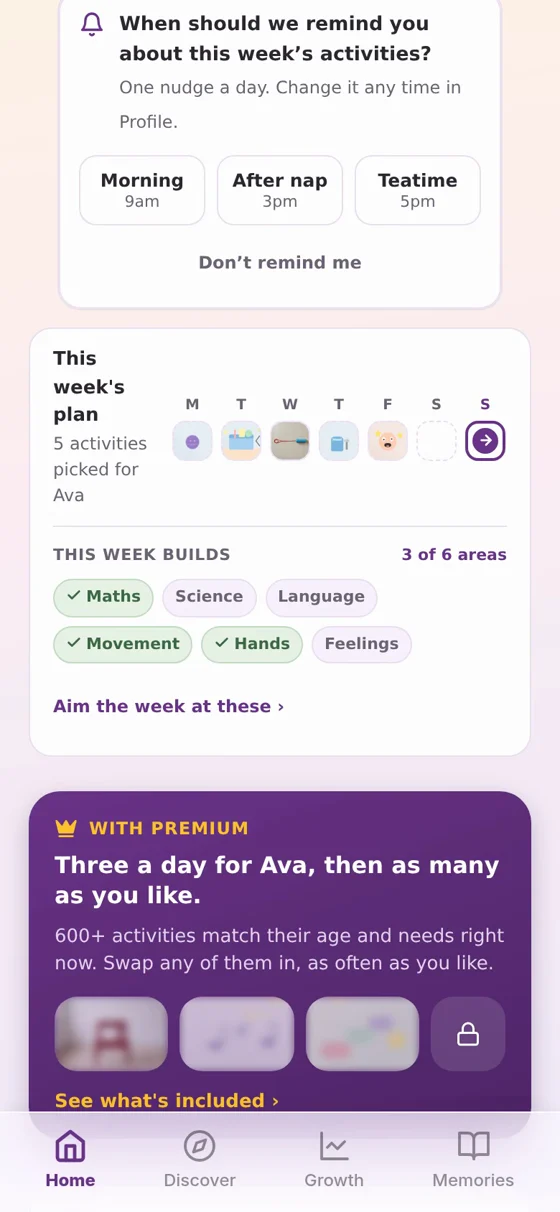
Mooshie Discover screen with Lifesavers for meltdowns and potty trainingThis week's plan showing five activities and the areas they build
5,918activities, adapted to your child
13additional needs you can add
Filteredwhat won’t suit them is left out
0child details uploaded, ever

If your toddler seems to run on a different battery to everyone else, adhd activities for toddlers are usually less about a diagnosis and more about finding games that use that energy instead of fighting it. Climbing the sofa, narrating everything, unable to sit through a single page of a book: for many under-4s, that is simply how a lot of energy and curiosity comes out. For some families, it is also familiar, because a parent or older sibling has ADHD themselves.

Below are ten activities from the Mooshie Moments app for children aged 1 to 4, chosen for busy, high-energy toddlers. Each one uses things you already have at home, most take 10 to 15 minutes, and every one comes with the words to say while you play.

Busy toddler, or early signs of ADHD?

ADHD is very rarely diagnosed before the age of 4. Most young children are, by nature, impulsive, easily distracted and full of movement: it is how their brains are built at this age, not a symptom on its own. So this page is not about spotting ADHD in a toddler. It is for two groups of parents: those with a naturally high-energy child who needs games that match their pace, and those where ADHD runs in the family and who want to build good habits early, just in case.

If you are ever worried about your child’s attention, behaviour or development, your health visitor or GP is the right person to talk to. They can look at the whole picture, which a page like this never can.

Burn it off: big-movement games

A toddler with energy to spare often settles faster once that energy has somewhere to go. These games are loud, physical and designed to tire out fidgety legs before you ask for anything quieter.

1 to 215 minutes

1. Bubble Chase

You’ll need: bubble solution and wand, an outdoor or easy-to-clean space

How to play
  1. Blow a few bubbles and say “Look, bubbles!”
  2. Encourage them to chase and pop: “Can you pop it?”
  3. Celebrate every pop: “You got it! It’s gone!”
  4. Keep going for 5 to 10 minutes, then stop while it is still fun rather than overstimulating.
Say this: “Pop the bubble!” · “It disappeared!” · “Watch it float!”
2 to 310 minutes

2. Go, Stop: red light, green light

Stand facing your toddler and use hand signals instead of words: a wave means go, a flat palm means stop. Wave them in to run, then snap your hand up silently and see if they spot it. Swap roles so they get to hold up the stop sign too. This one doubles as the next section’s impulse-control practice, so slow it down if they get too wound up.

You’ll need: a clear 4-metre path, no equipment

2 to 3

3. Dinosaur Stomp Adventure

You are both dinosaurs. Stomp heavily around the room, roar together, and mime eating pretend trees. Let them lead the chase, then flop down “tired” together for a breather before going again.

You’ll need: open space

Say this: “We’re dinosaurs!” · “Stomp, stomp!” · “Find food!”
2 to 3

4. Staircase Bounce Step

Drop a soft, lightweight ball (foam or a soft toy ball, never anything hard) from the top of the stairs and let your child chase it down. Catch it together at the bottom and celebrate before sending it down again. Three to five rounds is usually plenty.

You’ll need: a soft ball, stairs

Stop and go: games that practise pausing

Impulse control is a skill, not a personality trait, and it grows with practice. These games make “stop” into something fun to get right, rather than a word your child only hears when they are in trouble.

2 to 310 minutes

5. Stop Sign Response

You’ll need: paper, a drawn stop sign (optional)

How to play
  1. Say “Stop!” or hold up a paper stop sign.
  2. Ask your child to freeze in a funny pose.
  3. Celebrate the freeze, however wobbly it is.
  4. Say “Go!” and let them move again, then repeat.
Say this: “When you see the sign, feet stop.” · “You stopped so fast!” · “Ready, and go again.”
2 to 315 minutes

6. Self-Control Freeze Dance

Swap the usual roles: your child controls the music and decides when it stops, and you do the dancing and freezing. Dance properly, then freeze completely still and silent the moment the music cuts. Waiting to catch you out, and holding still once they have, is where the self-control lives for them.

You’ll need: music

All 5,918 activities adapt to your child.

Add their needs once. Mooshie leaves out what won’t work and adds tips where they help.

Short bursts of focus

Long, sit-still activities rarely work for a busy toddler, so these are built around short rounds with a clear pause in the middle, which is often easier to hold onto than one long stretch of attention.

3 to 415 minutes

7. Build Higher, Pause, Go

Take turns adding one block to a tower. After each block, pause and count the layers together before the next turn. The pause is the actual focus practice, so resist the urge to rush it.

You’ll need: blocks or similar stackable objects

Say this: “Your turn to stack.” · “Pause, let’s count.” · “One more round.”
3 to 415 minutes

8. Match Pairs, Take Turns

You’ll need: a simple set of matching cards

How to play
  1. Lay 8 to 10 cards face down in two rows.
  2. Flip one of your own cards, name the picture, then flip a second to look for a match.
  3. Say “Your turn” and wait while they pick two cards.
  4. Keep playing until every pair is found, celebrating the wins rather than the speed.
3 to 415 minutes

9. Watch One Bug, Wait

Find a bug or bird outside, sit down together and watch it quietly for two minutes without talking. Whisper “Still there, still moving” if they need a nudge, then finish with “You watched the whole time.” The stillness is the whole activity, and it is a genuinely hard skill at this age.

You’ll need: outdoor space

3 to 415 minutes

10. Count Slowly, One by One

Pour a handful of buttons into a bowl and ask your child to count them one at a time, pushing each one aside as they go. Let them do the counting without jumping in to help. When they finish, ask “How many was that?” and pour a fresh handful for another round.

You’ll need: buttons or other small objects, a bowl

Calming down after a big burst

Give the wind-down its own space.

Move from the loud game to a quieter spot, rather than expecting an instant switch.

Use your voice as the cue.

A slower, softer voice from you often brings their pace down too.

Offer something for busy hands.

Squeezing dough or holding a soft toy can channel leftover energy without more running.

Keep instructions to one step.

“Sit here” lands better than a string of requests after an energetic game.

Expect it to take a few minutes.

A sudden stop rarely works; a gradual step down usually does.

If meltdowns are frequent or intense, our guide to toddler tantrums has more on the moment itself, and emotions activities can help build the words for big feelings ahead of time.

LOVED BY FAMILIES

Parents and experts on Mooshie

“I used to spend 30 minutes looking for an activity on Pinterest, get overwhelmed, and just turn on the TV. Mooshie takes 5 seconds.”
Sarah J.Mum of a 2-year-old
“Finally, an app that tells me to put my phone away. The activities are actually doable with stuff I have in my junk drawer.”
Mark D.Dad of two
“As a pediatric OT, I love that these activities build core developmental skills without feeling like ‘homework’ for parents.”
Dr Emily R.Paediatric occupational therapist
HOW MOOSHIE HELPS

How Mooshie helps with high-energy toddlers

When you set up Mooshie Moments, you can tell it your child’s age and, if it applies, add ADHD as an additional need. From there:

  • The weekly plan includes movement. Five activities a week are chosen across six areas, including movement, so energetic play is built in rather than an afterthought.
  • Activities are picked for how the day is going. Tell the app how much time you have, from 10 minutes to 20 or more, including set-up, and it suggests something that fits.
  • Every activity comes with the exact words to say, plus prep and play times and a parent tip, so you are not improvising mid-chase.
  • Most activities come with an ADHD note. With ADHD added, the app favours activities with movement and clear stopping points, and adds tips like breaking play into short chunks and celebrating effort over a perfect result.
  • All 5,918 activities adapt once you add ADHD, and it is completely private: what you add about your child stays on your phone and is never uploaded.

The app is for you, not your toddler. Check the idea in 30 seconds, put the phone down, and go.

Questions parents ask

Can you tell if a toddler has ADHD?

Not reliably. ADHD is very rarely diagnosed before age 4, because high energy, short attention and impulsiveness are typical at this age anyway. If you are concerned, your health visitor or GP can talk it through properly.

My toddler never sits still. Is that a problem?

Usually not. Many toddlers are naturally on the move most of the day, and it often settles as they get older. Activities that use the energy, rather than trying to stop it, tend to work best in the meantime.

How long should an activity for a high-energy toddler last?

Aim for short: 10 to 15 minutes is plenty, especially for focus-based games. It is far better to end on a high note than to push on until it falls apart.

Does ADHD run in families?

Many parents who ask about this do have ADHD themselves, or a close family member does. That is a reasonable reason to build in extra movement and structure early, but it is not the same as a diagnosis for your toddler.

What if my child gets overexcited during these games?

Slow the pace, lower your voice and add a calm-down step, such as the ones above. If a game is clearly tipping them into overstimulation rather than fun, stop and try it again another day.

Mooshie is a play app, not medical advice. If you’re worried about your child’s development, speak to your health visitor or GP.

Make memories. Build skills. Play together.

Your first moment is ready as soon as you tell us their age.

Mooshie MomentsFree on iPhone
Get it free