Toddler Tantrums: What to Do in the Moment and After

HELP FOR HARD MOMENTS · AGES 1 TO 4

Toddler Tantrums: What to Do in the Moment and After

Toddler tantrums explained in plain words, with ten play ideas for before, during and after a meltdown, plus scripts for each. Free to try today.

  • Free to download
  • No account needed
  • No screen time for your child
QR code to download Mooshie MomentsOn a laptop?
Scan to get Mooshie on your iPhone.
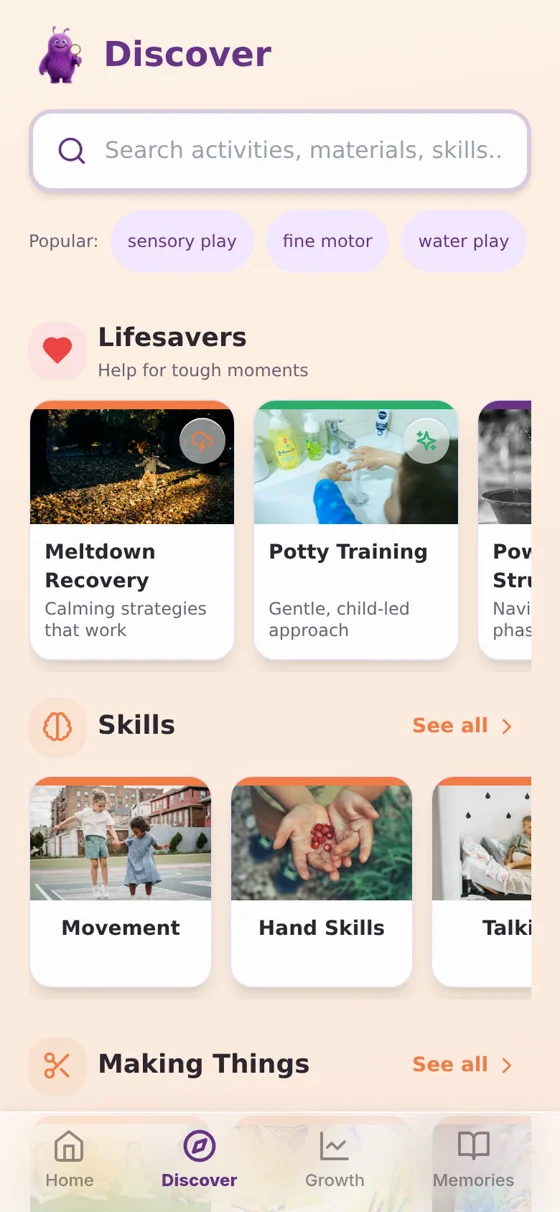
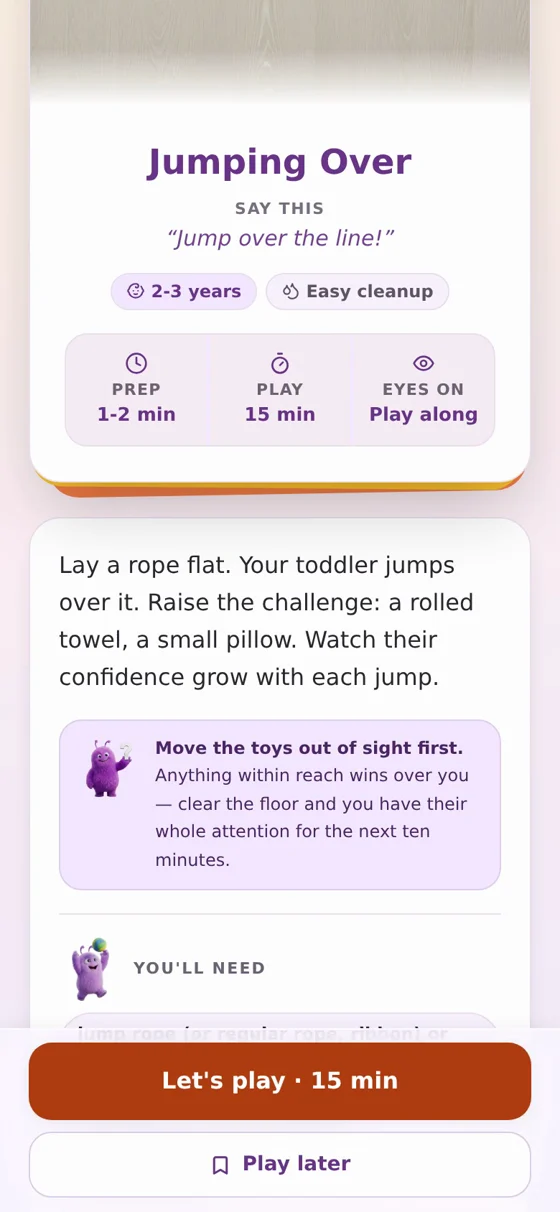
Mooshie Discover screen with Lifesavers for meltdowns and potty trainingMooshie activity screen with Say this words to use
10free ideas on this page
5,918activities for 6 months to 4 years
Say thisthe exact words on every activity
0child details uploaded, ever

Toddler tantrums pass faster when you stop trying to reason your way through the middle of one. A meltdown in full flow is not the moment for logic, bargaining or a long explanation. What actually helps happens before it starts and after it ends.

Below are ten activities from the Mooshie Moments app, for children aged 1 to 4, split into what to do before, during and after a tantrum. Each uses things you already have at home, takes 5 to 15 minutes, and comes with exact words to say, so you’re not scrambling for the right response mid-storm.

Why tantrums happen

A toddler’s brain isn’t being naughty on purpose. The part that manages big feelings, the amygdala, develops early and reacts fast. The part that can calm it down again, in the front of the brain, takes many more years to mature, often into the twenties. So when your toddler’s feelings overwhelm them, there’s genuinely very little braking system available yet. Tantrums are a normal, if exhausting, part of that gap closing over time. Your steady presence, before and after, is what teaches the braking system to build.

Before: connection play that lowers the odds

You can’t stop every tantrum, but regular play that practises calming skills, in a moment when nobody’s upset, makes tantrums a bit less frequent and a bit shorter when they do happen.

2 to 35 minutes

1. Whisper Practice

Take turns whispering silly secrets to each other. It’s genuinely difficult to scream and whisper at the same time, and practised in a calm moment, whispering becomes a trick your child can reach for later.

You’ll need: nothing

How to play
  1. Whisper something silly to them and wait for a whispered reply.
  2. Keep swapping whispered secrets for a minute or two.
  3. Practise this a few times a week when nobody’s upset.
  4. Bring it back out gently the next time feelings start rising.
2 to 35 minutes

2. Safe Hitting Pillow

Introduce a specific pillow as the one safe thing to hit when angry, and practise using it together while everyone’s calm.

You’ll need: a designated pillow

How to play
  1. Show them the pillow and say plainly “this pillow is safe to hit.”
  2. Demonstrate a gentle hit yourself.
  3. Practise it together during a calm moment, not a crisis.
  4. Remind them it’s there next time frustration builds.
3 to 415 minutes

3. Breathing For Calm

A slow breath in through the nose and out through the mouth, practised together when calm, becomes something your child can genuinely use later.

You’ll need: nothing

How to play
  1. Model one slow breath in and out yourself first.
  2. Breathe together three times, keeping it slow.
  3. Say plainly that slow breathing helps a body calm down.
  4. Remind them of it gently the next time they’re upset.

During: stay calm, use few words, keep everyone safe

Once a tantrum is underway, the goal shrinks right down: keep your child and anyone nearby safe, say very little, and wait it out. This is not the moment for a new activity to fix the feeling. It’s the moment for your steady presence.

1 to 210 minutes

4. Change of Scene

When a room feels too charged, moving to a different space, even just the hallway or the garden, can genuinely reset the mood.

You’ll need: another room, or outside

How to play
  1. Say simply “let’s go somewhere else” and move together.
  2. Let them keep crying if they need to, without demanding they stop.
  3. Sit or stand quietly in the new space.
  4. Wait for the shift rather than forcing it.
2 to 310 minutes

5. Hand Massage Calm

If your child will tolerate touch mid-meltdown, slow, firm strokes on clenched palms and fingers can loosen the grip and slow the breathing.

You’ll need: a bit of lotion

How to play
  1. Get down to their level and slow your own breathing first.
  2. Offer a slow, firm massage on their hands if they’ll allow it.
  3. Keep your voice low and unhurried throughout.
  4. Stay close afterwards rather than rushing to move on.
2 to 310 minutes

6. Tunnel Crawl Calm

A blanket tunnel draped over chairs gives a wound-up body gentle pressure and something physical to do, which can help feelings settle once the peak has passed.

You’ll need: blankets, chairs

How to play
  1. Drape blankets over chairs to build a short tunnel.
  2. Invite them to crawl through, without insisting.
  3. Let them repeat it as many times as they like.
  4. Stay nearby and calm throughout.
3 to 415 minutes

7. Squeeze Tight, Let It Go

Once your child can hear you again, making the whole body tight like a ball and then flopping like a puddle gives the leftover tension somewhere to go.

You’ll need: nothing

How to play
  1. Show them making fists and scrunching up tight.
  2. Hold the tightness for three seconds together.
  3. Say “now melt” and flop your whole body.
  4. Repeat four or five times, slower each round.

After: repair and rebuild connection

Once the storm passes, this is where the relationship gets stitched back together, and where your child learns that big feelings don’t end the connection between you.

1 to 210 minutes

8. Hug Jar

Fill a jar with paper hearts. When upset, your child pulls one out and asks for a hug, which gives them a concrete way to ask for comfort.

You’ll need: a small jar, paper hearts

How to play
  1. Fill a small jar with paper hearts together.
  2. When they’re upset, invite them to choose one.
  3. Give the hug straight away once they’ve asked.
  4. Put the heart back for next time.
1 to 210 minutes

9. Soft Stroke Calm

Gather a few soft fabrics and hand one over once the worst has passed. Stroking a soft texture slowly gives busy hands somewhere calm to focus.

You’ll need: a soft scarf, blanket edge or fleece

How to play
  1. Offer a soft scarf or fleece and say “let’s find something soft.”
  2. Model stroking it slowly with your hand over theirs.
  3. Let them hold it as long as they need, without rushing.
  4. Stay quiet and present rather than filling the silence.
3 to 415 minutes

10. Feelings Change When You Move

Once calm enough to move, a big shake-out, shimmying shoulders and shaking arms, teaches your child that moving the body can shift a feeling even when it hasn’t fully gone.

You’ll need: nothing

How to play
  1. Say “let’s shake it loose” and demonstrate a big wiggly shake.
  2. Invite them to shake their whole body too.
  3. Ask afterwards if anything feels different.
  4. Talk gently about what happened, once they’re ready.

Hundreds more ideas like these are waiting in the app.

Plus one picked for your child every day, matched to their age and how today is going.

LOVED BY FAMILIES

Parents and experts on Mooshie

“I used to spend 30 minutes looking for an activity on Pinterest, get overwhelmed, and just turn on the TV. Mooshie takes 5 seconds.”
Sarah J.Mum of a 2-year-old
“Finally, an app that tells me to put my phone away. The activities are actually doable with stuff I have in my junk drawer.”
Mark D.Dad of two
“As a pediatric OT, I love that these activities build core developmental skills without feeling like ‘homework’ for parents.”
Dr Emily R.Paediatric occupational therapist
Mooshie Discover screen with Lifesavers for meltdowns and potty training
HOW MOOSHIE HELPS

How Mooshie helps with tantrums

Meltdown recovery is one of Mooshie’s built-in lifesavers, alongside potty training and power struggles, so you’ve got somewhere to turn quickly.

  • Chooses one activity a day to suit your child’s age, stage and the time you have.
  • Every activity has “Say this” phrases and a parent tip, so you’re not inventing the right words on the spot.
  • 5,918 play ideas for under-4s, with zero shopping lists.
  • No sign-up, no cost to try. One fresh activity lands every day; iPhone now, Android soon.

It’s a tool for you, and your child only ever sees you. Read it once, then put the phone out of reach.

Questions parents ask

How do I handle toddler tantrums in the moment?

Keep everyone safe, use very few words, and stay as calm as you can manage. This isn’t the time for explaining or negotiating. Once the peak has passed, move towards comfort and connection.

Why are tantrums in 2 year olds so intense?

Two year olds feel emotions with full force but have very little ability yet to manage them, because the calming part of the brain develops slowly over many years. Intensity at this age is normal, even when it’s hard to sit through.

What causes toddler meltdowns to happen so often?

Tiredness, hunger, overstimulation and sudden changes of plan are common triggers. Frequent meltdowns often ease with more predictable routines and a bit more connection time built into ordinary days.

Should I ignore a tantrum completely?

Staying calm and saying little is different from ignoring your child entirely. Staying nearby, even silently, tends to help more than walking away, unless you need a moment yourself to stay regulated.

When should I get advice about tantrums?

If tantrums involve your child hurting themselves, are extremely frequent, or are still happening very intensely well past age four, it’s worth talking to your health visitor or GP. They can help rule out anything else going on.

Mooshie is a play app, not medical advice. If you’re worried about your child’s development, speak to your health visitor or GP.


Make memories. Build skills. Play together.

Your first moment is ready as soon as you tell us their age.

Mooshie MomentsFree on iPhone
Get it free