
9 Practical Toddler Meltdown Activities Parents Can Use in 2–5 Minutes

When a toddler starts to melt down, the fastest moves are simple ones: offer a bubble wand or a favorite fidget, try a slow balloon breath together, give a calm hug if your child wants contact, and check whether hunger or tiredness is the real cause. Keep your words short and stay close. These are quick helpers, not a magic switch that stops every meltdown on the spot.
TL;DR:
- Using sensory activities like bubbles, fidget toys, or calm walks during early signs of frustration can prevent meltdowns from escalating further.
- Sensory input should be tailored to the child’s state, with soft stimuli for overstimulation and more active play for boredom or flat moods.
- Movement and breathing techniques, such as balloon breaths or slow rocking, work best when used early, before arousal peaks.
- Keep a designated calm corner with familiar objects and lighting to help your toddler regain control before a meltdown occurs.
- Consistent practice of these calming strategies in calm moments improves their effectiveness during stressful episodes.
Table of Contents
- 1. A quick shortlist of go-to calming activities
- 2. Sensory-based activities and safety notes
- 3. Movement and breathing techniques you can do together
- 4. Setting up a calm corner and small routine changes
- 5. When to use these tools before, during, and after a meltdown
- 6. Red flags and when to get extra support
- 7. Making short calming practices work in real family life
- Practicing these activities with the Mooshie Moments app
- Sources
- FAQ
1. A quick shortlist of go-to calming activities
Every family needs a few tools they can reach for without thinking. Here is a practical shortlist, roughly in order of how early you would try them:
- Bubbles: blow a few slowly and ask your toddler to pop them. Best used the moment you notice early frustration. Takes a short time suitable for early frustration.
- Balloon breaths: big breath in, slow breath out like blowing up a balloon. Good for co-regulating together before things peak. Lasts a couple of minutes, ideal for co-regulating.
- A favorite book: a familiar story shifts attention fast. Works well as an early distraction. Typically takes a few minutes to shift attention effectively.
- A safe, firm hug: deep pressure calms some toddlers quickly, if they want to be held. Use once you sense rising tension. A brief hold may be sufficient to calm some toddlers.
- A short calm walk: moving to another room or around the garden gives an outlet. Useful when energy needs somewhere to go. Typically takes a few minutes to shift attention effectively.
- A safe fidget toy: something textured keeps hands busy. Handy for younger toddlers who need a distraction close by. Lasts a couple of minutes, ideal for co-regulating.
- A sensory tub: dried pasta, rice, or water beads give tactile calm. Best tried before overstimulation sets in. A few minutes to provide tactile calm before overstimulation.
- Soft music or white noise: gentle sound lowers the volume of a chaotic moment. Works well at home during quieter escalation. Ongoing, as needed.
- A simple snack: if hunger is the root cause, food solves it faster than any activity.
Try each of these during calm moments first, not just mid-meltdown, so your toddler already knows what to expect from them.
2. Sensory-based activities and safety notes
Sensory input works because it gives a toddler’s nervous system something predictable to focus on, but the right kind depends on what is happening. A child who is overstimulated needs low, soft input: dim light, gentle textures, quiet. A child who seems flat or bored before a meltdown often responds better to more active sensory play, like squishing dough or crunching a snack.
- Tactile bins: rice, dried pasta, or soft fabric scraps for squeezing and sorting.
- Visual calming: a dim lamp or a bubble lamp gives something quiet to watch.
- Mouth-safe options: cool water from a cup or a crunchy snack, useful when a toddler seeks oral input.
- Fidgets: silicone teethers or soft fabric toys keep hands occupied without small parts.
Always supervise anything that could end up in a mouth, and skip small parts for children under three. Choose taste-safe materials where possible, especially for toddlers who still put things in their mouths, and our taste-safe sensory play guide has more ideas if you need them.
Pro Tip: Keep one sensory item in your bag at all times. Consistency helps more than variety when a toddler is upset.
3. Movement and breathing techniques you can do together
Some toddlers need to move before they can settle, and a few simple scripts make this easy to practice at home.
- Bubble breathing: say “let’s blow the biggest bubble” and blow slowly together, an effective relaxation technique for children. Great for early escalation.
- Balloon breathe: “big breath in, slow breath out,” with hands miming a balloon growing and shrinking. Good for shared calming before things peak.
- Three-step calm walk: hold hands and count three slow steps together, then repeat. Useful when a toddler needs a change of scene.
- Slow rocking: gentle side-to-side rocking while holding your child, if they want contact.
- Lap squeezes: firm, gentle squeezes down the arms and legs while seated on your lap, giving deep pressure input.
- Short jog in place: a few seconds of jogging together burns off extra energy before it turns into frustration.
Movement helps most in the early stages, when a toddler still has some control. Once a meltdown peaks, reduce stimulation instead. Loud games or fast movement can make things worse when arousal is already high, so switch to stillness, quiet, and one simple calming option.
4. Setting up a calm corner and small routine changes
A calm corner does not need much: a soft blanket, two or three favorite comfort objects, something quiet to look at, and gentle lighting. Some families add a small lava-lamp-style light for a low-stimulation visual focus.
- Keep the corner in the same spot every time so it becomes familiar.
- Add a soft blanket and a cushion your toddler already likes.
- Include two or three safe, familiar objects, nothing new or overstimulating.
- Use a low lamp or dim light rather than anything bright.
- Introduce the corner during calm, ordinary moments, not mid-meltdown, so your toddler learns what it is for.
Alongside the corner, small routine tweaks reduce how often meltdowns happen at all. A countdown before transitions (“two more minutes, then bath time”) gives a toddler time to adjust. Checking snack and nap timing before outings avoids the two most common triggers. Practicing a tricky transition once or twice during a calm afternoon, like leaving the park, makes the real moment easier later.
5. When to use these tools before, during, and after a meltdown
Timing changes everything. NHS guidance on toddler tantrums points to a practical sequence: regulate first, relate once calmer, then reflect on what happened. That order matters more than which specific activity you pick.
- Before: use routine, short practice sessions, and clear transition cues to reduce how often meltdowns start.
- Early escalation: offer one simple sensory or movement choice, like bubbles or a fidget, before things build further.
- Peak meltdown: cut back on words, stay close, keep your child safe, and offer just one calming input rather than several options at once.
- After: reconnect warmly and help your child name the feeling once they are calm enough to hear you.
Pro Tip: Practice each calming activity for two to five minutes during ordinary, calm moments. Repetition is what makes a toddler reach for the activity themselves during stress.
This is where short, repeated practice earns its keep. A toddler who has tried balloon breaths a dozen times on a quiet afternoon is far more likely to accept them mid-meltdown than one trying it for the first time under stress. Building that familiarity through brief, regular activity bursts, the kind Mooshie Moments is built around, gives these tools a real chance of working when they are needed most.
6. Red flags and when to get extra support
Most tantrums are a normal part of toddlerhood, but a few signs are worth flagging to a health visitor or GP: meltdowns happening daily and disrupting eating or sleep, dangerous aggression toward themselves or others, a loss of words or skills your toddler previously had, or regression across several areas of development at once.
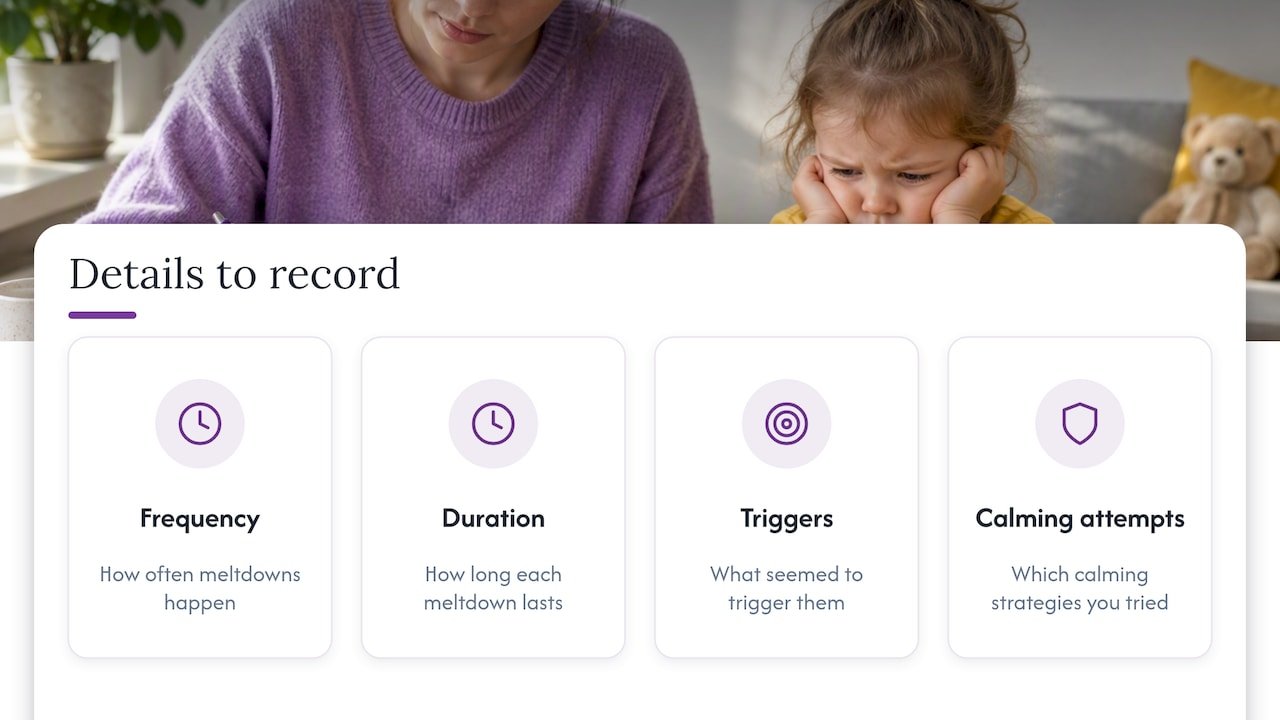
Before that conversation, it helps to jot down a few details: how often meltdowns happen, how long they last, what seemed to trigger them, and which calming attempts you tried. Bring those notes with you, and ask whether a referral to local early-years support would help.
7. Making short calming practices work in real family life
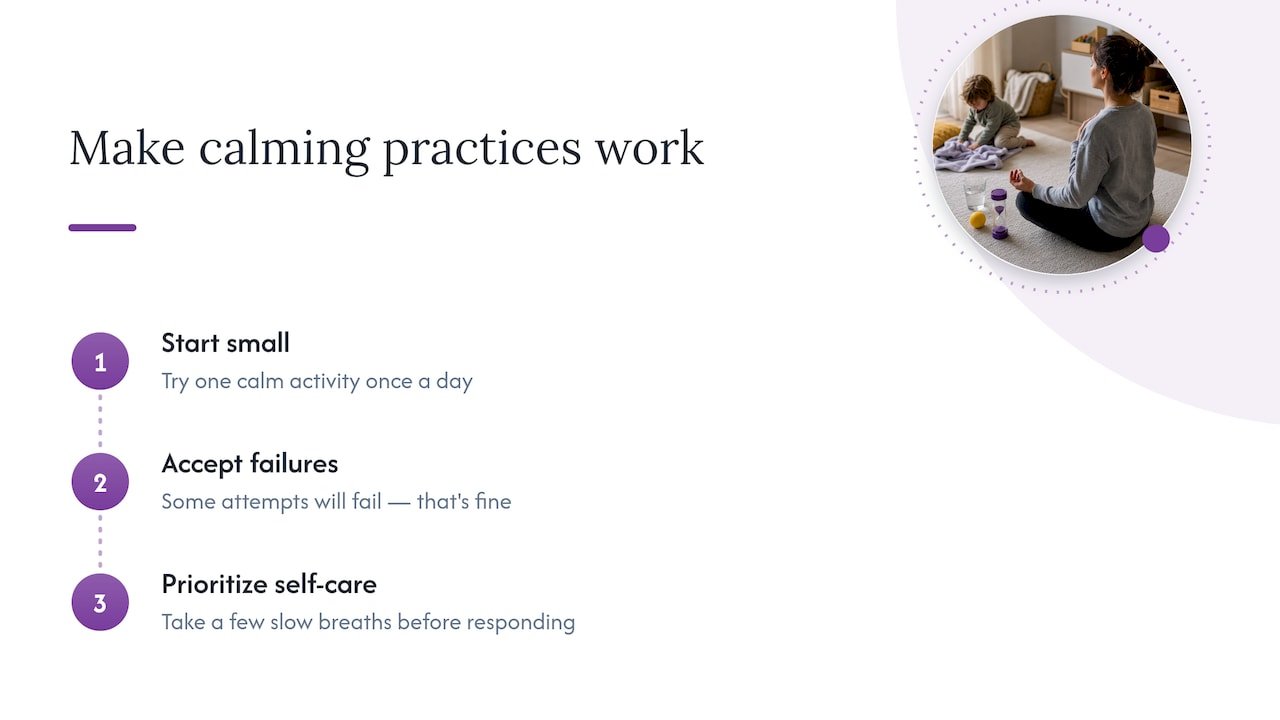
Some days, bubbles work perfectly. Other days, my toddler throws the wand across the room and the hug I offer gets pushed away, and that is fine too. The goal was never a perfect response every time, just a slightly better one.
Set small goals: one calm activity tried once a day is plenty to start. Expect some attempts to fail, because they will. And look after yourself in the process: a few slow breaths of your own before you respond often do more good than any toy in your bag.
— samit
Practicing these activities with the Mooshie Moments app
Building familiarity with calming activities takes repetition, and that is easier with a ready supply of quick ideas on hand. The app offers age-based activity suggestions for young children, using household items you already own, with no screen time and no extra shopping.
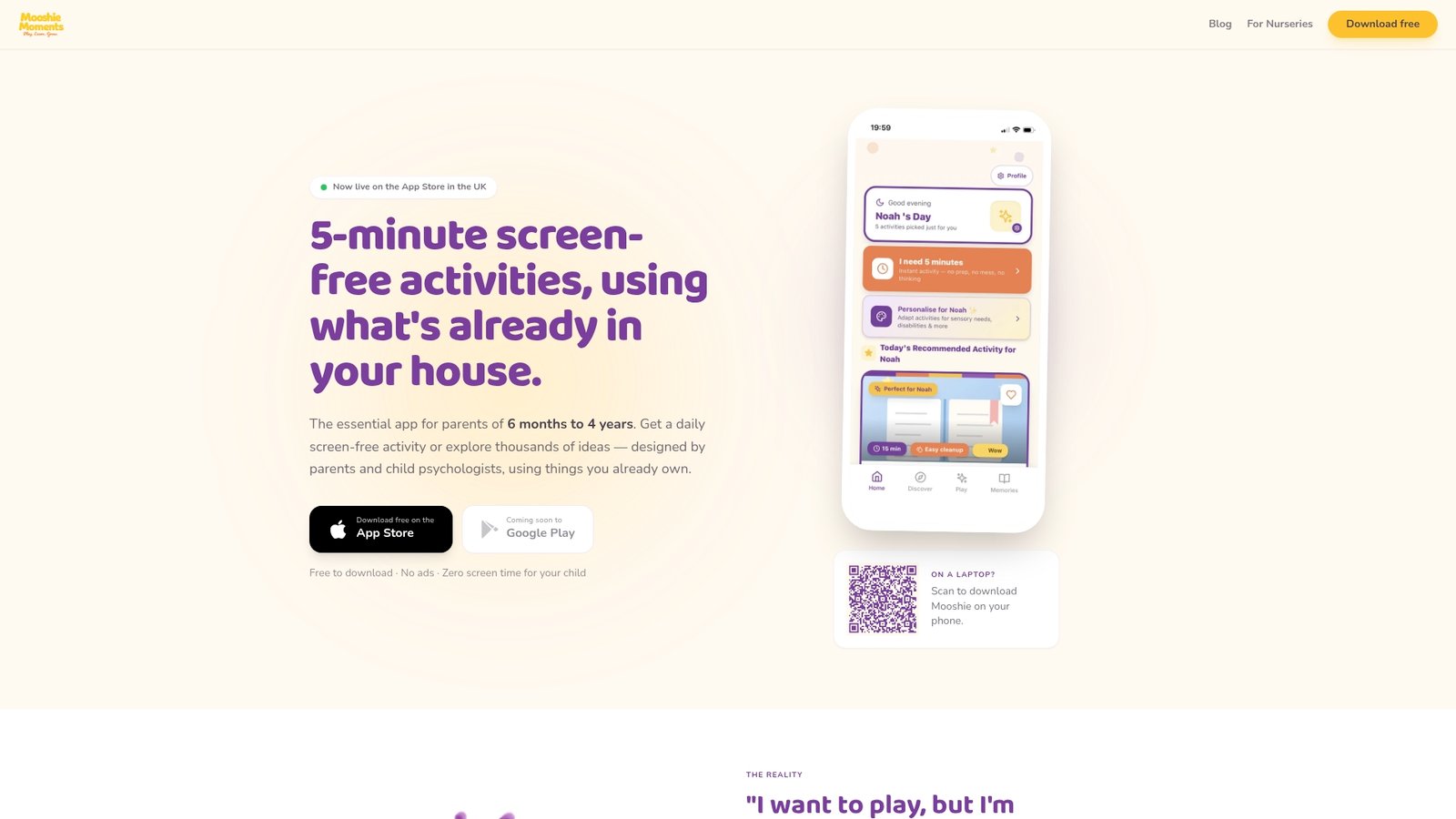
Each activity comes with a plain-language explanation of the developmental thinking behind it, so a short bubble session or sensory tub is never just filler. Short, repeated practice is one of the more reliable ways to help toddlers learn a calming routine, according to NHS guidance, and that is exactly the kind of activity Mooshie is built to deliver in quick bursts. Nurseries and early years settings can also access a Partnership Pack with printable resources for group practice. If you want a steady supply of quick, screen-free ideas ready for the next calm moment, visit Mooshie to see how it works.
Sources
For more detail, the NHS guide to toddler emotions and this Rise & Shine explainer on tantrums cover the reasoning behind these approaches in more depth.
- Help your toddler with their emotions | NHS
FAQ
What should you do when a toddler has a meltdown?
Stay close, reduce your words, and keep your child safe rather than trying to reason with them mid-meltdown. Offer one simple calming option, like a hug or a quiet object, and save talking through feelings for once they have calmed down, following the NHS’s regulate, relate, reflect approach.
What counts as a red flag behavior in a 2 year old?
Signs worth discussing with a health visitor or GP include daily meltdowns that disrupt eating or sleep, dangerous aggression, a loss of words or skills your child previously had, or regression across several areas of development. A single difficult day is not a red flag on its own, but a persistent pattern is worth raising.
Is it normal for a 2 year old to have frequent tantrums?
Yes, tantrums are a normal and common part of toddler development, and NHS guidance notes they commonly begin around 18 months as toddlers learn to manage big feelings with limited language. Checking hunger, tiredness, and overstimulation first often explains why they happen so often.
At what age do toddler tantrums tend to peak?
Tantrums often become more frequent in the toddler years before gradually easing as language and emotional regulation improve. If frequent, intense meltdowns continue well beyond the toddler years or come with other developmental concerns, it is worth mentioning to a health visitor or GP.
How can you help a toddler express feelings before a meltdown starts?
Offering simple choices, using short and clear language, and naming feelings out loud (“you seem frustrated”) gives toddlers words for what they are experiencing. Practicing this during calm moments, alongside a consistent routine, helps toddlers build the vocabulary to express themselves before frustration boils over.
Recommended
- Research Backed Nursery Activity Plans: 3 Daily 5 Minute Slots (UK)
- 12 Low Prep Toddler Activities for Grandparents With Seated Options
- 40 Fun 2 Year Old Activities to Start Right Now
- Junk Modelling for Toddlers: Easy EYFS-Aligned Activities
Want a new idea every day, matched to your child's age?
Mooshie Moments gives you simple, guided play ideas for ages 6 months to 4 years.
Download free on the App StoreMore like this
Babysitting Toddlers: 12 Low Prep Ideas and Why They Help
Explore 12 low prep toddler activities for babysitters, with developmental benefits, age adaptations, UK safety advice, and optional activity coaching.
10 EYFS Backed Sock Games for Toddlers Under Five Minutes
Ten EYFS aligned sock games to start in under five minutes, each with a one line developmental benefit, simple adaptations, and two…

Busy Parents: 12 No Prep Shopping Activities for Toddlers
Busy parents: keep toddlers learning and calm at the store with 12 no prep, screen free activities that take under five minutes…