
UK Parents: 8 Low Energy Toddler Activities for Sofa Days

When you or your toddler have low energy, choose short, seated, screen-free activities you can set up in under five minutes. Sensory boxes, sticker scenes, and soft-toy play all work from the sofa. Apps in this space often build tailored suggestions like these, and below you’ll find a shortlist you can start right now, no supplies run required.
TL;DR:
- Short, seated activities like sensory boxes and sticker scenes are quick to set up and effective for low-energy days, requiring minimal supplies and time.
- Activities are categorized by energy level, with ultra-low and low-energy options designed to keep toddlers engaged while parents remain mostly passive or seated.
- Safety precautions include avoiding small parts during illness and preparing a calm kit in advance for easy access during tired or sick days.
- Fewer toys and repetition in sensory play promote better focus and emotional regulation, making quiet, simple activities more developmentally beneficial.
- Apps can provide tailored, research-backed activity suggestions based on your child’s age and your energy, simplifying planning on low-energy days.
Table of Contents
- Low Energy Toddler Activities You Can Start From the Sofa
- Gentle Play Ideas Sorted by Energy Level
- Safety and Hygiene Checklist for Sick or Tired Toddlers
- Why Fewer Toys and Quieter Play Actually Help
- An Honest Note for Parents Running on Empty
- Let Mooshiemoments Do the Thinking on Hard Days
- Sources
- FAQ
Low Energy Toddler Activities You Can Start From the Sofa
You don’t need a craft cupboard or a burst of energy to keep a toddler happily occupied. You need one basket, one book, or one bag of scarves, and about two minutes to set it up. These are the activities we’d reach for first on a day when getting off the sofa feels like a marathon.
- Calm story time. Pick a single picture book or audiobook and let your toddler sit close while you read in a low, slow voice. No need to perform. Steady and quiet is the point.
- Sensory fabric box. Fill a shoebox with three soft items, a scarf, a felt square, a knitted sock, and let your toddler pull them out, fold them, and stuff them back in.
- Sticker scene. One sheet of paper, one sticker sheet. Your toddler peels and places while you sit back. This is one of the most low-key crafts for toddlers because there’s genuinely nothing to clean up.
- Soft toy tea party. Two or three stuffed animals, a couple of cups, and your toddler runs the whole show while you referee from a cushion.
- Shadow play. Dim the lights, grab a small torch, and make hand shapes on a wall or the inside of a blanket fort.
- Pompom pick-and-drop. A muffin tin and a handful of pompoms or cotton balls turn into a sorting game that works fine motor skills without any real effort from you.
- Breathing buddy. Lay a stuffed animal on your toddler’s tummy while lying down and ask them to breathe it up and down slowly. It doubles as a calming wind-down.
- Live animal cams. On a day when a small amount of screen time is fine, a live feed from somewhere like the Smithsonian National Zoo holds attention with almost zero input from you.
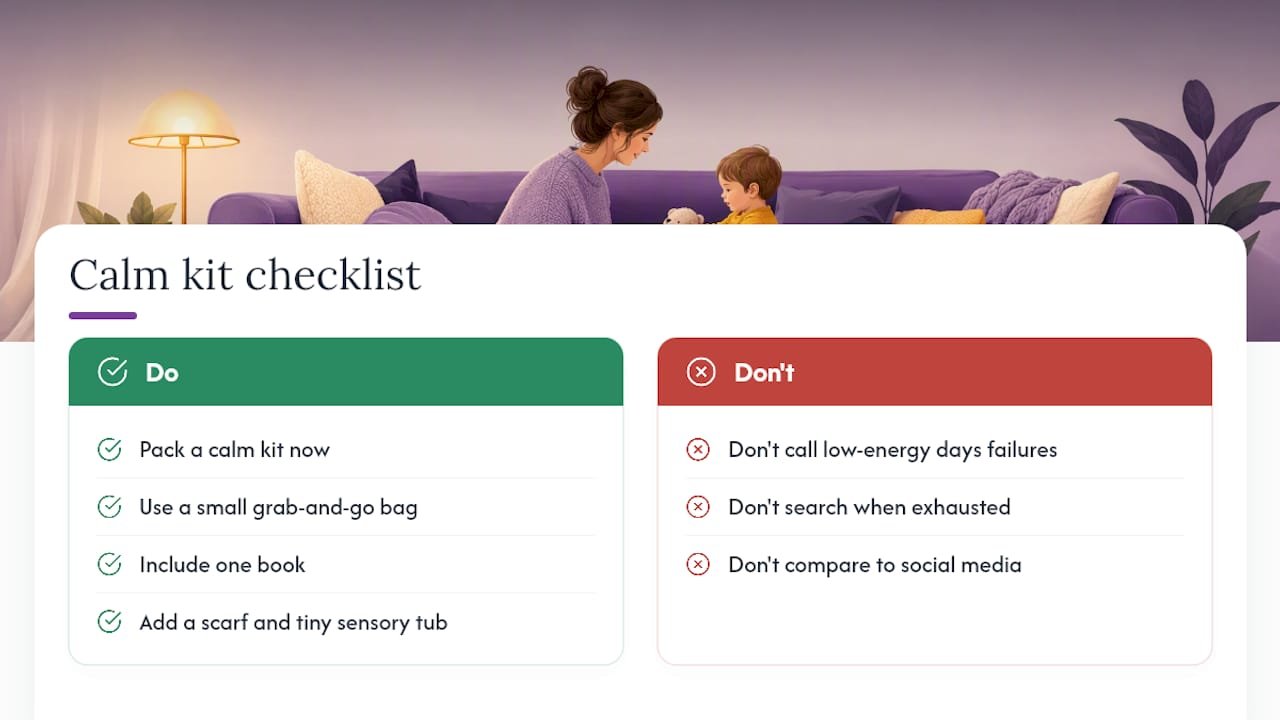
Pro Tip: Keep a small “calm kit” bag packed in advance, one book, a scarf, a mini sensory tub, so you never have to think or search when energy is at zero.
Gentle Play Ideas Sorted by Energy Level
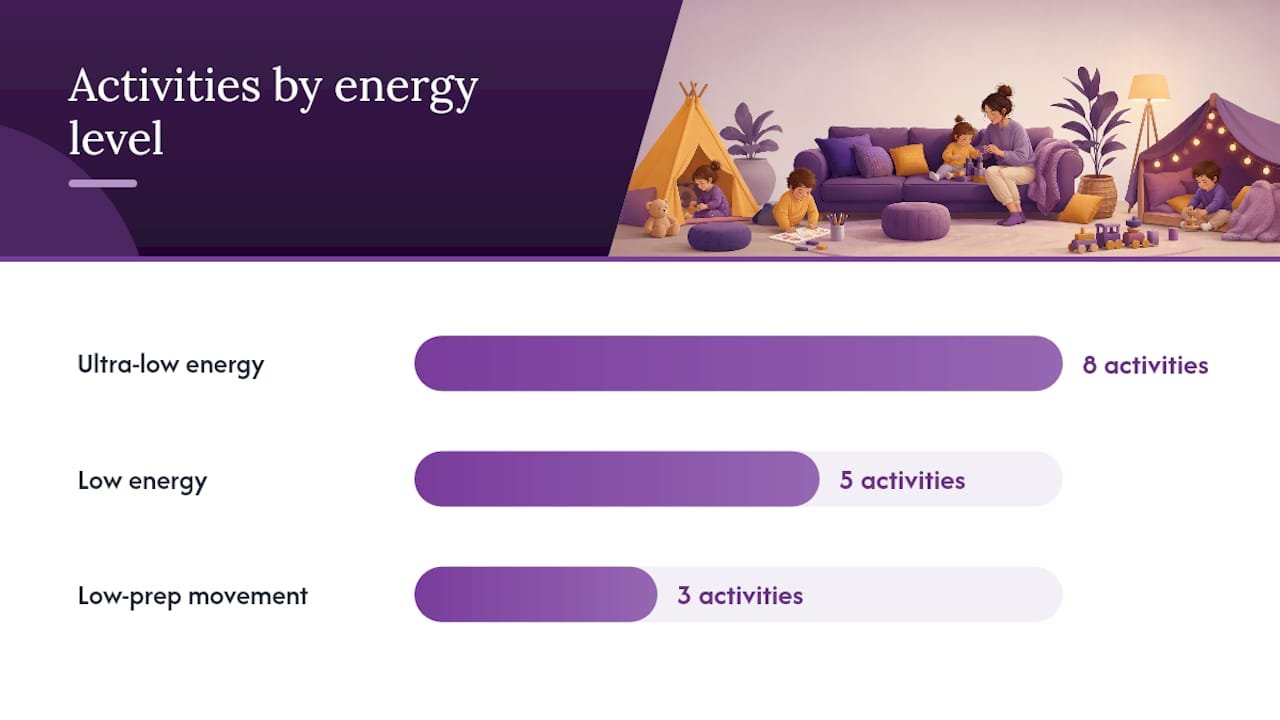
Not every low-energy day looks the same. Some days you can sit up and narrate; other days you need your toddler entertained while you barely move. Sorting activities this way makes it easier to grab the right one fast.
Ultra-low energy (you can stay lying down or seated with your eyes half open):
- Audiobook or narrated story time with a single picture book
- Sensory tray with three fabric textures to touch and sort
- Sticker scene, paper plus one sticker sheet
- Soft-object sorting into a muffin tin or egg carton
- Slow-narrated picture book “search and find”
- Cuddly puppet listening game, you move the puppet’s mouth, they listen
- Felt board play with pre-cut felt shapes
- Slow music sway, holding your toddler while swaying gently to one calm song
Low-energy (you can sit up and offer light guidance):
- Gentle shadow play with a torch and a blanket fort
- Slow animal walks, “walk like a sleepy bear,” done at half speed
- Pillow obstacle path across the living room floor
- Simple crayon drawing with big, chunky crayons
- A playdough provocation tray: playdough plus two or three tools like a fork and a cookie cutter, which supports fine motor skills and sensory exploration according to Kid Activities with Alexa
Low-prep gentle movement (when a little stretching helps without draining you):
- Calm dance and sway to one slow song
- Gentle floor rolling, side to side on a soft rug
- Simple stretch prompts, “reach for the ceiling,” “touch your toes”
For toddlers, choose age-appropriate pieces to ensure safety and engagement, adjusting activities to the child’s developmental stage to support sustained attention and gradually increasing complexity as they grow.
Safety and Hygiene Checklist for Sick or Tired Toddlers
Skip any activity, however gentle, and call a healthcare provider if your toddler has a fever, is vomiting, or shows any difficulty breathing. Quiet play is never a substitute for medical attention when something feels seriously wrong.
Mouthing objects is developmentally normal in toddlers, so choking risk deserves real attention during sensory play. Keep loose parts larger than a toilet paper tube opening, and swap small items like pompoms for taste-safe alternatives, such as the ideas in our taste-safe sensory play guide, when your toddler is under two or still mouths objects often.
Setup checklist for sick-day play:
- A comfortable, preferred seat or nest of cushions
- Soft, dim lighting rather than overhead brightness
- Quiet or no background music, low volume if any
- A clear “pause” signal, a word or hand sign, so play stops the moment your toddler seems overstimulated
- Sensory materials washed or replaced after illness, fabric items laundered, plastic trays wiped down
Quick fact: Toddlers routinely explore new objects by mouth as part of normal development, which is exactly why sensory bins built from household items, like the setup in Tinker and Toddle’s creek sensory bin, work best when pieces are sized generously and supervision stays close.
Why Fewer Toys and Quieter Play Actually Help
Toddlers focus better with less in front of them, not more. Research summarized by the Manchester Evening News found that fewer, open-ended toys help children concentrate longer and reduce overstimulation compared with large toy collections. That’s good news on a low-energy day, since it means you’re not failing by offering less.
Gentle, repetitive sensory play also does real developmental work. A simple playdough provocation, dough plus two tools on a tray, builds fine motor control and invites the kind of language development that comes from naming textures and actions out loud. Quiet play also gives toddlers room to practice patience and emotional regulation without the nervous system getting flooded, according to BabyOwn’s guide to gentle play.
Describing what your toddler is doing in one or two short phrases, “you’re squishing it flat,” “the scarf is soft,” gives real developmental benefit even when you’re barely moving.
Try these seated narration lines:
- “You found the soft one.”
- “That’s squishy, isn’t it?”
- “You’re stacking them up.”
Many parenting apps build this exact idea into suggestions. Pick an age and however many minutes you actually have, and the app hands you a short, research-backed activity with the “why” explained in plain language, so you’re not guessing whether quiet play still counts. It does.
An Honest Note for Parents Running on Empty
Low energy days are not failed parenting days. Sitting on the sofa while your toddler sorts pompoms into a muffin tin still counts as connection, even if it doesn’t look like the pictures on social media.
If you take one habit from this piece, make it the calm kit: pack a small bag now, one book, a scarf, a tiny sensory tub, so future-you never has to think or search while exhausted. Small, quiet interactions still build language, focus, and trust. You’re doing more than it feels like on the hard days.
— samit
Let Mooshiemoments Do the Thinking on Hard Days
Some apps are built for the moments when you have no energy left to invent a game, offering instant, expert-reviewed activity suggestions using only household items already in your home, with zero screen time for your toddler and nothing to buy.
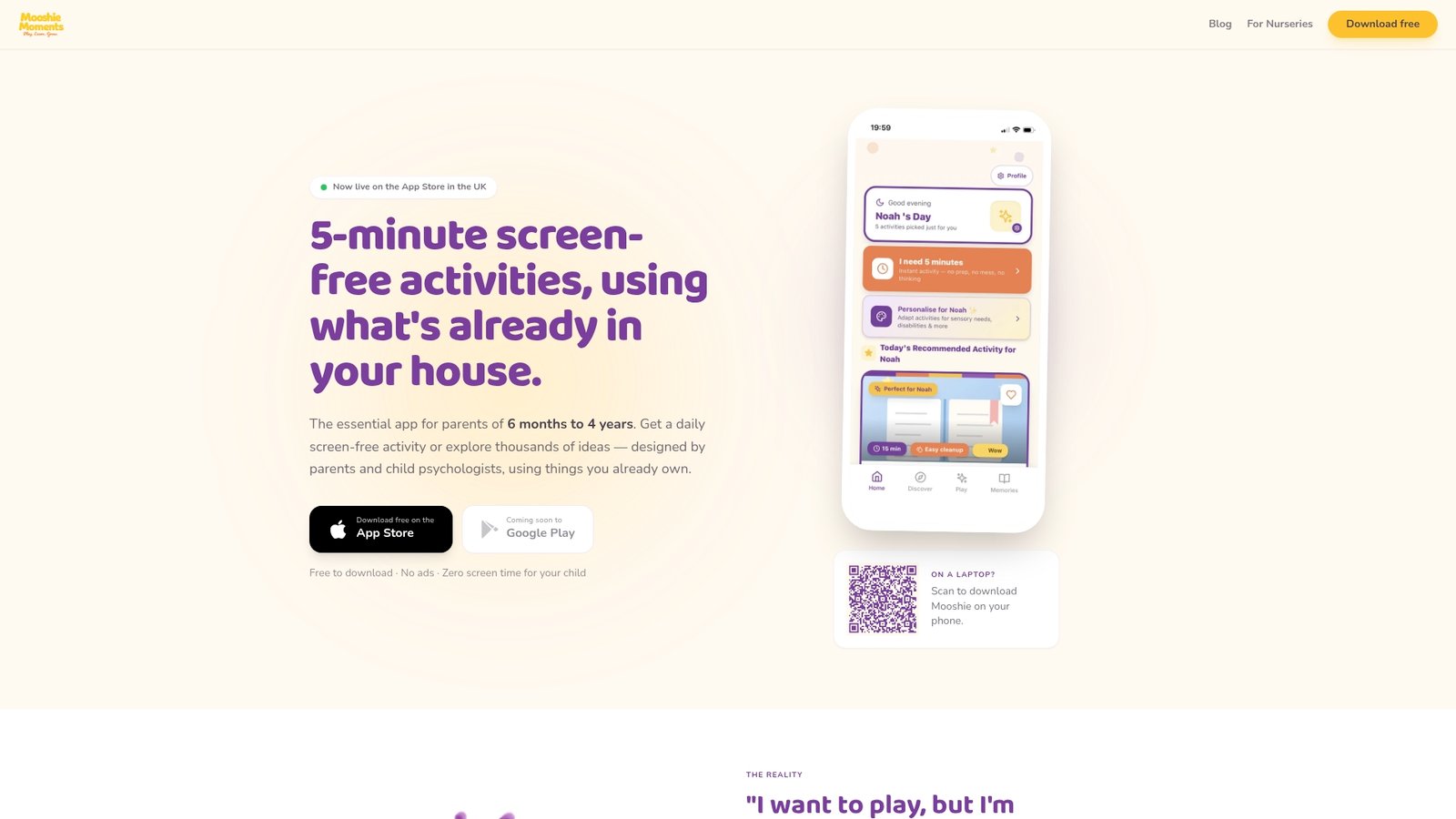
On a low-energy or sick day, open a suitable app, set your toddler’s age, and pick the shortest time slot you’ve got. Many suggestions in the ultra-low and 5-minute categories match everything covered above, sensory boxes, sticker scenes, felt play, but tailored to child’s developmental stage instead of a general list. If you’re a grandparent or another caregiver stepping in for the day, our seated, low-prep activities for grandparents cover the same ground with even less setup. Head to Mooshiemoments and pick your child’s age to get your first tailored activity in under a minute.
Sources
The claims above draw on Manchester Evening News on toy quantity and focus, BabyOwn on gentle play’s emotional benefits, Kid Activities with Alexa for playdough provocation setup, and Tinker and Toddle for sensory bin design. For a deeper look at sensory play’s developmental role, see this parent’s guide to sensory play.
- Having fewer toys is better for children — Manchester Evening News
- Gentle play ideas for toddlers — BabyOwn
- Big creek sensory bin — Tinker and Toddle
FAQ
My 2-year-old keeps pushing me away. What could be causing this?
This is often a normal push toward independence rather than rejection, especially during illness or tiredness when toddlers feel more emotions than they can express. Offering a calm, low-pressure activity nearby, like a sensory box they can explore alone while you stay close, usually helps more than direct engagement.
How long should a 3-year-old be away from their mother?
There’s no fixed universal rule, since it depends heavily on the child’s temperament, routine, and how the separation is handled. Short, predictable separations with a clear goodbye tend to go more smoothly than long or unexplained ones.
What is the 333 rule for toddlers?
Definitions of this rule vary across parenting sources, and there isn’t one settled version. Rather than chase a specific numbered rule, focus on the energy-matched approach covered above: short, quiet, screen-free activities suited to how much energy you and your toddler actually have that day.
My toddler won’t let me leave the room at night. What can I do?
A predictable bedtime routine with one calming activity, like a breathing buddy exercise or quiet story, done consistently can ease this over time. Leaving a comfort object and using short, calm check-ins tends to work better than staying in the room every single night.
Does Mooshiemoments cost anything to use?
Mooshiemoments is free to download, with subscription options for premium activity content. Current pricing details are available directly on the Mooshiemoments site.
Recommended
- 12 Low Prep Toddler Activities for Grandparents With Seated Options
- 40 Fun 2 Year Old Activities to Start Right Now
- Junk Modelling for Toddlers: Easy EYFS-Aligned Activities
Want a new idea every day, matched to your child's age?
Mooshie Moments gives you simple, guided play ideas for ages 6 months to 4 years.
Download free on the App StoreMore like this
Babysitting Toddlers: 12 Low Prep Ideas and Why They Help
Explore 12 low prep toddler activities for babysitters, with developmental benefits, age adaptations, UK safety advice, and optional activity coaching.
10 EYFS Backed Sock Games for Toddlers Under Five Minutes
Ten EYFS aligned sock games to start in under five minutes, each with a one line developmental benefit, simple adaptations, and two…
Busy Parents: 12 No Prep Shopping Activities for Toddlers
Busy parents: keep toddlers learning and calm at the store with 12 no prep, screen free activities that take under five minutes…