Preparing Your Toddler for a New Baby Sibling

HELP FOR HARD MOMENTS · AGES 1 TO 4

Preparing Your Toddler for a New Baby Sibling

Preparing your toddler for a new baby sibling: activities for before the birth, the newborn weeks, and the squabbling that often follows later.

  • Free to download
  • No account needed
  • No screen time for your child
QR code to download Mooshie MomentsOn a laptop?
Scan to get Mooshie on your iPhone.
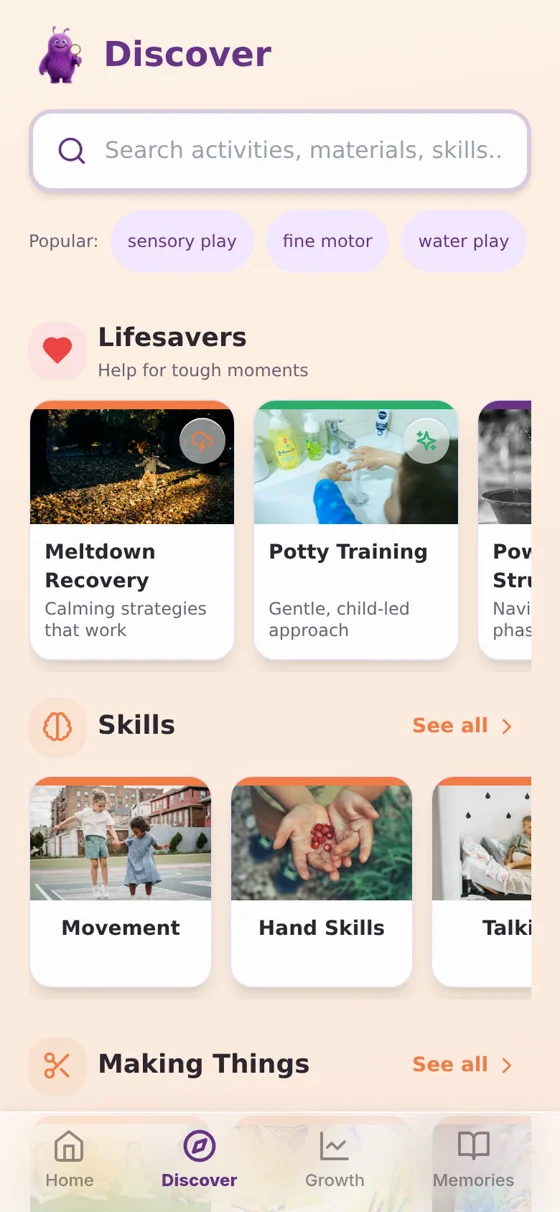
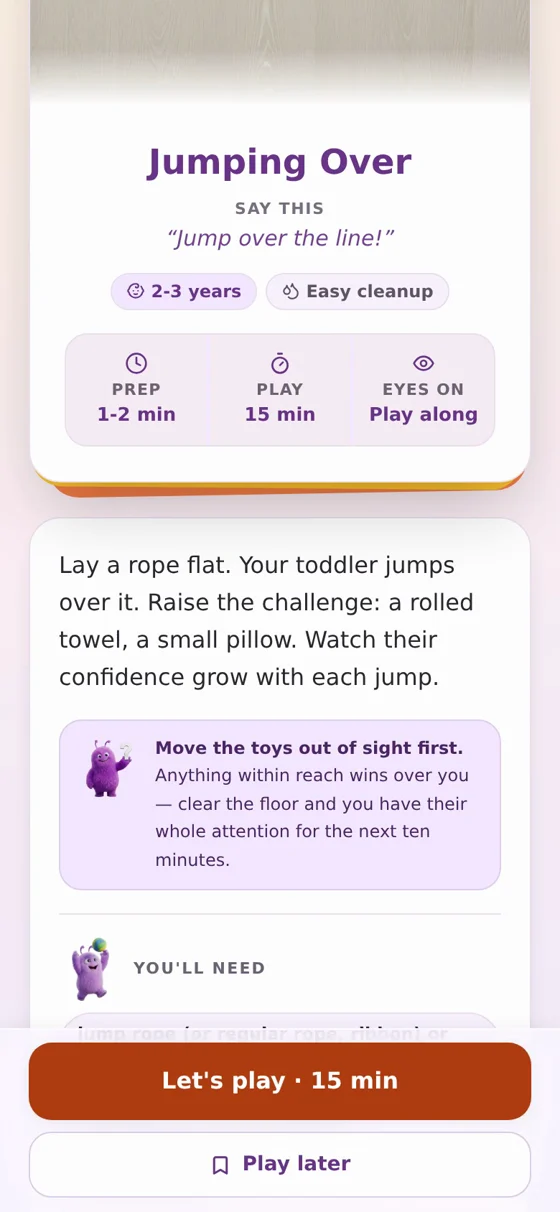
Mooshie Discover screen with Lifesavers for meltdowns and potty trainingMooshie activity screen with Say this words to use
12free ideas on this page
5,918activities for 6 months to 4 years
Say thisthe exact words on every activity
0child details uploaded, ever

Preparing your toddler for a new baby sibling works best when you spend as much energy making them feel like the big sibling as you do preparing for the baby. A new arrival is thrilling for the adults in the house and often deeply unsettling for the toddler, who has just watched their whole world shift without being asked.

Below are twelve activities from the Mooshie Moments app for children aged 1 to 4, arranged across the run-up to the birth, the first few weeks, and the squabbling that often follows once the baby starts moving around. Everything uses things you already have at home, and each one comes with the words to say.

Before the baby arrives

The weeks before a birth are a good time to bank some one-to-one memories and start setting expectations gently, without making the baby the centre of every conversation.

1 to 210 minutes

1. Big Kid Adventure Day

Plan one outing that is entirely theirs to choose: the park, the library, ice cream. Go together, just the two of you, and say plainly, “This is special time, you and me.” Take a photo to look back on together once the baby has arrived.

You’ll need: an outing of your child’s choice

1 to 210 minutes

2. Your Toys Are Safe

Keeping the rest of the toys shared, while ring-fencing a couple as untouchable, gives your toddler a real sense of control over what is coming.

You’ll need: 2 to 3 special toys, a shelf or box

How to play
  1. Say “Some toys are your toys. Baby can’t play with them.”
  2. Let your child choose two or three toys that feel important to keep for themselves.
  3. Store them somewhere visible but out of the baby’s reach, a shelf or a closed box.
  4. Point them out from time to time: “Those are yours, and they stay yours.”

The first few weeks

Newborn days are exhausting, and your toddler will notice the shift in attention even if they cannot name it. Small, regular moments of connection matter more here than anything elaborate.

1 to 210 minutes

3. Soft Hands on Baby

With you guiding every touch, help your toddler practise a gentle hand on the baby’s arm, a soft stroke of their hair, or a careful high-five against a tiny palm. Keep the rule simple and repeated: soft, like petting a puppy.

You’ll need: the baby, your guidance

Say this: “Soft touch, like petting a puppy.” · “Your hands stayed gentle the whole time.”
1 to 210 minutes

4. Whisper Stories While Baby Sleeps

While the baby naps, settle in a quiet spot with your toddler and whisper a story, about their day, a silly dream, anything at all. Five to ten minutes of quiet, just-the-two-of-you time, with no competing demands.

You’ll need: just your voice

2 to 310 minutes

5. Mad at Baby Permission

Say it plainly: “It’s okay to feel mad at the baby sometimes. I get it, I don’t like it when someone takes my things either.” Naming the feeling, without correcting it, often takes the sting out of it faster than reassurance does.

You’ll need: nothing, just time alone with your toddler

2 to 315 minutes

6. Feelings Expression Art

Hand your toddler paper and crayons and say “Draw how you feel about the baby.” Mad, happy, confused, sad, every feeling gets a page. Seeing the feeling taken seriously matters more here than fixing it.

You’ll need: paper, crayons

2 to 310 minutes

7. Special Big Kid Privileges

Offer something small but genuinely new: staying up ten minutes later, a special cup, choosing the film. Nothing dramatic, just a clear signal that “big kid” status is real, not a consolation prize.

You’ll need: whatever small privilege you choose

Hundreds more ideas like these are waiting in the app.

Plus one picked for your child every day, matched to their age and how today is going.

2 to 320 minutes

8. Big Memory Box Creation

Gather a few of your toddler’s own early treasures, a first toy, a photo, a piece of their baby clothing, and put them in a special box together. Say “You were special too. This is your baby box.” Some children linger over it; others just glance and move on, and both reactions are fine.

You’ll need: a box, a few of their own baby items

When the squabbling starts

Once the baby becomes mobile and starts reaching for toys, a new kind of conflict tends to arrive. These activities build the language for sorting it out.

3 to 415 minutes

9. Different Is Fair

Explain plainly that fair does not mean identical: it means everyone gets what they need. Point to a real example, one child needing a booster seat and the other not, and ask “Is that fair?” before confirming that yes, different can absolutely be fair.

You’ll need: nothing

Say this: “Fair doesn’t mean the same.” · “Different is fair. Different is good.”
3 to 415 minutes

10. Alone Time Importance

Explain that needing time away from a sibling does not mean not liking them. Help each child set up their own quiet spot with something calm to do, then check in afterwards: “How do you feel now?”

You’ll need: books, puzzles or toys for a quiet corner

3 to 415 minutes

11. Conflict Cooling Off

You’ll need: nothing

How to play
  1. When a fight starts, say calmly, “Time to take a break, you two need separate spaces for five minutes.”
  2. Move them apart and ask the first child, “Tell me what happened,” listening fully before responding.
  3. Do the same with the second child.
  4. Once both are calm, bring them back together and ask, “What could you do next time?”
3 to 415 minutes

12. Mine vs Ours

Point to different items around the house and ask “Whose is this?”, sorting them together into mine, theirs and ours. Set one simple house rule from it: ask before using someone else’s things. Sorting it out loud, together, tends to stick better than a rule handed down.

You’ll need: a few household or family items to point at

Your special time habit

Underneath every activity above sits the same idea: regular, undivided one-to-one time with your older child, even ten minutes, protects the bond that everything else depends on. Try to make it a fixed habit rather than an occasional treat, so your toddler can count on it even on the hardest, most baby-focused days.

LOVED BY FAMILIES

Parents and experts on Mooshie

“I used to spend 30 minutes looking for an activity on Pinterest, get overwhelmed, and just turn on the TV. Mooshie takes 5 seconds.”
Sarah J.Mum of a 2-year-old
“Finally, an app that tells me to put my phone away. The activities are actually doable with stuff I have in my junk drawer.”
Mark D.Dad of two
“As a pediatric OT, I love that these activities build core developmental skills without feeling like ‘homework’ for parents.”
Dr Emily R.Paediatric occupational therapist
Mooshie Discover screen with Lifesavers for meltdowns and potty training
HOW MOOSHIE HELPS

How Mooshie helps during a big family change

Mooshie Moments picks one activity a day for your child’s age and stage from a library of 5,918 ideas for ages 6 months to 4 years, using things already at home.

  • The weekly plan covers feelings as one of its six areas, alongside maths, science, language, movement and hands, so emotional check-ins get built into the week without extra effort from you.
  • You can say how the day is going, “I’m shattered” or “hands free”, and the app picks something realistic for a household running on newborn sleep.
  • Every activity has “Say this” phrases, useful on the days you cannot think of the right words yourself.
  • Free on iPhone, a fresh idea every day, Android on its way.

Questions parents ask

When should I start talking to my toddler about the new baby?

Many families find a few weeks to a month before the birth is enough for a toddler to take it in without too much anxious anticipation. Very young toddlers have little sense of “nine months”, so timing it closer to the birth usually works better than starting too early.

Is it normal for my toddler to act like a baby again after the birth?

Yes, temporary regressions such as wanting a bottle again, more tantrums, or clinginess are common in the weeks after a new sibling arrives. It usually settles as your toddler adjusts and gets reassurance that their place in the family has not changed.

How do I stop my toddler resenting the baby?

You likely cannot stop some resentment appearing, and that is fine. Naming the feeling out loud, protecting one-to-one time, and avoiding comparisons between the two children all help it soften over time.

What if my toddler is rough with the baby?

Stay close during any interaction at first and guide their hands directly, as in the soft hands activity above. Rough handling at this age is usually about not yet knowing their own strength, not malice.

Should I get my toddler a “gift from the baby”?

Some families do this and find it helps soften the first meeting, but it is entirely optional. What tends to matter more long term is consistent one-to-one time, not a single gesture.

Mooshie is a play app, not medical advice. If you’re worried about your child’s development, speak to your health visitor or GP.

Make memories. Build skills. Play together.

Your first moment is ready as soon as you tell us their age.

Mooshie MomentsFree on iPhone
Get it free