No Toy Activities: Keep UK Toddlers Busy for 2 to 15 Minutes
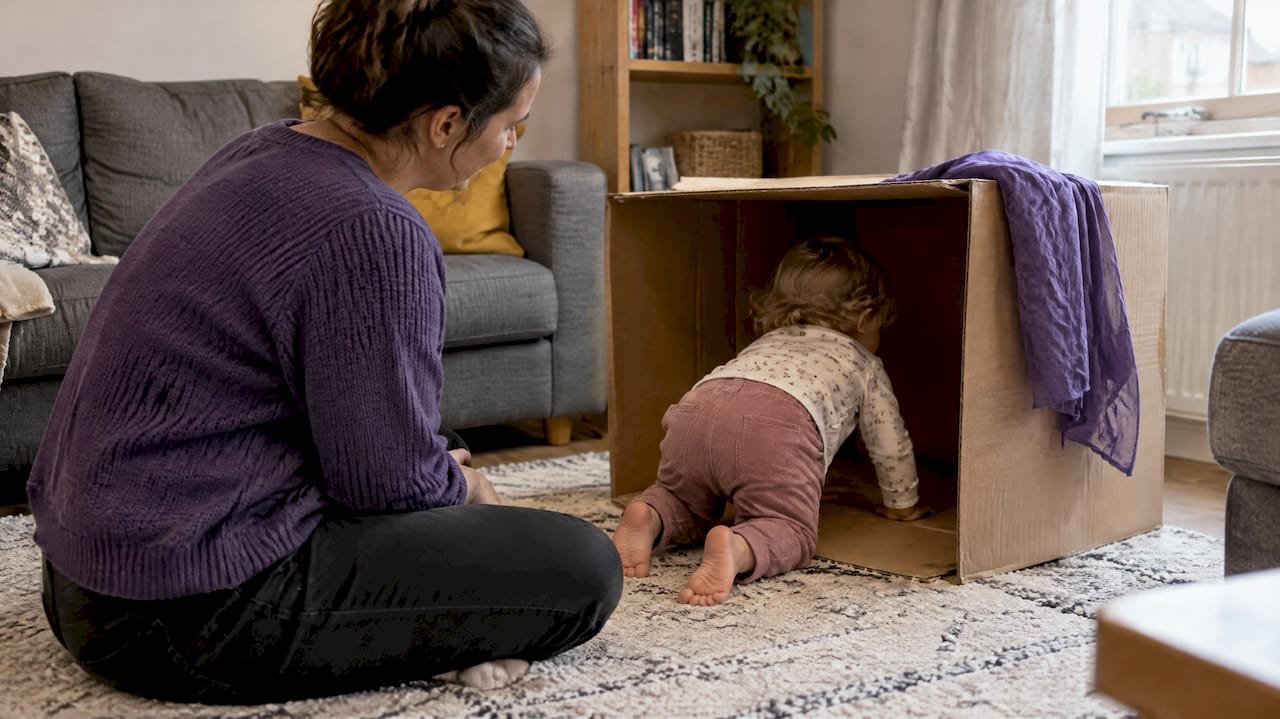
Yes, toddlers can play richly without store-bought toys. Sensory play, movement games, pretend play with household items, everyday routines, outdoor exploring and supervised water play all work. The NHS says play need not be difficult or expensive, and UNICEF stresses that you do not need special equipment.
TL;DR:
- Join your toddler in household play, narrating actions and responding to babbles, gestures, or looks to build language through back and forth interaction.
- Keep coins, buttons, button batteries, and anything small enough to fit through a toilet roll tube out of reach, and never offer water beads.
- During water play, keep your toddler within arm’s reach with constant, undivided supervision; even 5 centimetres (2 inches) of water can present a drowning risk.
- The three minute settling, focus, and transition pattern is only a flexible guide; follow your toddler’s mood instead of forcing an activity.
- Keep one or two themed baskets available, rotate them about weekly or when interest fades, and combine familiar objects to create fresh play without buying supplies.
Table of Contents
- 1. Indoor ideas that need nothing you do not already own
- 2. Outdoor play with sticks, leaves and puddles
- 3. Turning everyday routines into play
- 4. Quick 2 to 15 minute activities for busy moments
- 5. Water play: how to keep it safe
- 6. Why play without toys matters for development
- 7. A simple system to keep no-toy play fresh
- 8. What a busy household really needs
- 9. Find activities that fit your toddler and your time
- FAQ
- Sources
1. Indoor ideas that need nothing you do not already own
Your kitchen cupboards and laundry basket hold more play than a toy shop. The trick is picking one idea, setting it up quickly, and then sitting down with your toddler. The NHS notes that children learn more from adults joining in than from toys alone, so your attention is the main ingredient.
Sensory play with ordinary materials
Fill a baking tray or large bowl with something your toddler can safely touch and mouth. Dry oats, cooked and cooled pasta, scrunched tissue paper and scarves in different textures all work well. Add a wooden spoon, a ladle and a few cups, and let them scoop, pour and poke.
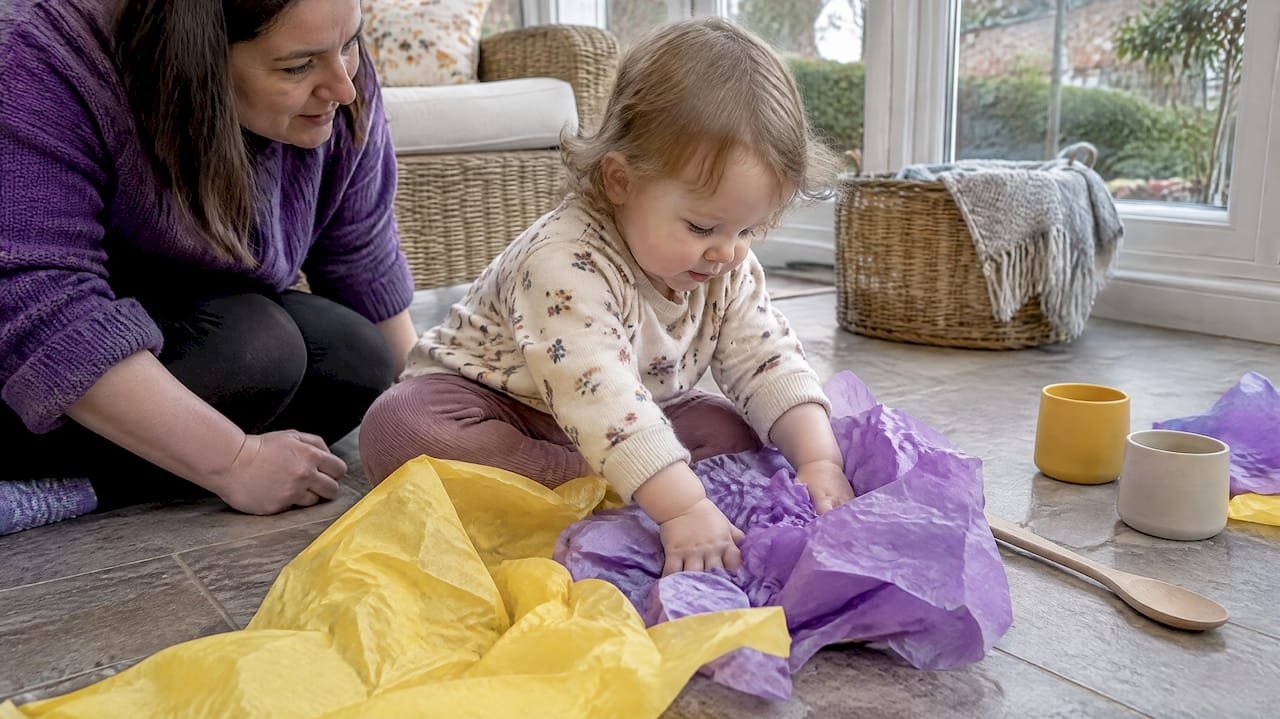
Mouthing is normal at this age, so check everything first. Anything small enough to fit through a toilet roll tube is a choking risk, and button batteries, coins and loose buttons must stay well out of reach, as UK child safety guidance points out. If your toddler still tastes everything, our list of taste safe sensory play ideas helps you pick mixes that are fine to lick.
Movement games for big energy
Toddlers need to move, and a living room is plenty of space. Here are setups we like:
- Cushion obstacle course: Line up sofa cushions to climb over and crawl under. Keep the drops low and put a soft rug underneath.
- Tape roads: Stick masking tape in curvy lines across the floor. Your toddler can walk, hop or crawl along the road, or push a shoe “car” down it.
- Pillow mountain: Pile pillows in a corner for climbing and tumbling. For younger toddlers, make it a gentle hill. For older ones, add a “jump into the soft landing” rule.
- Animal walks: Waddle like a duck, stomp like an elephant, creep like a cat. Name the animal and let your toddler pick the next one.
For more ways to build movement into a short window, see our low-prep music and movement ideas.
Pretend play with household items
A saucepan becomes a drum, a hat or a boat. Scarves become capes, blankets or a baby’s bed. A big cardboard box turns into a house, a bus or a cave. You do not need to plan the story. Follow your toddler’s lead: if they feed a teddy with a spoon, say “Teddy is hungry! What does he want?” and wait.
Pretend play also builds language and imagination. This article on pretend play development goes deeper into why it matters if you want the theory behind it.
Fine-motor tasks with kitchen gear
Small hand skills grow through everyday tasks:
- Pouring dry rice or water from one measuring cup to another (outdoors or on a towel).
- Picking up large pom-poms or scrunched paper balls with kitchen tongs.
- Threading large tube pasta onto a shoelace for older toddlers, with an adult close by.
- Posting lolly sticks or straws through a hole cut in a cardboard box lid.
- Peeling stickers off a sheet and sticking them on paper.
These tasks work the same muscles used later for holding a pencil. For more, try our hand-eye coordination activities, which fit into a short slot.
Pro Tip: Put the activity on a tray or a towel. It defines the play space, makes cleanup quick, and tells your toddler “this is where we play.”
2. Outdoor play with sticks, leaves and puddles
Outside, nature supplies the toys. A garden, park or even a pavement verge has plenty to explore. The aim is to let your toddler touch, collect, carry and compare, while you narrate what they find.
- Nature hunt: Give your toddler a bag and ask for “something rough”, “something green” or “something crunchy.” For younger toddlers, one item at a time is plenty.
- Loose parts play: Collect sticks, leaves, pebbles and pine cones, then arrange them into lines, piles or patterns. Wash hands afterward, and keep a close eye on anything that could go in a mouth.
- Puddle and mud play: Waterproof trousers, wellies and a towel in the boot of the car make this stress-free. Stomping, splashing and stirring mud with a stick is rich sensory and movement practice.
- Sound hunt: Stand still briefly and listen. Birds? A car? Wind in the leaves? Point and name each sound.
- Colour walk: Pick a colour before you leave and spot it on the way to the shops or park.
- Leaf feel comparison: Hold two leaves and ask “Which is smooth? Which is bumpy?”
Short trips like these double as learning time without any prep.
3. Turning everyday routines into play
You do not need to carve out extra time. Chores already happen, and toddlers love to be involved. UNICEF’s parenting guidance notes that feeding, bathing and dressing can all be playful learning moments, and that small, repeated turn-taking interactions build communication and confidence.
- Sock matching: Tip clean socks into a pile and ask your toddler to find the pairs. Older toddlers can sort by color.
- Stirring batter: Sit your toddler safely at the table with a bowl and spoon. Let them stir, and talk about “round and round” and “mix, mix, mix.”
- Pouring practice: At the sink, with you right beside them, let them pour water between plastic containers.
- Shopping basket helper: Ask them to find “the yellow banana” or put an apple in the basket.
- Tidy-up song: Sing the same short song each time you put things away, so the routine becomes a signal.
Language is the secret ingredient. When your toddler says “ba,” you say “Yes, a ball! A big red ball!” Then pause and wait for a response. That back-and-forth is what researchers call serve and return, and it fits into brief moments like these.
Pro Tip: Narrate what you are doing in short, simple sentences: “Washing the cup. Splash. Cup is clean.” Toddlers soak up the words even when they cannot reply yet.
4. Quick 2 to 15 minute activities for busy moments
Some days you have two minutes. Some days you have fifteen. Here is a list sorted by how long you have, so you can choose fast.
If you have 2 to 5 minutes:
- Peekaboo with a muslin, a cushion or your hands, and vary where you pop up.
- Hide a small object under one of three plastic cups, shuffle them slowly, and let your toddler find it.
- Sing an action song like “Wheels on the Bus” or “Row, Row, Row Your Boat” and add silly new verses.
If you have 5 to 10 minutes:
- Muffin tin sorting: put large safe items such as bath sponges, pasta shapes (older toddlers only) or wooden spoons in different cups.
- Push a shoe along a tape road and make engine noises.
- Draw on a window or mirror with washable markers, and let your toddler wipe it clean with a cloth.
If you have more time:
- Build with cardboard boxes: stack, tunnel, climb in, or decorate with stickers.
- Put on a sock puppet show: two socks, two voices, one silly story.
- Act out a favorite picture book using a spoon, a blanket and a cushion as props.
Read your toddler’s mood first. A tired, cranky toddler may want a lap and a song, not an obstacle course. A wriggly, energetic one wants movement. Matching the activity to the child, and to your own energy, makes it more likely to land. Our page of low-prep toddler activities by skill area is sorted by time and skill if you want more.
5. Water play: how to keep it safe
Water is one of the best free toys there is. A washing-up bowl, a few plastic bottles, a funnel and a sponge can provide plenty of play. The NHS suggests household items like bottles, funnels and sponges for exactly this kind of play.
- Sink or bowl pouring: Give them cups and jugs, and let them fill and empty over and over.
- Sponge transfer: Soak a sponge in one bowl and squeeze it into another.
- Bottle and funnel play: Use clean plastic bottles with the lids off so there are no small parts.
- Wash the toys: Give your toddler a bowl of soapy water and some plastic cups to wash.
For more setups, see our water play ideas for babies and toddlers. If you want to take water play beyond the home, this guide to swimming with toddlers offers safety and confidence tips.
Supervision rules that are not optional
UK health guidance states that toddlers can drown in as little as 5 centimetres (2 inches) of water, so adult supervision must be constant, direct and undivided. That means no phone, no stepping out for a towel, and no relying on bath seats, which RoSPA discourages because they create a false sense of security.
One more important point: skip water beads entirely. The Office for Product Safety and Standards strongly discourages water beads for young children because they can cause severe gastrointestinal blockage or asphyxiation. Their consumer poster adds that water beads expand up to 400 times when hydrated, can need surgical removal if swallowed, and will not show up on X-ray.
A quick safety check before every water session:
- Use shallow water only, and empty it when play ends.
- Stay within arm’s reach the whole time.
- Keep the room warm and have a dry towel and clothes ready.
- Remove any small items that could be swallowed.
6. Why play without toys matters for development
It is easy to feel guilty about not having the “right” toys. The research points the other way. According to UNICEF, the most impactful interaction for early brain development is serve and return: a back-and-forth between you and your child.
Parents do not need expensive equipment to support play-based learning. A responsive adult is the best resource a toddler has.
That is our plain-language summary of UNICEF’s message, and it explains why a spoon and a saucepan can beat a flashing gadget. When your toddler “serves” with a babble, a gesture or a look, and you “return” with words, a smile or a copy of what they did, you are building the connections they need for language and thinking.
UNICEF data shows that many children worldwide lack enough responsive interactions or playthings, and that caregiver engagement through reading, singing and naming is a key marker of early learning opportunity. In other words, what you do matters far more than what you buy.
Open-ended play, where there is no right way to use an object, also exercises imagination, decision-making and focus. A cardboard box has no instructions, so your toddler gets to make the rules.
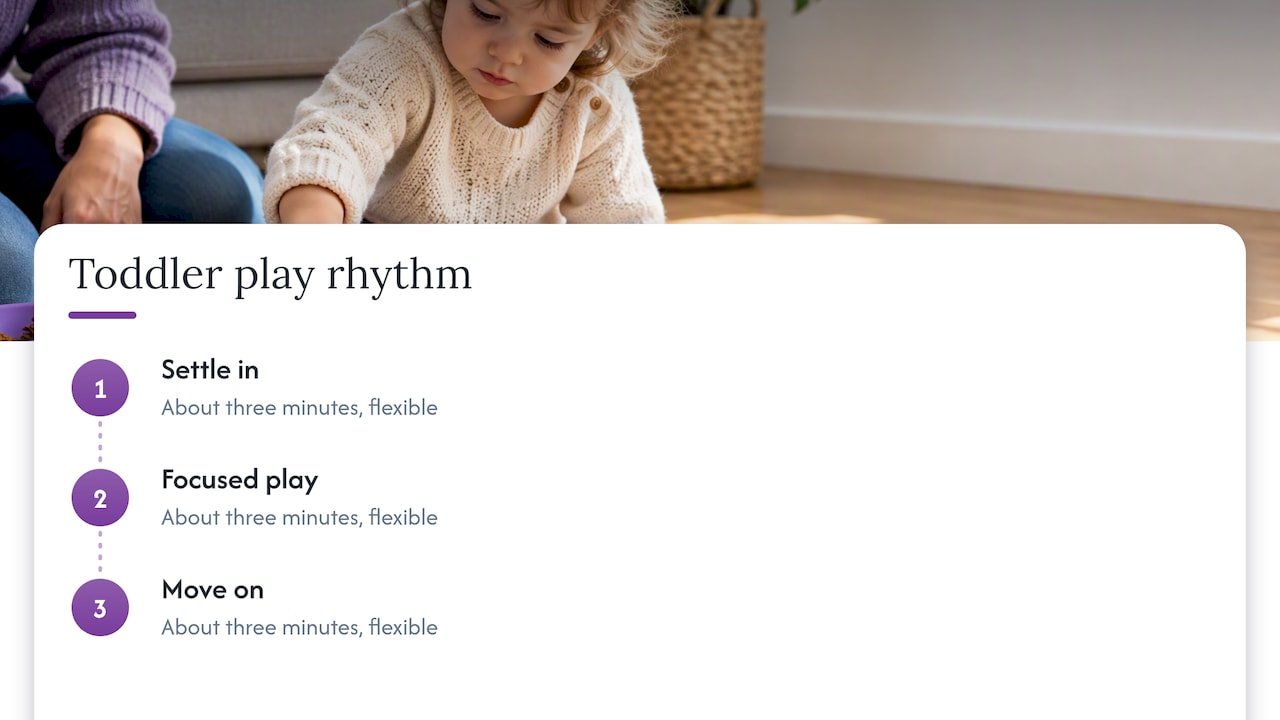
Toddlers also have short attention spans, which is normal. One practitioner guideline is the 3-3-3 rule: about three minutes to settle in, three minutes of focused play, and three minutes to move on. It is a flexible pattern, not a target, and it helps you stop forcing activities that have run their course.
7. A simple system to keep no-toy play fresh
The worry we hear most is “they get bored in five minutes.” Rotation fixes this without buying anything.
- Make a few small baskets. Fill each with a theme: kitchen bits, scarves and fabric, cardboard tubes, wooden spoons and containers, a few board books.
- Store most baskets out of sight. Keep one or two out. Swap one basket when interest drops, roughly once a week, or whenever you notice boredom.
- Change the setting. The same basket on the garden mat feels brand new compared with the living room floor.
- Combine two familiar things. Scarves plus a laundry basket becomes a “ghost in the cave” game.
- Add a new rule or word. “Today we are going to be very slow,” or “Let’s find everything that is soft.”
Pro Tip: Keep a “rescue” basket on a high shelf with your best five items. Pull it out on rainy afternoons or when you need a little time to make a phone call.
8. What a busy household really needs
Here is our honest take. The best toddler activities are not the most impressive ones. They are the ones you can actually do on a Tuesday afternoon when you are tired, the washing machine is beeping and someone needs a snack. A few minutes of real attention, a funny voice and a saucepan beat an elaborate setup you never get around to.
The NHS and UNICEF messages we shared earlier back this up: small, repeated moments of back-and-forth are what count. If you only take one thing from this article, let it be that your presence is enough, and ordinary things are plenty.
— samit
9. Find activities that fit your toddler and your time
Knowing what to do is half the battle. The other half is having an idea ready when you are tired and short on time. That is why we built Mooshie Moments, an app that suggests quick, expert-reviewed activities using things already in your home, matched to your child’s age, the minutes you have free, and your energy level.
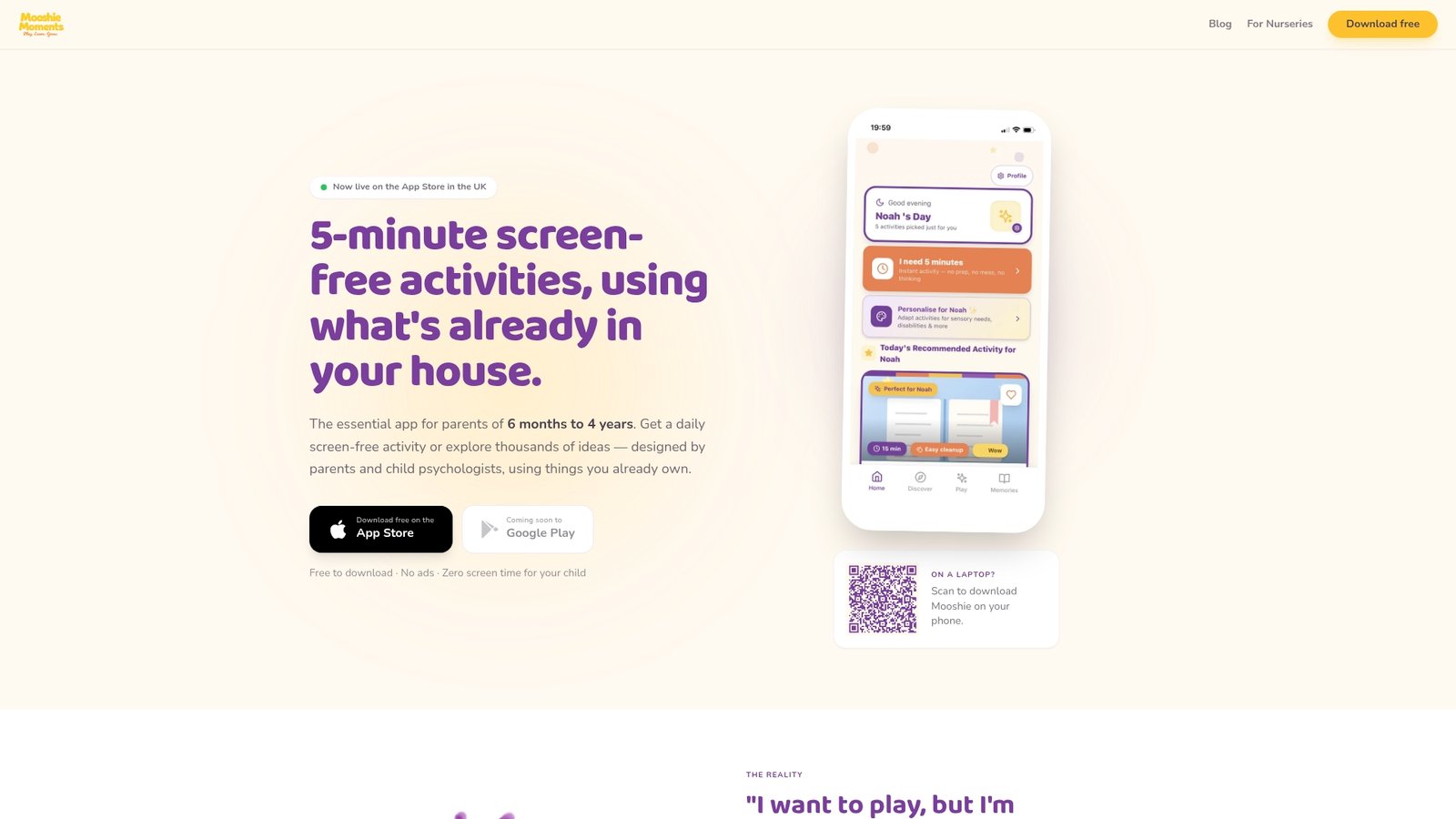
You tell us how old your toddler is and how long you have, and you get an idea straight away, with a plain-language note on why it helps their development. There are no supplies to buy and no screen time for your child. Start at Mooshie Moments and browse our low-prep activities by skill area to try your first idea today.
FAQ
What is the 3-3-3 rule for toddlers?
It is a flexible guideline that suggests a brief settling-in period, a short spell of focused play and time to transition. See the 3-3-3 guideline. It is not an official standard, but it helps you respect a toddler’s short attention span and avoid forcing longer activities. Adjust it to your child’s mood.
What can you give a toddler that is not a toy?
Everyday safe household items work well: wooden spoons, plastic cups, scarves, cardboard boxes, sponges and empty plastic bottles. The NHS suggests bottles, funnels, sponges and boxes, and recommends you join in. Always check items for choking hazards first.
How do I keep no-toy play safe?
Remove anything small enough to be swallowed, including coins, buttons and button batteries, and stay within reach during water play. Avoid water beads entirely, as the OPSS warns they can cause serious harm to young children.
What can I do when my toddler gets bored quickly?
Rotate a few small baskets of household items, change the setting, or combine two familiar objects in a new way. Keep activities short and follow your toddler’s interest rather than a plan. Losing interest quickly does not mean the activity failed.
Sources
- Gov
- Building babies’ brains through play: Mini Parenting Master Class
- Baby and toddler play ideas – NHS
- Water Beads Poster
Recommended
- Quick Toddler Activities for UK Parents
- UK Parents: Low Prep Toddler Activities by Skill Area in 2–15 Minutes
- Ten Minutes: Screen Free Outdoor Activities for UK Toddlers
- 5 Minute Calming Activities for UK Toddlers, Screen Free & Low Prep
Want a new idea every day, matched to your child's age?
Mooshie Moments gives you simple, guided play ideas for ages 6 months to 4 years.
Download free on the App StoreMore like this
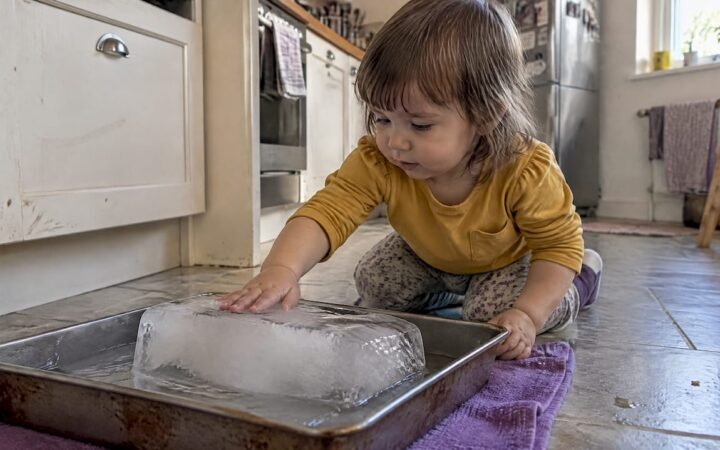
Ice Play Activities for Toddlers: 12 Easy, Safe Ideas
Simple ice play activities for toddlers using things you already have at home, with safety tips for choking and cold, plus ideas…
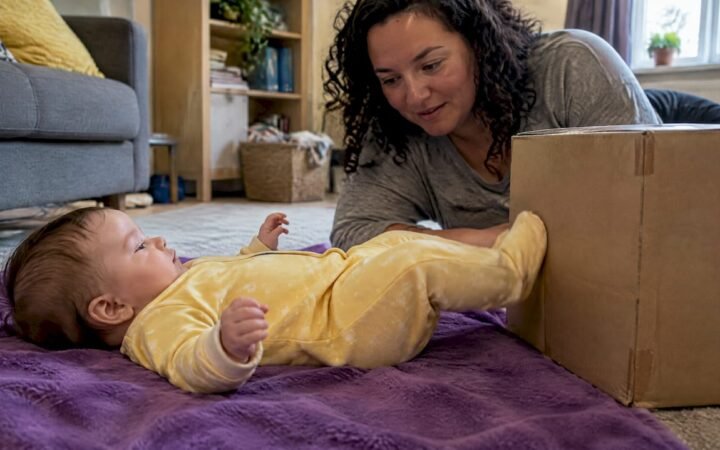
Cardboard Box Toddler Activities: 12 Ideas by Age
Twelve cardboard box activities for babies and toddlers, sorted by age, with safe prep tips and ideas for tubes too. No shopping,…
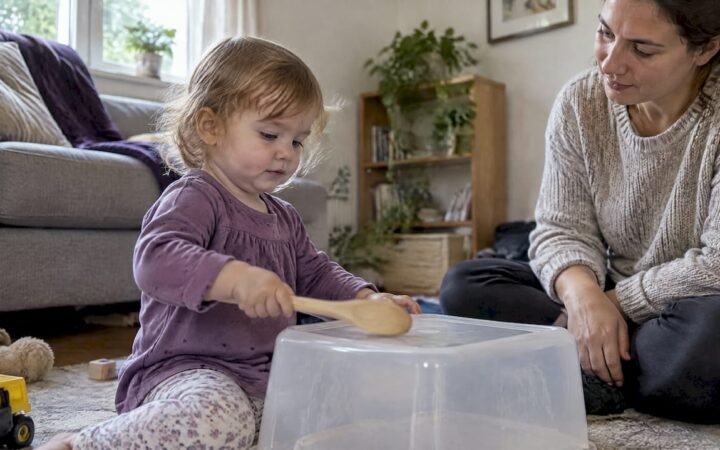
Best Boredom Busters for Toddlers: Easy, Screen-Free Ideas
Screen-free boredom busters for toddlers using things you already own: quick ideas by time and energy, set-up tips and honest advice for…