Toddler Bonding Activities Busy Parents Can Do in 2–15 Minutes

Short, follow-your-child play sessions build strong bonds with toddlers, and you don’t need special toys to start. The UK health visitor review found that 81.4% of children reached the expected level of development across five key domains at their 2 to 2.5 year check. We like Mooshie Moments for quick, age-matched ideas when you’re short on time or ideas.
TL;DR:
- Set aside five screen free minutes, follow your toddler’s chosen activity, and focus on observing, waiting, narrating, copying, and slightly expanding their words.
- Around age 2, parallel play is typical; cooperative imaginative play often develops between ages 3 and 4, so match activities to your child’s stage.
- Stay within arm’s reach during play, limit choices to two or three items, and stop or switch activities if your toddler seems unsettled.
- At age 2, unfamiliar adults typically understand about half a toddler’s speech; treat this as a monitoring marker, and discuss concerns with a health professional.
Table of Contents
- Easy bonding activities you can try with items at home
- Why following your child’s lead builds stronger bonds
- How to fit short bonding moments into a packed day
- Low-prep tips and quick safety reminders
- Matching activities to your toddler’s temperament and stage
- Bringing siblings and family into the fun
- Keeping your own energy up during playtime
- A quick word on why small moments add up
- How Mooshie Moments helps busy parents play more, plan less
- FAQ
- Sources
Easy bonding activities you can try with items at home
You don’t need a craft cupboard or a trip to the toy store. Most of these activities use things already sitting in your kitchen or living room, and each one builds a specific skill while you’re having fun together.
Sensory play gets toddlers exploring with their hands, which supports early language as they describe what they feel. Fill a bowl with water and a few cups for pouring, or set up a tactile bin using dried pasta, rice, or cotton balls. If mess worries you, do it in the bathtub or over a towel outside, and let your toddler scoop, pour, and squish while you name what’s happening: “splashy water,” “soft cotton.”
Pretend play builds imagination and early social skills like taking turns; understand more about the importance of this through the role of pretend play development in toddlers. A blanket draped over two chairs becomes a fort in seconds, and a few mismatched cups turn into a tea party. Simple role play, like pretending to be animals or acting out a trip to the shops, gives toddlers a safe way to practice social scripts they’ll use later.
Read-aloud and storytelling work best with repetition. Toddlers often want the same book again and again, and that’s actually helping them learn new words and predict what comes next. Try acting out parts of the story with your voice or body, and pause to let your child fill in a word they know. Our guide on narrating play for language growth covers simple phrases that expand a toddler’s vocabulary during these moments, and our storytelling ideas for busy parents offer more ways to stretch five minutes of reading into a richer language session.
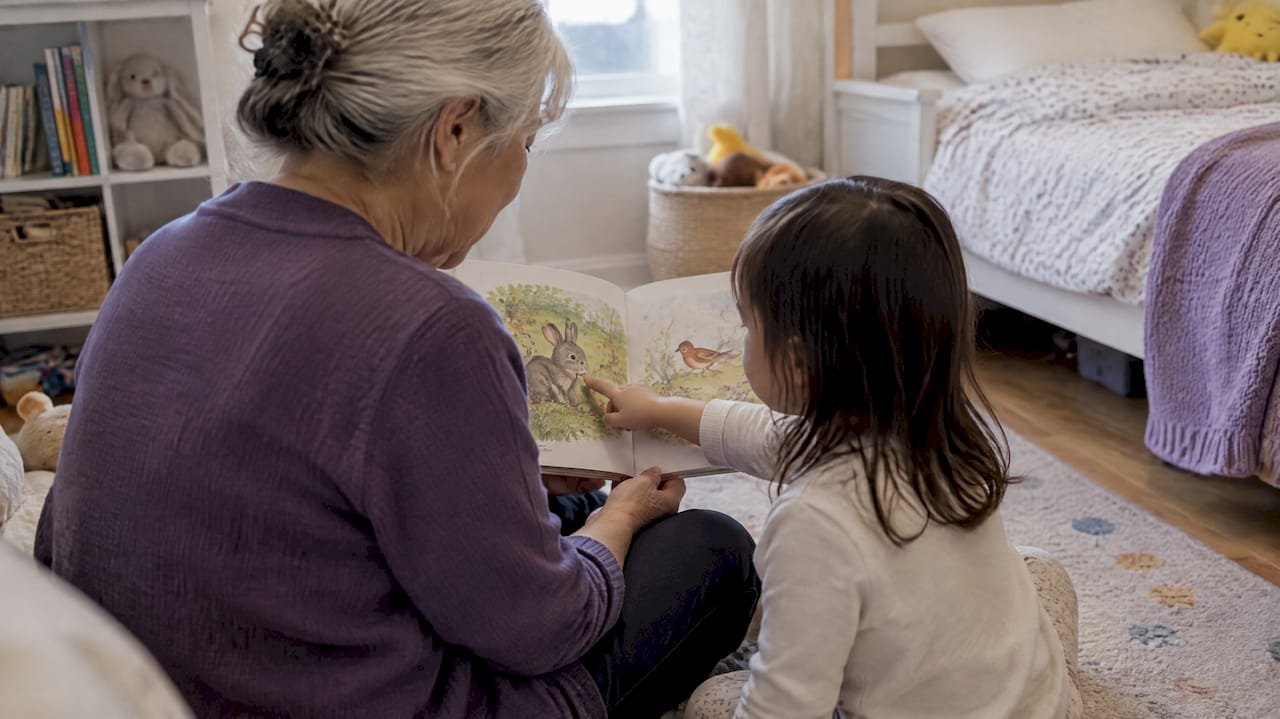
Physical and outdoor play builds gross motor skills while burning off energy. Set up a simple obstacle course with couch cushions, run a backyard scavenger hunt for leaves or pinecones, or roll a ball back and forth. NHS guidance on play and bonding with toddlers points to outdoor and active play as one of the clearest ways to support both movement and emotional connection.
Everyday chores as play turn routine tasks into shared moments. Let your toddler stir batter, wash plastic dishes, or help sort laundry by color. A tidy-up race, where you both race to put toys away before a song ends, teaches cooperation without feeling like a lecture.
Short, low-energy games work on the days when you have nothing left to give. A song with hand actions, a quick tickle chase across the living room, or a short spell of undivided “special time” on the floor can be enough.
- Water play or a tactile bin for sensory exploration and new words.
- Blanket forts or simple tea parties for imagination and turn-taking.
- Repeated storybooks with acting out and pauses for language growth.
- Obstacle courses or scavenger hunts for movement and confidence.
- Cooking together or tidy-up races for cooperation and routine.
- A song or tickle chase for connection on tired days.
Pro Tip: Keep a small basket of “go-to” items, like a scarf, a few cups, and a soft ball, so you can start any of these activities quickly.
Why following your child’s lead builds stronger bonds
Letting your toddler choose the game and set the pace does more than keep the peace. NHS speech and language guidance recommends following your child’s lead: observe, wait, listen, copy, and expand. This approach supports joint attention, the shared focus between you and your child that underpins early language and turn-taking.
In practice, this means:
- Observe what your toddler is already doing before jumping in.
- Wait a beat to see if they’ll continue or invite you in.
- Narrate their actions in simple words instead of directing them.
- Copy their sounds or movements to show you’re paying attention.
- Expand their words slightly, turning “ball” into “big ball.”
Guidance on following your child’s lead notes that this style of play increases confidence and keeps interactions at a pace the child can manage.
The 2024-2025 statistical commentary tracks how UK toddlers are developing, not a target for your own child: the 81.4% figure is service-coverage context, useful background, not a benchmark to chase. If you’re ever concerned about your toddler’s speech clarity, it’s worth checking in with a health visitor or speech and language therapist.
How to fit short bonding moments into a packed day
You don’t need a lengthy stretch of time. A 5-minute “special time,” with no screens and no agenda beyond following your toddler’s lead, can fit into a busy schedule, whether it’s right after nursery pickup or before bath time.
- Low energy: a song with hand actions or a tickle chase.
- Medium energy: blanket fort, tea party, or a shared book.
- Higher energy: water play, an obstacle course, or a scavenger hunt.
On harder days, a grandparent, older sibling, or partner can take over “special time” so the habit continues even when your energy doesn’t.
Pro Tip: Set a timer for your special time slot so you can be fully present without watching the clock.
Low-prep tips and quick safety reminders
Limit toys to 2 or 3 options at a time. Too many choices overwhelm toddlers and dilute the focus that builds real connection.
- Play in a tub, over a towel, or outside to cut cleanup time.
- Turn tidy-up into a quick game instead of a chore.
- Stay within arm’s reach during sensory or physical play.
- Choose activities and materials cautiously, and seek reliable safety guidance about choking hazards.
- Pause and comfort your child if they seem upset or overstimulated, rather than pushing through.
Matching activities to your toddler’s temperament and stage
Every toddler plays differently, and adjusting your approach gets you further than sticking to a script. A cautious toddler might need you to start an activity first and invite them in slowly, while a bold, high-energy toddler often does better with physical games like obstacle courses or chase that let them move right away.
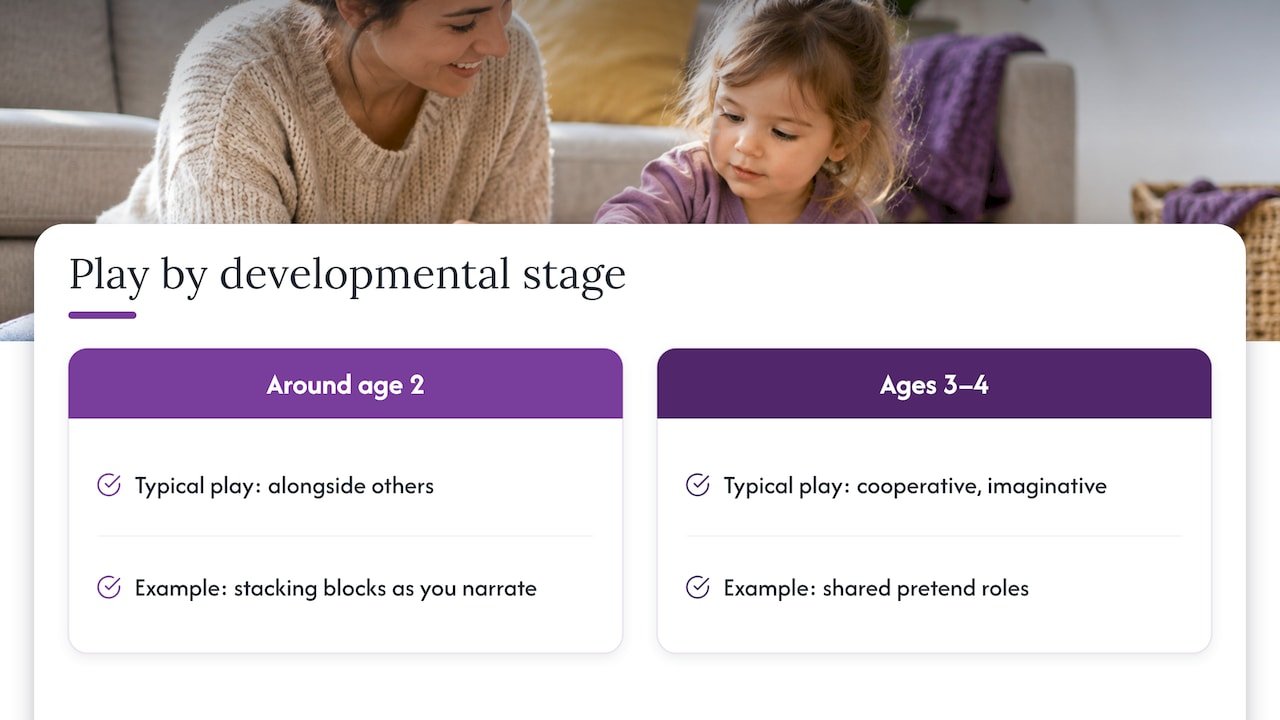
Developmental stage matters too. Early communication monitoring guidance on social and pretend play notes that parallel play, where toddlers play alongside rather than with others, is typical around age 2, while more cooperative, imaginative play tends to develop between ages 3 and 4. A 2-year-old might enjoy sitting near you stacking blocks while you narrate, whereas a 3-year-old is often ready for a shared pretend scenario with defined roles.
Sensitive toddlers may need quieter sensory play with soft textures and slower pacing, while sensory-seeking toddlers often thrive with messier, more physical options like water play or a scavenger hunt. Watching how your toddler reacts to a new activity can help you decide what to do next: continue if they’re engaged, and switch to something calmer if they seem unsettled. There’s no single right way to play, only the way that fits the child in front of you today.
Bringing siblings and family into the fun
Bonding activities don’t have to be one-on-one to count. Older siblings can take on a helper role, reading a page of a story, holding one end of a blanket fort, or leading a scavenger hunt while you narrate alongside the toddler. This also gives older children a sense of responsibility and strengthens their own relationship with their younger sibling.
Grandparents, aunts, uncles, and other caregivers can pick up the same 5-minute special time format, which keeps the habit going even when parents need a break. Rotating who leads playtime also exposes toddlers to different voices, play styles, and vocabulary, all of which support language and social growth.
When including multiple children, keep activities flexible enough for different ages: a scavenger hunt can have simple categories for a toddler and trickier ones for an older sibling, and a tidy-up race can be timed so everyone has a fair chance to win. The goal isn’t perfectly equal participation, just shared time where everyone feels included.
Keeping your own energy up during playtime
Bonding activities work best when you’re actually present, not just physically in the room. Choosing low-energy options on tired days, like a quiet book or a seated sensory bin, protects your own reserves while still giving your toddler focused attention.
It also helps to let go of the idea that play has to be constant or elaborate. A short burst of genuine engagement, where you’re actually watching and responding rather than half-present, does more for connection than a long stretch of distracted play. Sitting on the floor at your child’s level signals that this time is theirs.
If you’re depleted, swap in an activity that requires less from you, like narrating while your toddler plays independently nearby, rather than skipping bonding time altogether. Sharing the load with another caregiver, for a short spell, also helps keep your own energy steady over the week.
A quick word on why small moments add up
We think the pressure to plan elaborate activities does more harm than good. A quick tickle chase on a hard day can be just as meaningful as a planned craft session, and consistency matters more than perfection. Inside the Mooshie Moments app, activities are designed for short windows with the research-based “why” explained simply, which takes the guesswork out of busy afternoons. Pick one idea from this list and try it today.
— samit
How Mooshie Moments helps busy parents play more, plan less
We built Mooshie Moments around the reality that most parents don’t have an hour to spare, but they do have five minutes between dinner and bath time. Inside the app, you filter activities by your toddler’s age, the time you have, and your current energy level, and get a suggestion that uses things already in your home. Every activity comes with a plain-language explanation of the developmental skill it supports, so you’re not guessing whether it’s worthwhile.
- Age and time filters match activities to your toddler and your schedule.
- Suggestions use household items only, with no extra purchases needed.
- Each idea includes the research-based reason it works, explained simply.
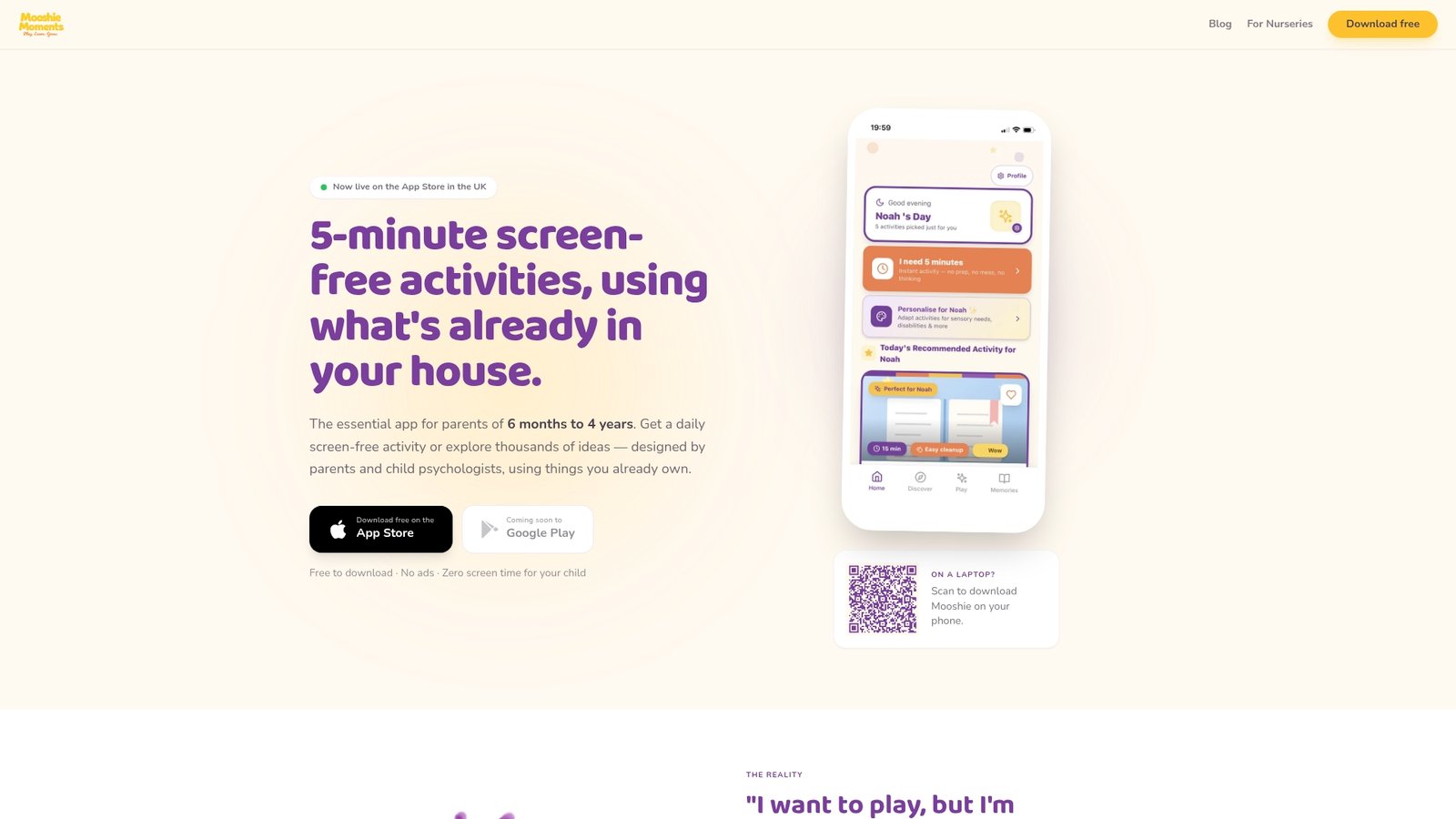
If you want a steady stream of quick, screen-free ideas without the planning, visit the Mooshie app or browse low-prep toddler activities by skill area to find your next five-minute session.
FAQ
What is the 3-3-3 rule for toddlers?
The “3-3-3 rule” isn’t a standard term in UK health or child development guidance, and definitions of it vary across parenting sources. Rather than follow an unverified rule, focus on the NHS-backed approach of following your child’s lead: observe, wait, narrate, copy, and expand during short play sessions.
What are some examples of bonding activities?
Simple examples include water play, blanket forts, reading the same storybook repeatedly, obstacle courses, and cooking together. NHS guidance on toddler play points to everyday moments like bath time and shared reading as effective ways to build connection.
What are red flags for a 2 year old?
If a 2-year-old’s speech is mostly unintelligible to unfamiliar adults or consists mainly of vowel sounds rather than words, it’s worth discussing with a health visitor or speech and language therapist. Monitoring guidance suggests that around 50% of a 2-year-old’s speech is typically understood by unfamiliar adults, rising to about 75% by age 3, though these are markers for monitoring, not strict diagnostic cutoffs.
How to improve bond with a toddler?
Short, frequent sessions of focused, child-led play tend to build stronger bonds than occasional long activities. Following your toddler’s lead, narrating their play, and getting down to their level for even a few minutes a day supports both connection and early language skills, and tools like Mooshie Moments can offer quick, age-matched ideas when you’re low on time or energy.
Sources
- Gov
- Hct
- Following your child’s lead
- Playtime and bonding with your toddler – Best Start in Life – NHS
Recommended
- Quick Toddler Activities for UK Parents
- Low Prep Music and Movement for Busy Parents That Works in 5 Minutes
- Busy Parents: 8 Easy, Research Based Storytelling Ideas for Toddlers
- 5 Minute Calming Activities for UK Toddlers, Screen Free & Low Prep
Want a new idea every day, matched to your child's age?
Mooshie Moments gives you simple, guided play ideas for ages 6 months to 4 years.
Download free on the App StoreMore like this

Ice Play Activities for Toddlers: 12 Easy, Safe Ideas
Simple ice play activities for toddlers using things you already have at home, with safety tips for choking and cold, plus ideas…
Cardboard Box Toddler Activities: 12 Ideas by Age
Twelve cardboard box activities for babies and toddlers, sorted by age, with safe prep tips and ideas for tubes too. No shopping,…
Best Boredom Busters for Toddlers: Easy, Screen-Free Ideas
Screen-free boredom busters for toddlers using things you already own: quick ideas by time and energy, set-up tips and honest advice for…