Camping With Toddlers: Activities That Work at the Campsite
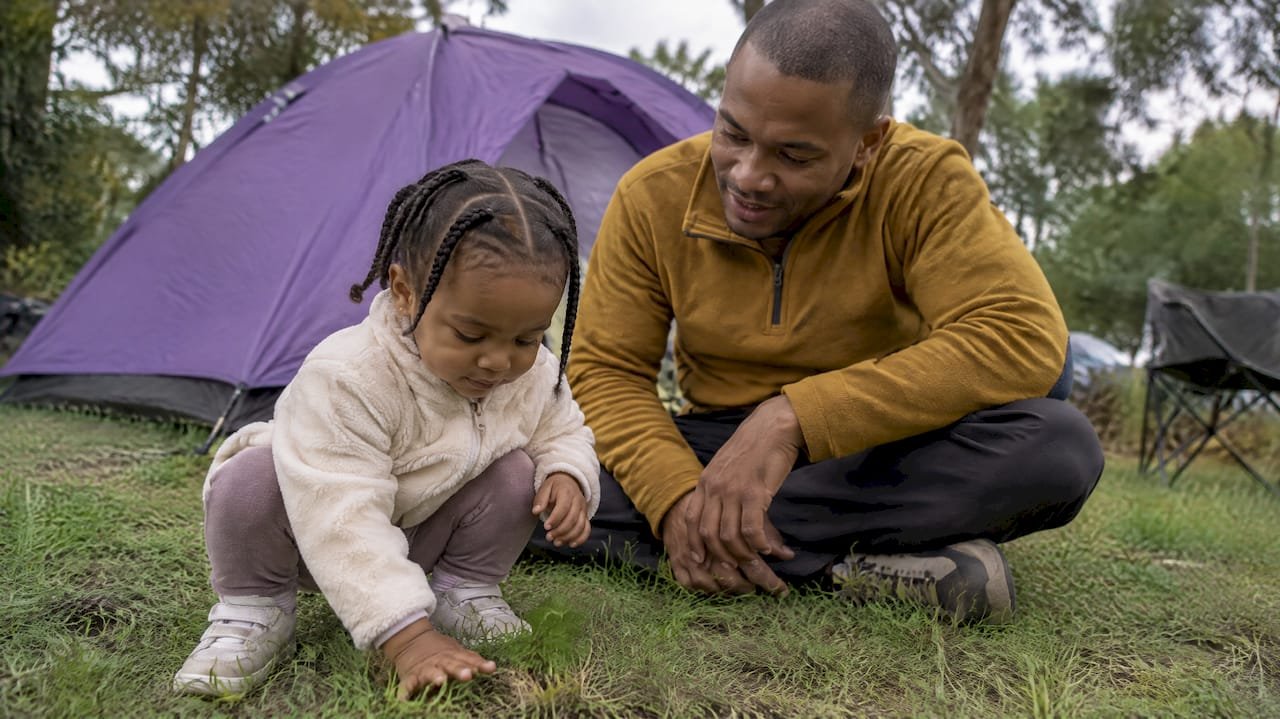
The best camping activities for toddlers are the simplest ones: collecting leaves and stones, pouring water between pots, hunting for bugs, singing, making shadow puppets and helping with small camp jobs. You don’t need to pack a bag of toys. The campsite is the toy box, and your job is to follow your toddler’s curiosity, keep them safe and say what you see.
We’ve pulled together ideas that need no shopping, no setup and no screens, plus the safety points that matter most when a one- or two-year-old is loose near guy ropes, stoves and a field you’ve never seen before.
TL;DR
- Toddlers need less entertainment outdoors than adults expect. Grass, sticks, water, stones and bugs will do most of the work.
- Pack a few kitchen items (jugs, spoons, a sieve, a pan) for water play and pretend “campfire soup”.
- Set a clear play area, check it for sharp stones, litter and droppings, and keep play away from cooking, fire, water and access routes.
- Plan a rainy-day kit: waterproofs, layers, wellies, a torch for shadow puppets and a few stories.
- Keep the fun going at bedtime with songs, stargazing and a tent story.
Table of Contents
- Start with the campsite itself
- Quick no-prep activities for toddlers at camp
- A quick activity menu by time and energy
- Keep it safe: set up the play area first
- Rain, mud and cold: activities that work in British weather
- Adapting for babies and younger toddlers
- Games that bring everyone together
- Screen-free doesn’t mean toy-free chaos
- Our view: you don’t need more stuff, you need a few good ideas
- Take the ideas with you
- FAQ
- Sources
Start with the campsite itself
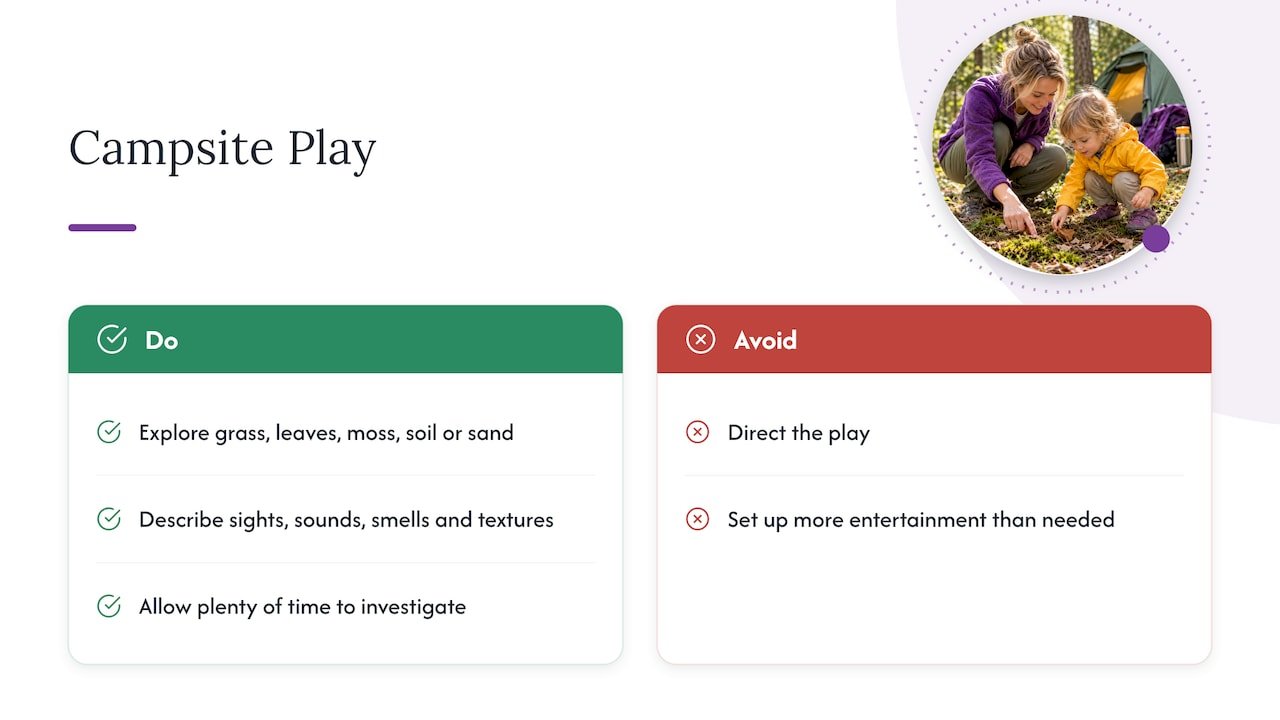
A toddler’s idea of a good time is usually small and close to the ground. Guidance for early years outdoor play from Inspiring Scotland says babies and toddlers can explore grass, leaves, moss, soil or sand, and that adults can add to the experience by describing sights, sounds, smells and textures, asking “Where is…?” and allowing plenty of time to investigate.
That is the whole plan. You don’t have to direct the play. Sit down, pick up a leaf and say what it feels like. Your toddler will probably pick up a different one and bring it to you. That is a game.
One camping blogger notes that toddlers often need less entertainment at a campsite than parents expect, and that collecting rocks and sticks, digging and helping with camp tasks fill a lot of time. Our own experience with toddler play ideas points the same way: the less you set up, the longer they stay interested.
Quick no-prep activities for toddlers at camp
These take under two minutes to start. Use them while the kettle boils, while the tent goes up or when someone needs a break.
Nature collecting and sorting
Give your toddler a small bag, bucket or an empty cereal box and let them gather leaves, pinecones, smooth stones and bark. Then talk about what they found: rough, smooth, big, little, heavy. Tip it out and sort by colour or size. When you’re done, put everything back where it came from.
For a bit more structure, try a picture-based scavenger hunt. One travel-with-kids guide suggests drawing or printing pictures of leaves, rocks, sticks, flowers and bugs for toddlers to find. Even simple sketches on the back of an envelope work.
We have lots more of this style of play in our nature play ideas for toddlers.
Campfire soup (without the fire)
Give your toddler a pan, a wooden spoon and a little water. They add leaves, grass, petals and pebbles and stir. The same guide describes pretend campfire soup made from natural objects and water, and it is an easy hit. Keep the pan well away from the real stove and the real fire.
Water play with kitchen items
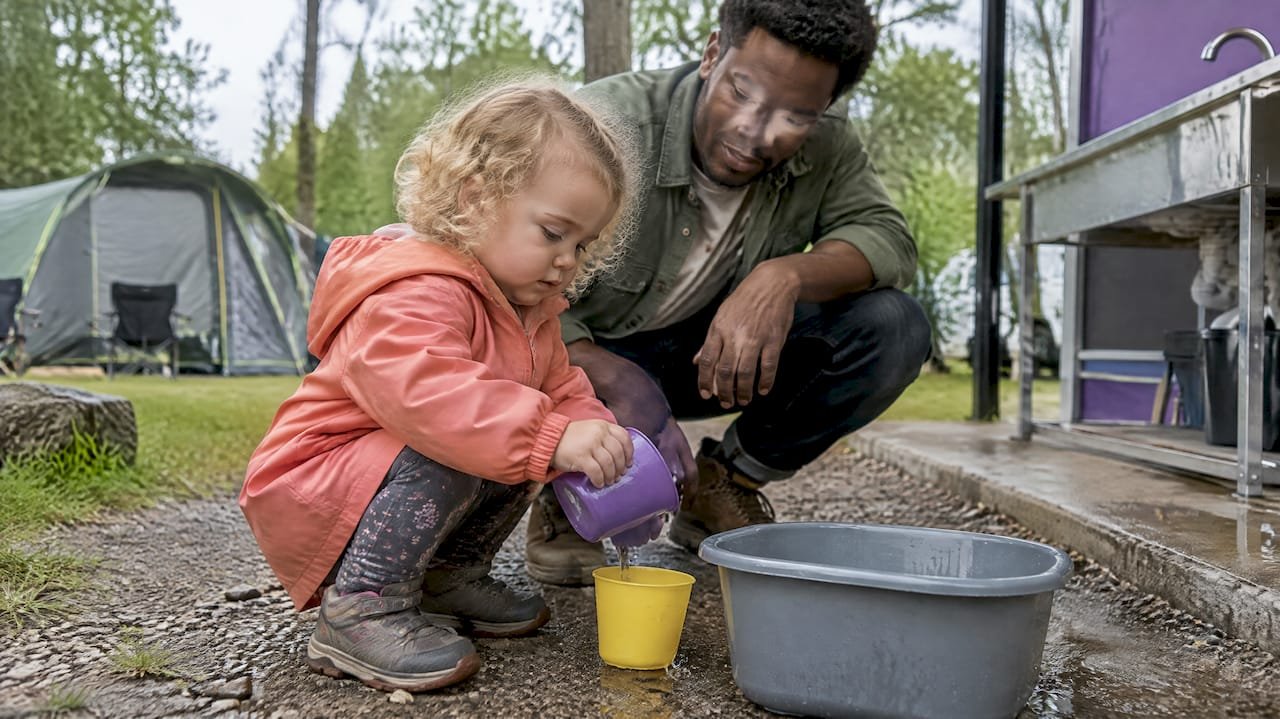
The Scottish early years guide mentions pouring water between household items such as jugs, spoons, sieves, pots and pans. A washing-up bowl and a few cups from the camp kitchen turn into pouring, splashing and scooping for twenty minutes. Put the bowl on flat ground, stay within arm’s reach and tip it out when you’re done. More ideas are in our water play ideas for babies and toddlers.
Songs, “Where is…?” and naming games
Songs with actions need no kit and work anywhere. Play “Where is…?” with a bird, a tree, your boots or the tent door. Point, name, wait, then let your toddler point back. It builds early language and it keeps small people close to you, which is useful at a busy site.
Dig, stomp and chase
NHS guidance says toddlers aged 1 to 2 should be active for at least 180 minutes a day, and it lists walking, dancing, messy play, water play, chasing games, ball games and hide-and-seek as good ways to get there. Camping makes that easy. A flat patch of grass, a soft ball or a bubble wand does the job. Our gross motor activities for toddlers have more movement ideas you can borrow.
A quick activity menu by time and energy
| Situation | Idea | What you need |
|---|---|---|
| 2 minutes, you’re tired | Sit and name five things you can hear | Nothing |
| 5 minutes, waiting for dinner | Leaf and stone collecting | A bag or box |
| 10 minutes, toddler is grumpy | Water pouring | Bowl, cups, spoon |
| 15 minutes, a bit more energy | Scavenger hunt with picture cards | Paper and a pen |
| After dark | Torch shadow puppets | A torch and your hands |
| Rainy afternoon | Tent stories and songs | Blanket, a book |
If you want a library of quick ideas matched to your toddler’s age and how much time you have, that is what our app is built for. More on that below.
Keep it safe: set up the play area first
A campsite has hazards a garden doesn’t. Before your toddler starts exploring, take five minutes to set it up.
- Inspect the area. Early years outdoor play guidance advises checking the space and removing sharp stones, litter and animal droppings. A paediatric safety article also lists glass, rubbish, matches, knives, sharp rocks and choking hazards to look for.
- Pick a defined space. Choose somewhere away from access routes and tell your toddler where the edges are. A trail safety organization recommends setting a perimeter for exploring around camp before play begins.
- Keep play away from fire, cooking and water. The same pediatric guidance advises keeping play areas away from fire, open water and cooking areas. The trail safety group highlights fire and getting lost as the two hazards that need special, direct supervision.
- Watch what goes in mouths. Toddlers taste everything. Stay close and take away anything unsafe, including berries, small stones and litter.
- Store sharp objects securely. The Scouts’ activity guidance mentions risk assessment, supervision and secure storage of sharp objects for outdoor activities, and the same thinking applies to penknives, tent pegs and cooking tools.
If you have a campfire or fire pit, treat it as a no-go area for toddler play. Supervise it directly, keep water nearby and make sure it is fully out when you finish. The Scouts’ guidance covers having a safe way to put fires out, and the trail safety group advises extinguishing fires until they are cold.
Sun and heat
UK summers can get hot, and toddlers feel it quickly. GOV.UK guidance for early years settings says children should stay in shade as much as possible, wear loose light-coloured clothing and wide-brimmed sunhats, use SPF 30 or higher sunscreen with a 4-star or higher UVA rating, and drink plenty of water. In very hot weather it also advises cutting back on energetic activity. That is a good time for water play in the shade and quiet games under an awning.
Rain, mud and cold: activities that work in British weather
It will rain at some point. That’s fine. Play Wales’ early years toolkit says everyday weather can enhance outdoor experiences, and suggests puddle jumping, mud pies, den building, minibeast hunts, sensory walks, songs and shadow puppets. Extreme conditions are different, so bring children inside or into the car if it turns unsafe.
Try these when it’s wet:
- Puddle jumping. Waterproofs and wellies on, then count the jumps.
- Mud pies. Use a tray or an old pan, with a spoon. Wipe hands before food.
- Minibeast hunt. Look under logs and leaves, gently, and put everything back.
- Tent stories. Snuggle up with a blanket and a book, or make up a story about the day.
- Shadow puppets. The National Trust suggests that after dark you can use a torch against the tent to make hand-shadow puppets and act out a story.
What to wear
The BBC’s CBeebies guidance for camping with young children recommends warm base layers or thermals, blankets, a ground mat or air mattress, coats and wellies, sun hats and woolly hats for changing conditions. Inspiring Scotland’s guide adds that in wet weather children need waterproofs or shelter, and that you should keep checking whether your child is too warm or too cold. Toddlers can’t always tell you, so feel their neck or tummy rather than their hands.
For more garden-style ideas that also work in a field, see our low prep garden activities for toddlers, rain or shine.
Adapting for babies and younger toddlers
If your little one isn’t walking yet, camping still works. Outdoor play guidance for babies suggests supervised floor play on a blanket, rug or towel, encouraging reaching, grasping and tummy time. As they start to crawl and pull up, offer safe surfaces and textures to touch, and keep checking for mouthing hazards.
NHS guidance says babies should be active throughout the day and get at least 30 minutes of tummy time spread across the day while awake. A groundsheet with a blanket on top, in the shade, is a good spot.
A few practical points for babies:
- Put a blanket down over a groundsheet so there’s a clean, dry place to play.
- Don’t leave a baby alone on a raised surface such as a camp table or chair. nidirect advises changing nappies and clothing on the floor for this reason.
- Use the harness on a camp high chair or pushchair if it has one, as nidirect also recommends a five-point harness in such equipment.
- Offer natural textures, such as a smooth stone or soft leaf, only while you’re holding or right beside the baby.
Games that bring everyone together
Camping is a good time for grandparents, aunties, uncles and friends to join in, because nobody has to be good at anything. CBeebies suggests family and friends listen to nature, find a feather, spot clouds and stargaze, with bird watching, leaf collecting, den building and campfire stories as alternatives.
For toddlers, you can shrink those down:
- Feather finder. Everyone looks for one feather. Your toddler just points and shouts.
- Cloud spotting. Lie on a blanket and say what each cloud looks like. No wrong answers.
- Den building. Drape a blanket over two camp chairs. Add a torch and a cuddly toy.
- Ball and bubbles. The National Trust lists football, frisbee, cricket and rounders as camp games. For toddlers, kicking a soft ball and chasing bubbles is the same idea at their level.
- Camp jobs. Let your toddler carry a (plastic) cup, hold the tent bag or “help” stir the pan.
If you’re caring for a toddler for a weekend and want quick ways to connect, our toddler bonding activities take two to fifteen minutes each.
Screen-free doesn’t mean toy-free chaos
You can skip the tablet and the new toys. The Scottish guide says children can follow their own interest in ordinary materials, such as water, leaves, stones, bark, grass, sounds and textures, with adults using narration, questions, songs, collecting, movement and pretend play. All of it can be repeated at your toddler’s pace. Toddlers love repetition, so the fifth round of dropping a pebble in the water is not a failure of imagination. It is how they learn.
If you want more ideas that use nothing special, try our list of toddler activities with no supplies, or our sensory play ideas parents can use with toddlers.
Our view: you don’t need more stuff, you need a few good ideas
At Mooshie Moments, we hear the same thing from parents again and again: they’re tired, and the creative part of their brain has gone quiet. On a camping trip that feeling gets stronger. You’re in a new place, you’re doing everything outdoors and your toddler wants something to do right now.
We built Mooshie for that moment. It gives you quick, screen-free activities that use things you already have, matched to your child’s age and how much time and energy you’ve got. Each one explains, in plain language, why it helps your child’s development, so you know the stick-and-water game is doing real work.
We think the best play is the kind that gets you off your phone and onto the grass with your child. That is why we put so much effort into making ideas easy to start and easy to repeat. Camping is one of the best places to do it, because the whole site is already a playground.
samit
Take the ideas with you
Campsite signal can be patchy, so it helps to have ideas ready before you set off. Mooshie is a free-to-download app for parents and caregivers of children from 6 months to 4 years. It offers quick, screen-free activities that use everyday household items, personalised by your child’s age, the time you have and your energy level, with a developmental explanation and coaching tips for each one.

You can find out more and download it at Mooshie Moments. Nurseries and childminders planning outdoor trips can also see our activities for nurseries, daycare and childminders.
For days at home before or after your trip, our ten-minute screen-free outdoor activities for UK toddlers and best park games for toddlers will keep the habit going.
FAQ
What can a toddler do at a campsite all day?
Most of the day can be nature play: collecting leaves and stones, pouring water, digging, hunting for bugs, singing and helping with camp jobs. Mix active play such as chasing bubbles with quiet play such as stories in the tent. Follow your toddler’s interest and repeat what they enjoy.
How do I keep my toddler safe around a campsite?
Check the play area for sharp stones, litter and droppings, and set clear boundaries away from cooking, fire, water and access routes. Stay within reach, watch for things going into their mouth, and give any fire or open water your full, direct attention. Keep sharp tools stored away.
What can we do if it rains while camping with a toddler?
Dress them in waterproofs, layers and wellies and go puddle jumping or look for minibeasts, or stay in the tent for songs, stories and torch shadow puppets. If conditions turn extreme or unsafe, move indoors or into the car.
Can I go camping with a baby who isn’t walking yet?
Yes. Provide a blanket on a groundsheet for supervised floor play, tummy time and reaching for safe textures, and adjust clothing and shelter for the weather. Keep babies off raised surfaces and stay close to prevent mouthing of unsafe objects. If you have health questions about your baby, ask your health visitor or GP.
Sources
- Connecting babies and young children to nature (Inspiring Scotland)
- 30+ Zero-Prep Camping Activities for Kids
- 17 Camping Activities for Toddlers
- Physical activity guidelines for children under 5 (NHS)
- Seattle Children’s camping safety tips
- Keeping Kids Safe on Trail and in Camp (Washington Trails Association)
- Campfire chocolate oranges (Scouts)
- Hot weather guidance for early years settings (GOV.UK)
- Playing outdoors in early years settings (Play Wales)
- CBeebies camping survival guide for parents
- CBeebies camping adventure activities
- Go camping: 50 things to do (National Trust)
- Guarding children against trips and falls (nidirect)
Recommended
- Ten Minutes: Screen Free Outdoor Activities for UK Toddlers
- Nature Play Ideas for Toddlers: 12 Simple Activities to Try
- Best Park Games for Toddlers: 12 Easy Ideas, No Gear Needed
- Toddler Activities With No Supplies: 25 Ideas to Try Now
Want a new idea every day, matched to your child's age?
Mooshie Moments gives you simple, guided play ideas for ages 6 months to 4 years.
Download free on the App StoreMore like this
Toddler Scavenger Hunt: Easy Ideas for Home and Garden
Easy toddler scavenger hunt ideas using things you already have: indoor, garden and nature walk hunts, by age, with safety tips and…
Eco-Friendly Toddler Activities Using Things You Already Have
Simple eco-friendly toddler activities using things you already have: water play, nature hunts, junk modelling and garden play, with safety tips for…
Paper Plate Crafts for Toddlers: 9 Easy Ideas With Household Items
Nine quick paper plate crafts for toddlers using things you already have, with age adaptations, prep times and safety tips for parents…