Toilet Roll Crafts for Toddlers: 10 Easy Ideas by Age
Updated 28 October 2026 · 10 minute read
You already have what you need for a good toddler craft: the empty tube from the bathroom. Binoculars, skittles, a ball run, a caterpillar or a simple sensory bin all start with a cardboard roll, and most take five to twenty minutes. We have grouped the ideas by age, so you can pick something that fits your child today, plus a few safety points worth reading before you start.
TL;DR
- Most toilet roll crafts need only tubes, tape, scissors and something to decorate with. No shopping trip is needed.
- Babies and younger toddlers do best with a single tube, a sensory bin of cardboard rings or a pom-pom drop. Older toddlers can help decorate and build.
- Supervise the whole time. String, small balls and small bits like googly eyes are choking risks, and scissors and staples stay in adult hands.
- Let your toddler lead and talk about what they are making. The chat is as useful as the craft.
- Keep it short. A craft that lasts three minutes and ends in a game is a success.
Table of Contents
- What you need before you start
- Keep it safe: supervision, string and small parts
- Ideas for babies and younger toddlers
- Ideas for toddlers from about 18 months to 3 years
- Ideas for older toddlers, around 3 to 4 years
- Which craft for which age?
- Turning a craft into time together
- Our view: the best craft is the one you actually do
- Find a new idea in seconds
- More ideas to try next
- FAQ
- Sources
What you need before you start
The basic kit is short. A UK paper-products brand’s guide lists toilet or kitchen roll tubes, scissors, glue, tape, and paint or colouring pens, with eyes, feathers, string or paper fasteners as optional extras. You can manage with much less. Tubes, sticky tape and a crayon will cover half of the ideas below.
A few habits make the session easier:
- Collect tubes first. Keep a bag by the bathroom bin and you will have a dozen in a couple of weeks. Kitchen roll tubes are longer and work well for telescopes and ball runs.
- Set up a workspace close by. The same guide suggests keeping a nearby, organized workspace. A tray or an old tablecloth on the floor does the job.
- Prepare the sharp parts yourself. Do any cutting or stapling before your toddler joins in, or while they are busy with something else.
- Expect a short attention span. Have the next step ready so there is no waiting around.
If you want more ideas that need no shopping, our guide to cardboard box toddler activities uses the same approach with bigger boxes.
Keep it safe: supervision, string and small parts
Tubes are soft and light, which makes them a good first craft material. The risks come from what you add to them.
Supervise throughout. BBC Tiny Happy People advises that you watch children throughout craft activities and playtime, and keep small and sharp objects out of reach. It also flags string as a choking hazard, so if you add a strap to binoculars, keep it short and stay close. UK charity Action for Children gives similar advice: supervise babies and young children around craft materials, especially small choking hazards and sharp items.
Check the size of any ball. For ball runs, the BBC warns that small balls can choke toddlers, so the ball must be too large to fit in the child’s mouth. A rolled-up sock works well.
Go large with pom-poms. Happiest Baby suggests starting with large pom-poms and moving to smaller ones only when your child is no longer likely to put things in their mouth. If your toddler still mouths everything, skip the googly eyes and draw faces with a crayon instead.
Use child-friendly scissors with help. The BBC recommends child-friendly scissors with supervision if your toddler wants to cut. For a deeper look at how nannies and other caregivers handle small-parts and string hazards during crafts, these caregiver activity ideas are a handy extra.
If you are setting up a whole play space, the safety section of our indoor obstacle course guide shows how to get a room ready.
Ideas for babies and younger toddlers
For children around 6 months to 18 months, the goal is not a finished craft. It is touching, looking, dropping and making noise. You do the building and they do the exploring.
1. Single-tube telescope
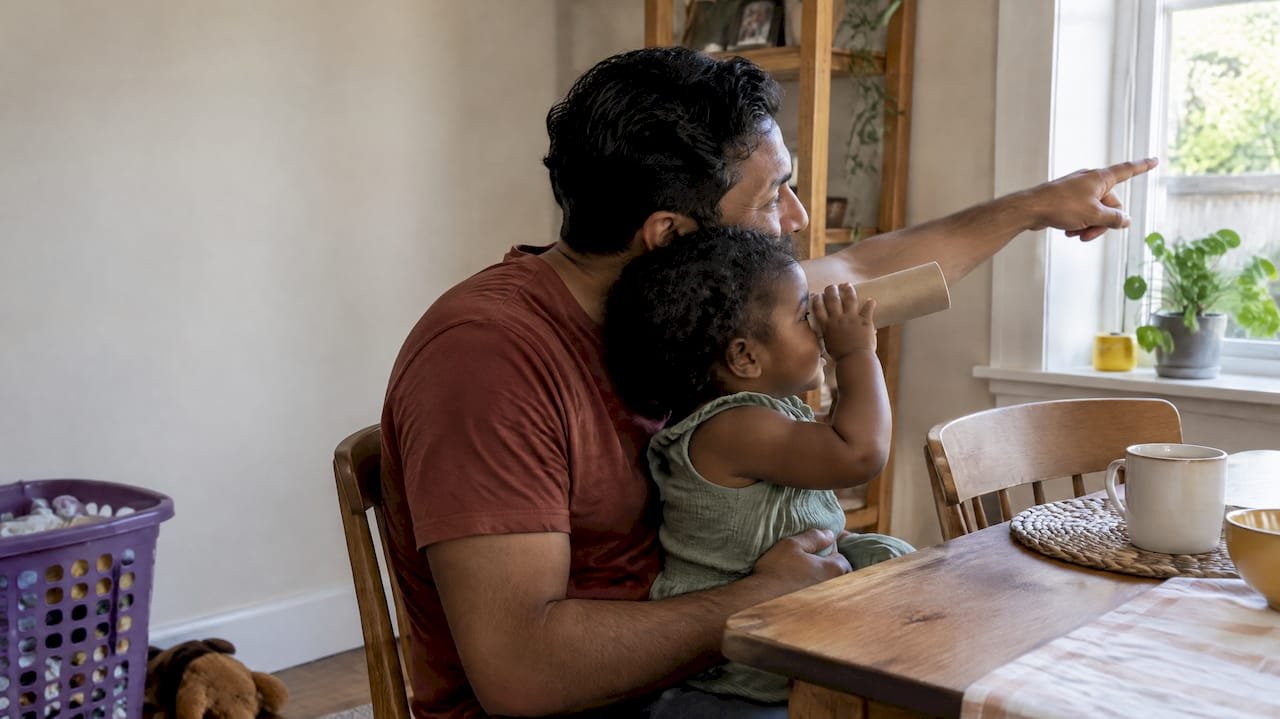
The BBC suggests a single cardboard tube as an easier telescope for younger babies, because it is simpler for little hands and fingers to hold. Hand it over plain, or decorate it with a few stickers or crayon scribbles first. Peek through it at your face, a toy or the window, and say what you can see.
2. Cardboard ring sensory bin
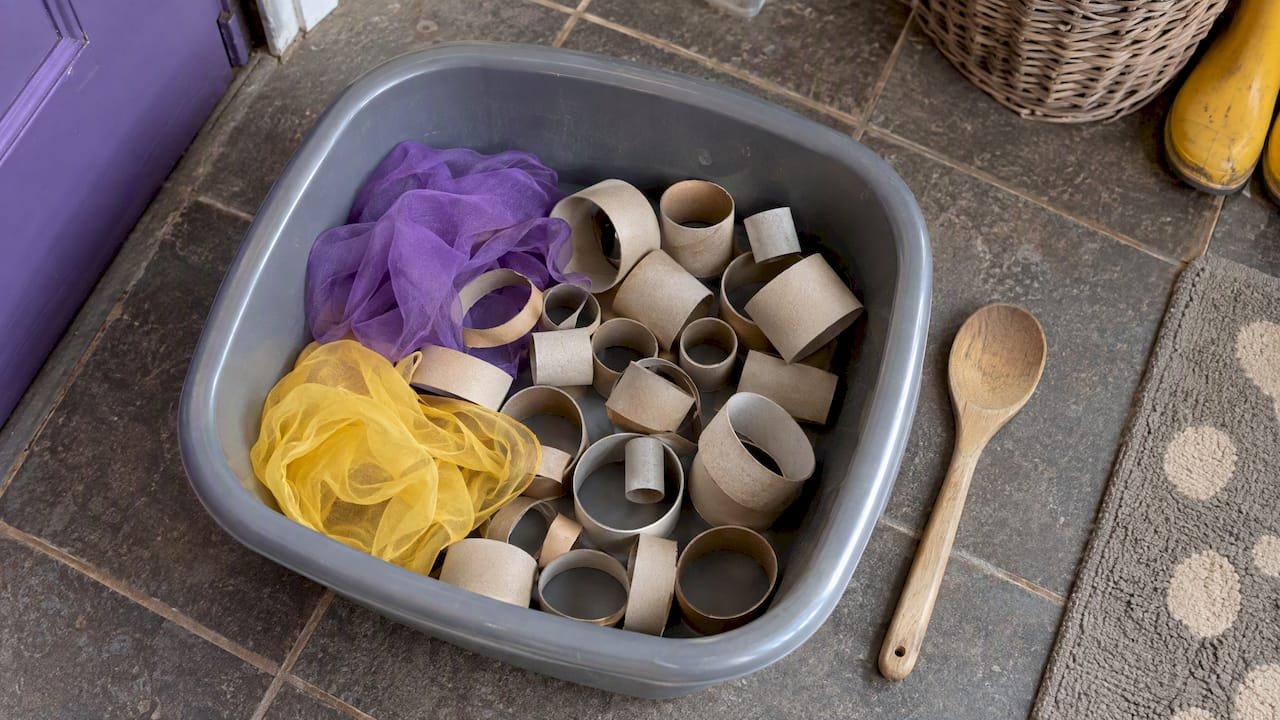
Cut tubes into rings of different widths and toss them into a toddler’s sensory bin, as Happiest Baby suggests. A washing-up bowl or a laundry basket will do. Add scarves, wooden spoons or a few soft toys. Your toddler can stack, sort, wear the rings as bracelets and tip them out again. For more low-cost ideas along these lines, see our sensory play ideas for toddlers.
3. Pom-pom pass-through
Tape a few rolls to a wall or the side of a cupboard at toddler height. Your child drops large pom-poms in the top and catches them at the bottom. The same source describes this as a wall-mounted drop activity. It is a good one to try when you only have two minutes and a pile of laundry.
4. Homemade noisemaker
Happiest Baby says a roll sealed with paper or foil and filled with dry beans or rice can become a noisemaker. We would add this: seal both ends very firmly with tape, make it yourself, and check it before and after each play. If an end comes loose, stop and take it away, because loose beans or rice are a choking risk.
Ideas for toddlers from about 18 months to 3 years
At this age your child can help decorate, tape (with a little hand-over-hand) and, most importantly, play with the result.
5. Five-minute binoculars
This is the classic. The BBC’s method is to staple two tubes together at each end, add sticky tape and optional string for a strap, then use them for I-spy or pretend play. You handle the stapler. Your toddler can color the tubes first. Take them to the garden or a park and spot birds, buses and dogs. If you skip the string, you also skip the choking risk.
6. Homemade skittles
The BBC says that empty bottles, milk cartons or toilet roll tubes can be set up as skittles and played with indoors or out, using a small ball or rolled-up socks. Decorate them with card, paper, faces or numbers, then ask your child to count what is left standing. The same page suggests using words like “more”, “less”, “faster”, “slower”, “hard” and “soft” as you play.
Skittles and counting go together naturally. Our toddler counting games offer more ways to build on this without any kit.
7. Tube ball run
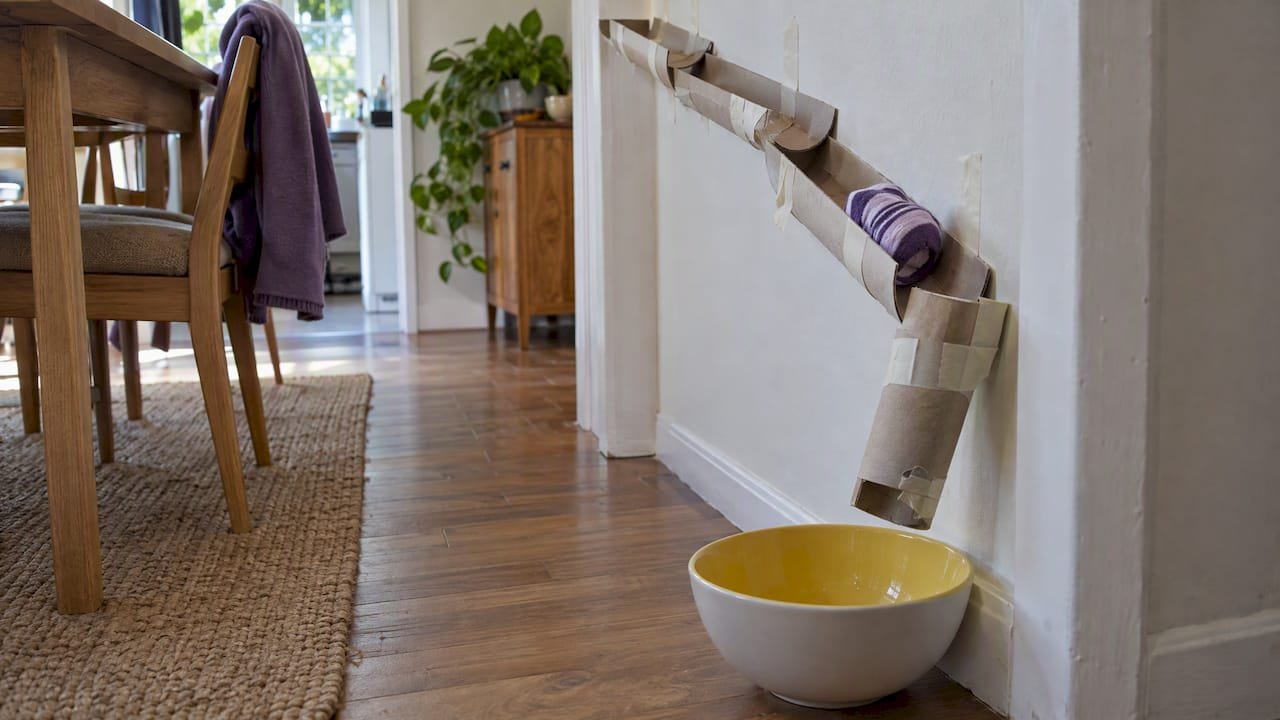
This one takes a bit more setting up, but it keeps going. The BBC’s ball run uses cardboard tubes, foil or paper, scissors and tape. You cut the tubes lengthways, make a ball from paper, foil or a rolled sock, tape the tubes in a downward path and catch the ball in a bowl. The BBC says it can take up to 20 minutes to make, can turn into a turn-taking race, and develops attention and listening. It also presents the activity as a way to explore gravity. Keep the ball big, as above.
8. Magic wand or telescope
Happiest Baby says a decorated roll can become a simple magic wand or telescope. Let your toddler scribble all over it, add a ribbon strip taped on firmly (and short), and wave it. Cast spells on the teddies. It takes about three minutes and gives you ten minutes of pretend play.
Ideas for older toddlers, around 3 to 4 years
Children in this range can follow two or three steps, choose colors and talk about what they are making.
9. Toilet roll animals
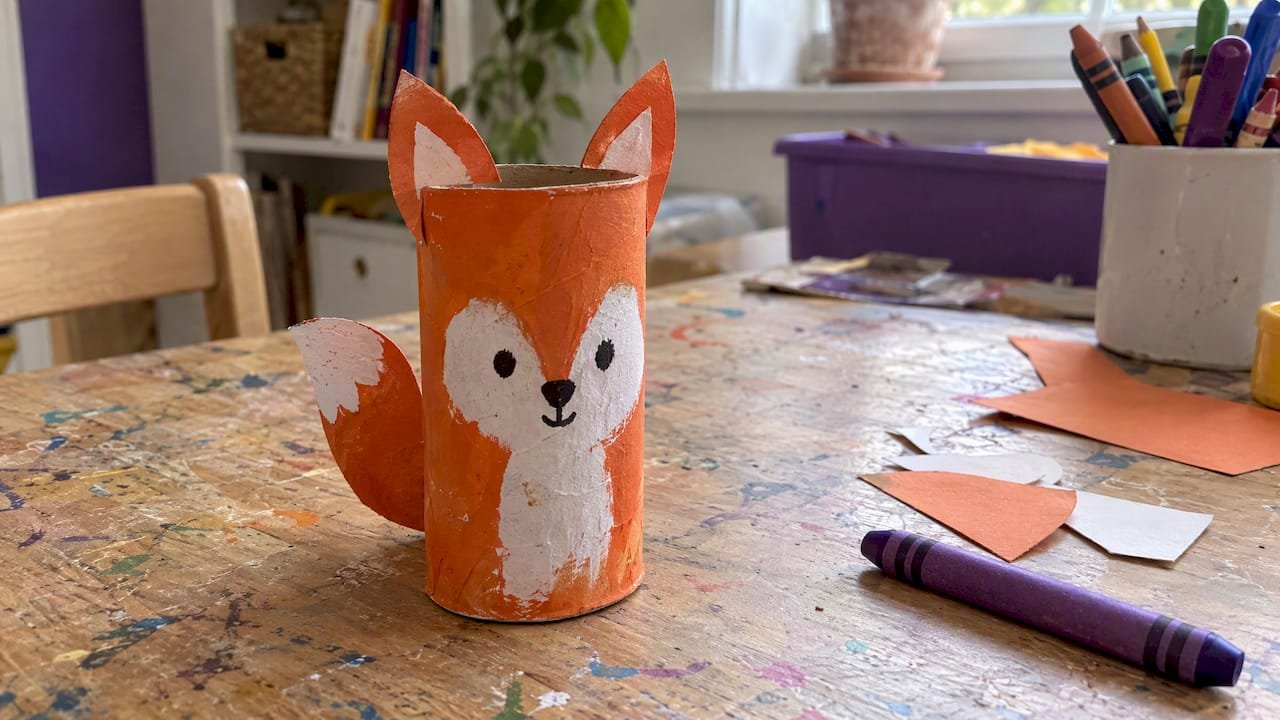
A UK guide gives a simple method: choose an animal, color or paint the tube, attach card features, add facial details, decorate and let it dry, then play. Its examples are a polar bear, penguin and fox. Ask your toddler which animal they want, and let them pick the color. Ears can be cut from card by you and stuck on by them. Once dry, the animals can go on a walk around the living room.
PBS KIDS for Parents offers a longer list of toilet roll crafts, including butterflies, coiled snakes, puppy marionettes, caterpillars, maracas, cuff bracelets, binoculars and a cardboard crane. Some of those need more cutting and fiddly assembly than a toddler can manage alone, so treat them as “we do it together” projects.
10. Race car
The same UK guide describes a race car: cut a seat opening, decorate the tube, cut four cardboard wheels and a steering wheel, then attach the wheels with paper fasteners. You do the cutting and fixing. Your toddler decorates and then zooms it along the sofa cushions. If paper fasteners feel too small or sharp for your child, use tape for the wheels instead.
Which craft for which age?
Use this as a quick guide. Every child is different, so go by what your toddler can do and what they still put in their mouth.
| Craft | Good for | Adult does | Toddler does | Time |
|---|---|---|---|---|
| Single-tube telescope | Babies, young toddlers | Prepares tube | Looks, holds, scribbles | 2 to 5 min |
| Ring sensory bin | Young toddlers | Cuts rings | Stacks, tips, sorts | 5 to 15 min |
| Pom-pom drop | Young toddlers | Tapes rolls up | Drops and catches | 5 to 10 min |
| Binoculars | 18 months and up | Staples | Colors, spots things | 5 min |
| Skittles | 18 months and up | Sets up | Rolls, counts | 10 to 15 min |
| Ball run | 2 years and up | Cuts, tapes path | Rolls ball, takes turns | Up to 20 min to make |
| Animals | 3 years and up | Cuts features | Colors, sticks, plays | 10 to 20 min |
| Race car | 3 years and up | Cuts, fixes wheels | Decorates, drives | 10 to 20 min |
Want a wider range of low-prep play? Our low prep toddler activities by skill area sorts ideas by what your child is working on, in 2 to 15 minutes.
Turning a craft into time together
The craft is the excuse. The real value is you and your toddler doing something side by side.
BBC Tiny Happy People says that making toys from household items can support imagination, problem-solving, fine-motor development and bonding. Its advice is to let the toddler lead, ask simple questions, invite them to describe what they have made and take turns in pretend play. Action for Children points the same way: toddlers do not need many toys or much equipment, and arts and crafts can spark creativity and develop motor skills.
Some simple ways to do this:
- Narrate what they do. “You’re rolling the ball down the tube. Down, down, down!” Our guide on narrating play for language growth has more examples.
- Ask one question, then wait. “What is your bear called?” is enough. Give them time to answer, even if it is a babble or a point.
- Take turns. You roll, then they roll. You are the penguin, then they are.
- Let the mess be. A wobbly, scribbled tube is a finished craft.
- Keep the pretend play going. Educators describe pretend play development in toddlers as something adults support best by following the child’s story rather than directing it.
If your toddler needs more words for what they are doing, our speech and language activities build on these same moments.
Our view: the best craft is the one you actually do
We hear the same thing from parents again and again: they are tired, the day is long, and a long craft list on the internet feels like one more thing to fail at. We built Mooshie Moments for exactly that moment.
Here is what we believe about toilet roll crafts.
Start with play, not the product. A tube that becomes a telescope in two minutes is better than a beautiful animal that needs forty minutes of prep and ends in tears. Many of the best ideas end with your toddler holding something and doing something with it.
Household items are enough. Toddlers do not need a craft cupboard. Tubes, tape, a crayon and some socks give you plenty to work with, and that is how we write every activity: nothing to buy and little to prepare.
Explain the why. When you know that dropping pom-poms through a tube is working on hand-eye coordination, or that counting skittles builds early number words, it is easier to feel that ten minutes on the floor counted. Each activity in our app comes with a plain-language explanation of the development behind it, which we base on child-development research.
Put the phone down. Craft time is one of the easiest chances to have a screen-free stretch with your child. We designed the app so you can find an idea fast, then put the phone away and get on the floor.
Babies join in too, just differently. Give them the safe version, stay close and enjoy it.
— samit
Find a new idea in seconds
When the tube pile runs out of inspiration, Mooshie gives you a quick, screen-free activity based on your child’s age, the time you have and how much energy you have left. Each idea uses things already in your home and comes with a short explanation of how it helps your toddler’s development, plus tips on how to play. It is made for parents, grandparents, aunties, uncles and anyone who looks after a child from 6 months to 4 years.
Running a nursery, childminding setting or playgroup? Take a look at our activities for nurseries, daycare and childminders, or the Partnership Pack with home-learning resources for your families.
More ideas to try next
Once the tubes are used up, you can keep going with other things around the house:
- Balloon activities that build skills with almost no prep.
- Color sorting with your painted tubes and rings, a good five-minute game.
- Autumn activities for the cooler months, when you need to play indoors.
- Gross motor activities when your toddler has had enough sitting and needs to move.
- Bonding activities that fit into 2 to 15 minutes.
FAQ
Can a baby do toilet roll crafts?
Yes, with an adult close by. The BBC suggests a single cardboard tube as an easier telescope for younger babies. You do the preparation, they look, hold and explore. Watch them the whole time and keep small and sharp objects out of reach.
What can I make with toilet rolls in five minutes?
Binoculars are the quickest. Staple two tubes together, add tape and play I-spy. A wand or telescope takes about three minutes if your toddler just scribbles on a tube. A pom-pom drop only needs a few rolls taped to a wall.
Are toilet roll tubes safe for toddlers?
The tubes themselves are soft cardboard, but the extras need care. String, small balls, googly eyes, staples and loose fillings can all be hazards. Supervise throughout, keep any ball too large to fit in your child’s mouth and handle the scissors and stapler yourself.
What do toddlers learn from cardboard tube crafts?
According to BBC Tiny Happy People, making toys at home can support imagination, problem-solving, fine-motor skills and bonding. Games like skittles bring in counting, turn-taking, coordination and new words. Ball runs build attention and listening.
Do I need to buy craft supplies?
No. Tubes, tape and a crayon are enough for many of the ideas here. Paint, card, pom-poms and paper fasteners are nice extras, but not needed to get a toddler playing.
Sources
- How to make binoculars out of toilet rolls, BBC Tiny Happy People
- Sustainable toys: how to make toys out of household items, BBC Tiny Happy People
- How to make your own homemade bowling pins, BBC Tiny Happy People
- How to make a DIY marble run for young children, BBC Tiny Happy People
- Activity ideas for toddlers for fun and learning, Action for Children
- 13 DIY crafts with paper towel and toilet paper rolls, PBS KIDS for Parents
- Creative ways to reuse cardboard rolls with toddlers, Happiest Baby
- 5 fun and easy toilet roll crafts for kids, Regina
- The role of pretend play development in toddlers
- 10 nanny activities that fill an afternoon
Recommended
- Cardboard Box Toddler Activities: 12 Ideas by Age
- No New Toys Needed: Sensory Play Ideas Parents Can Use With Toddlers
Want a new idea every day, matched to your child's age?
Mooshie Moments gives you simple, guided play ideas for ages 6 months to 4 years.
Download free on the App StoreMore like this
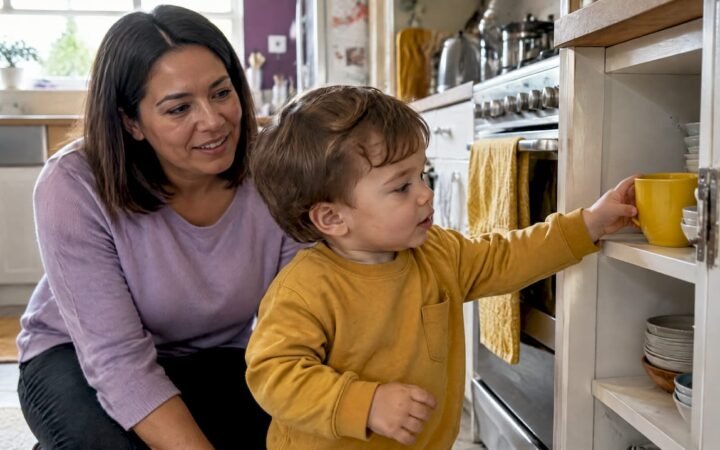
Toddler Scavenger Hunt: Easy Ideas for Home and Garden
Easy toddler scavenger hunt ideas using things you already have: indoor, garden and nature walk hunts, by age, with safety tips and…
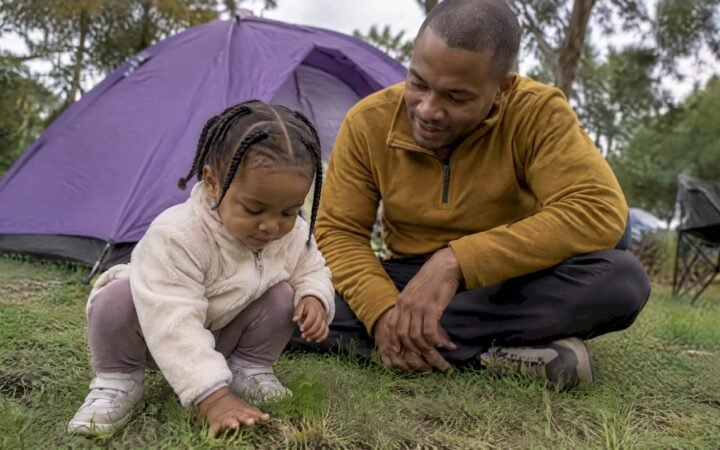
Camping With Toddlers: Activities That Work at the Campsite
Easy camping activities for toddlers using what you already have: nature play, campfire-free games, rainy-day ideas and safe-play tips for UK campsites.
Eco-Friendly Toddler Activities Using Things You Already Have
Simple eco-friendly toddler activities using things you already have: water play, nature hunts, junk modelling and garden play, with safety tips for…