
10 Minute Indoor Obstacle Course for Toddlers: NHS Backed, No New Toys
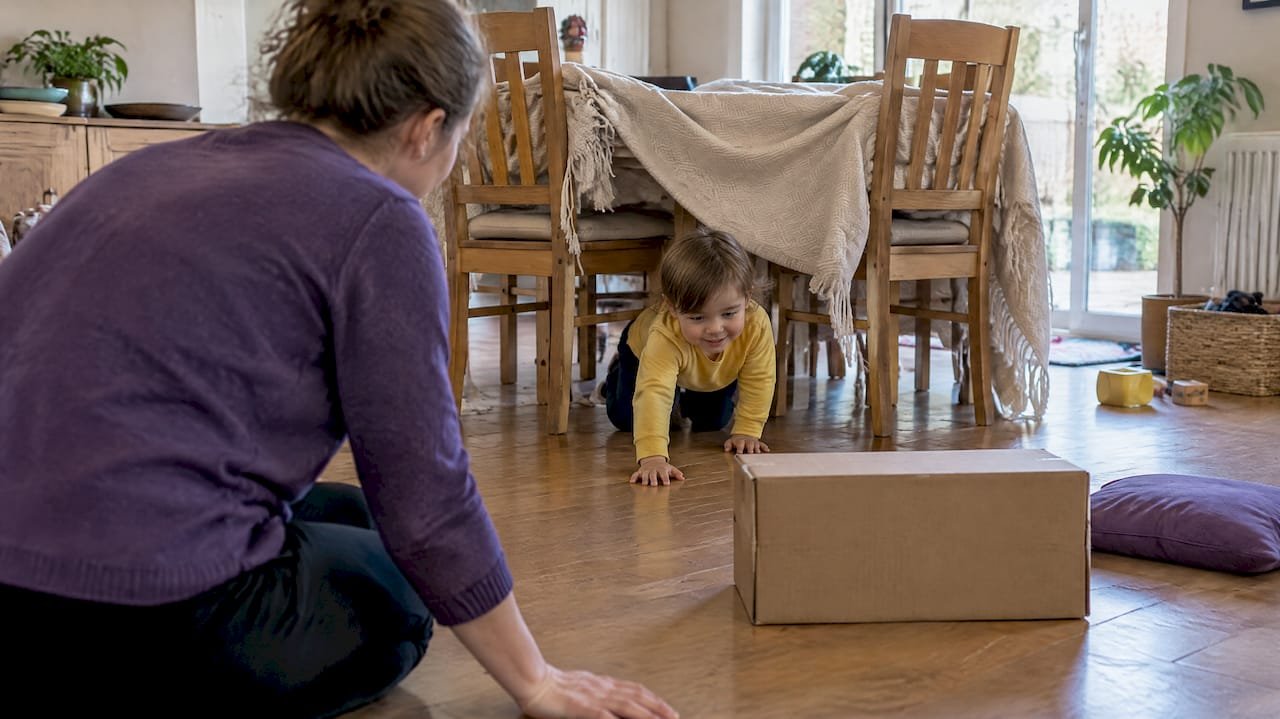
A 5 to 7 station indoor obstacle course built from cushions, tape, boxes, and an under-table tunnel is one of the simplest ways to burn off toddler energy and practice gross motor skills, and you can set it up in minutes. It works because it turns everyday clutter into a mini adventure. Just keep items soft, clear the path of anything breakable, and stay close while your toddler explores.
TL;DR:
- A toddler obstacle course can be created from household items in about 10 minutes, with stations like crawling, jumping, balancing, and tossing.
- Safety measures include clearing breakables, securing rugs, padding sharp corners, and staying within arm’s reach for new walkers.
- Rotating different stations targeting balance, coordination, and sensory play helps maintain engagement and develop different motor skills.
- The course should be adjusted by age and mobility, with shorter distances and additional support for new walkers and sensitive children.
Table of Contents
- A quick starter course you can set up today
- Getting the room ready and keeping play safe
- A bank of station ideas sorted by the skill they build
- Adjusting the course by age, mobility, and sensory needs
- How often to run it and what it actually builds
- Who’s behind this guide
- Why the best obstacle course is the one you’ll actually repeat
- Want more ideas without the planning effort?
- Where this guidance comes from
- Sources
- FAQ
A quick starter course you can set up today
You do not need special equipment for this. Grab what is already lying around the house and line it up into a simple loop.
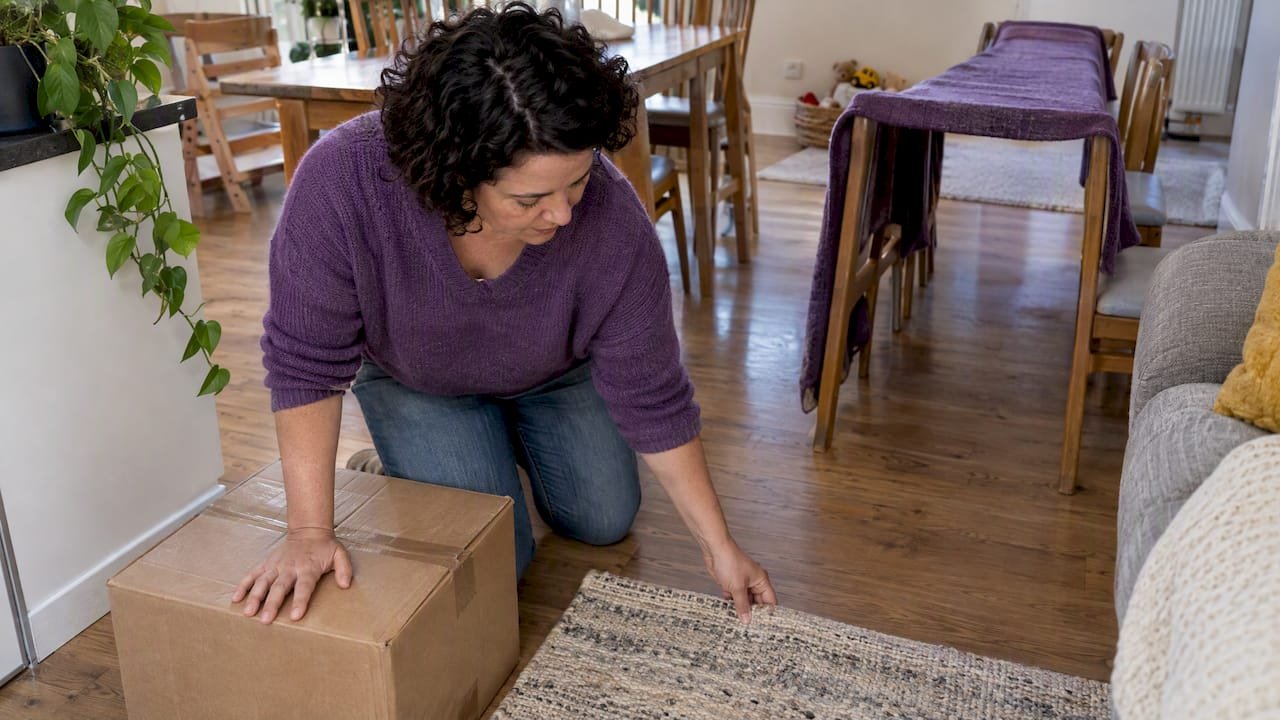
- Crawl through: an open cardboard box with both ends cut off, or a blanket draped over two chairs.
- Balance beam: a strip of tape on the floor, or a rolled towel for a bit more wobble.
- Jump zone: two cushions laid flat, asking for a two foot jump from one to the other.
- Tunnel: the gap under a sturdy coffee table or dining table.
- Stepping stones: a few flat cushions spaced apart for careful stepping.
- Throw target: a laundry basket or box for tossing a soft ball or rolled sock.
- Finish line hug: a favorite stuffed toy waiting at the end for a celebratory cuddle.
Setup takes about 10 minutes, and one run through the course usually takes a toddler a short few minutes depending on how often they stop to explore. To make it easier, widen the gaps and skip the tunnel. To add challenge, time the run or ask your toddler to carry something while they go.
Getting the room ready and keeping play safe
A few minutes of prep before you start makes the whole session safer and smoother.
- Clear small objects, toys with sharp edges, and anything breakable from the play path.
- Secure loose rugs with non-slip tape so they cannot slide underfoot.
- Pad sharp table or shelf corners, or move that furniture out of the play zone entirely.
- Stay within arm’s reach for new walkers, and a step or two back for toddlers who are steady on their feet.
- Swap hard flooring for a yoga mat, folded blanket, or rug under jumping and balance stations.
The NHS guidance on keeping toddlers active points to removing hazards and supervising closely as the two basics that make active play low risk, alongside joining in yourself.
Pro Tip: Do a 30 second walk-through of the course yourself before your toddler starts, so you catch wobbly boxes or slippery spots first.
A bank of station ideas sorted by the skill they build
Rotating stations keeps the course fresh and lets you target specific motor skills on different days.
- Balance: tape lines on the floor, a rolled towel beam, or stepping across spaced cushions.
- Jump and hop: pillow hurdles to step over, chalk or tape squares for two foot hops, or a line to leap across.
- Crawl and move through: cardboard boxes, draped blankets, or the classic under-table tunnel.
- Coordination: tossing a soft ball at a laundry basket target, chasing bubbles, or picking up and sorting small toys.
- Calming and sensory: a quiet corner with a textured blanket, a sensory bin of dried rice or pasta, or a few minutes of slow breathing with a stuffed toy.
The RUH patient information leaflet on early years activity lists crawling spaces and bubble chasing as reliable ways to get toddlers moving safely indoors. For more age-specific ideas, our guide to activities for 2-year-olds has a wider mix to pull from, and our junk modeling ideas show you how to turn recycled cardboard into tunnels and targets.
Ending on a calming station after a few high-energy laps helps your toddler wind down instead of finishing overstimulated.
Adjusting the course by age, mobility, and sensory needs
The same course can flex to fit where your toddler is right now.
- New walkers: shorten distances between stations, use wider and flatter balance items, and hold hands through the trickier spots.
- Confident toddlers: narrow the balance beam, add a timer, or combine two tasks, like carrying a ball while crawling through the tunnel.
- Sensory sensitive or mouthing toddlers: skip small loose parts, use larger soft textures, and offer a calm station instead of a busy one when things feel like too much.
- Limited mobility caregivers: seated versions of throw and sort stations work well; our low prep ideas for grandparents has seated options that still let you join in fully.
Watch your toddler’s reaction rather than their age alone. A cautious three year old might need the new walker version, and a bold eighteen month old might be ready for a small jump.
How often to run it and what it actually builds
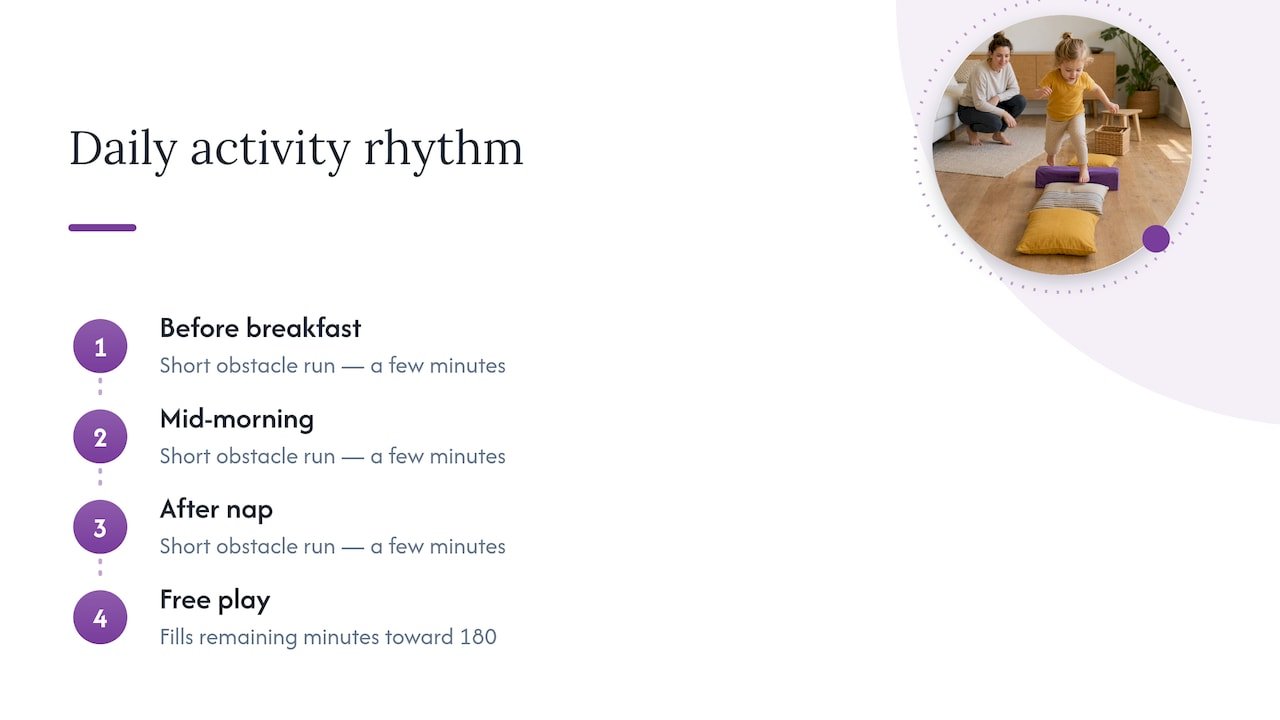
Short bursts work better than one long session for this age group. Two to three runs through the course, each lasting a few minutes, fit naturally into morning and afternoon routines and count toward the NHS recommendation of 180 minutes of daily activity for children aged 1 to 5.
The NHS recommends toddlers get at least 180 minutes of physical activity every day, spread across light and energetic play. An obstacle course is a fast way to bank several of those minutes while practicing balance, coordination, sequencing, and following directions all at once. A simple daily rhythm might look like one run before breakfast, one mid-morning, and one after nap, with free play filling the rest.
Who’s behind this guide
This guide was put together by samit, drawing on NHS play and activity guidance to turn official recommendations into things you can actually do at home today. Mooshie Moments, an app that offers age-tailored, screen-free activity ideas built from household items, uses a similar approach: it might suggest “build a tunnel from your dining chairs and a blanket” as a quick prompt, then explain in plain language why crawling through tight spaces supports a toddler’s spatial awareness.
Why the best obstacle course is the one you’ll actually repeat
The real value of a toddler obstacle course is not in building the perfect layout. It’s in running it often enough that your toddler starts to recognize the stations and anticipate what comes next. Drop the idea of a flawless setup and let a slightly wobbly cushion stack do its job.
Narrating what your toddler is doing, “you’re crawling under the table now, great job balancing,” builds language alongside movement. If you have more than one child, turn stations into a queue so everyone practices waiting their turn. When boredom or a meltdown shows up mid course, swap in a new prop, shorten the run, or head straight to the calming station rather than pushing through.
— samit
Want more ideas without the planning effort?
Coming up with new household-item activities every day gets tiring, and that’s exactly the gap Mooshie Moments was built to fill. There are apps that give parents and caregivers quick, age-tailored activity prompts using things already in the house, each one explained in plain language so you know why it matters developmentally, with no screens and nothing extra to buy.
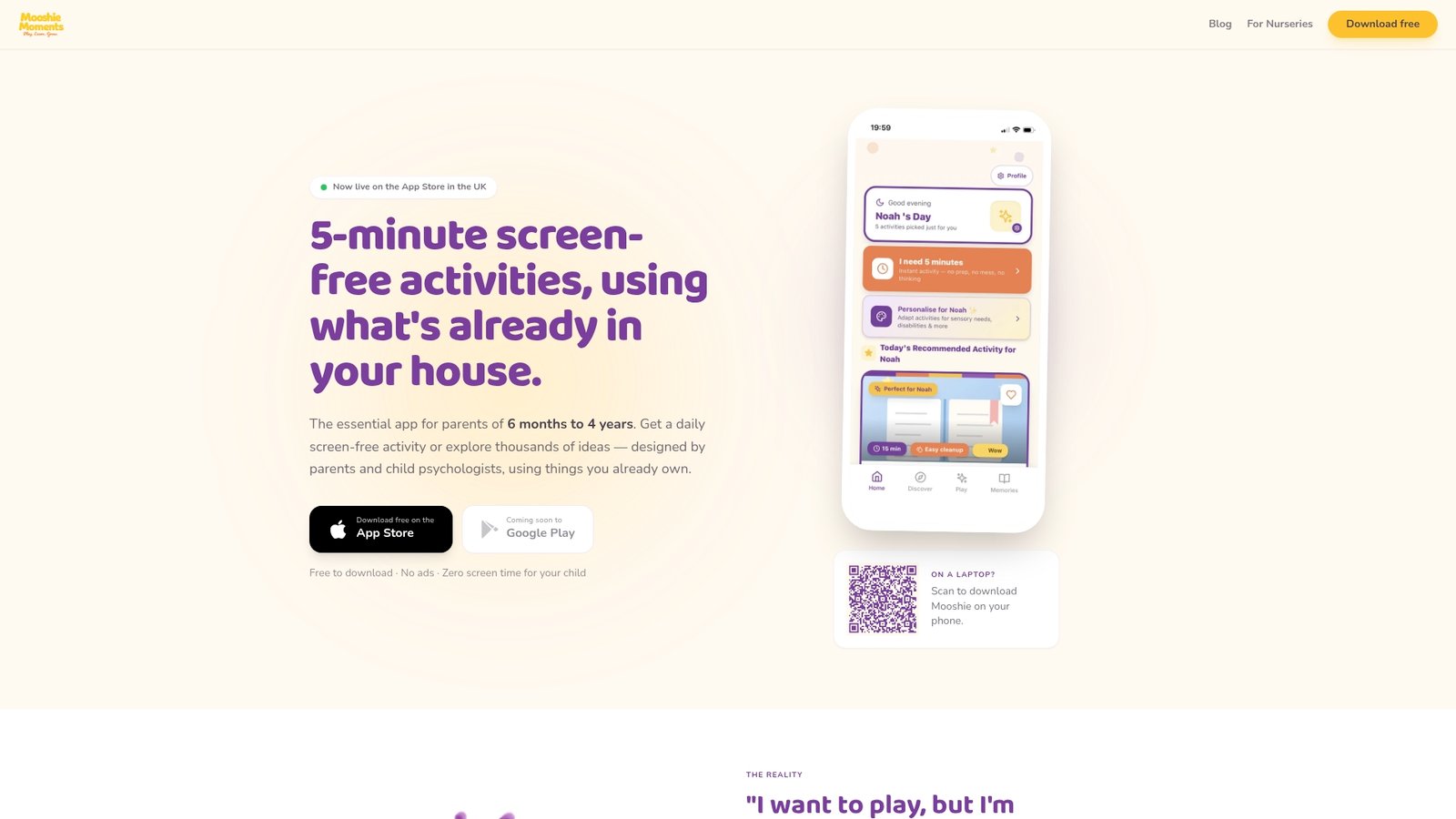
If you look after a group of toddlers rather than just your own, the Partnership Pack for nurseries and early years settings offers ready-made resources and printable activity plans designed for that setting. For creative prop inspiration beyond the obstacle course, Brainie Comics’ household science experiments are worth a browse too. Start with Mooshie and see what today’s activity suggestion looks like for your child’s age.
Where this guidance comes from
- NHS physical activity guidelines for under 5s: the 180 minute daily recommendation explained.
- NHS guidance on keeping toddlers active: safety and engagement tips for active play.
Sources
- Physical activity guidelines for children (under 5 years) – NHS
- How to keep your baby or toddler active – NHS
- Physical activity recommendations for early years (birth to 5 years) – RUH patient information
FAQ
What are some good obstacle course ideas for a 2-year-old?
Simple stations work best at this age: crawling through a box, stepping over a rolled towel, and tossing a soft ball into a laundry basket. Keep distances short and stay close, since many 2 year olds are still building balance and confidence with new movements.
How to keep a 2 year old busy indoors?
Short, varied bursts of activity work better than one long session, and an obstacle course is a reliable option because it combines movement with a bit of structure. Rotating a few stations, like a tunnel, a balance line, and a throw target, keeps things interesting without needing new toys.
How to make an obstacle course for kids indoors?
Line up 5 to 7 stations using household items such as cushions, tape, cardboard boxes, and a table to crawl under, then let your toddler move through them in sequence. Clear small objects and secure any loose rugs first, following basic NHS safety guidance for active indoor play.
What is the best age for obstacle courses?
There is no single starting age since it depends on mobility rather than birthdays. Most toddlers can manage a simplified course once they are walking confidently. Adjust station difficulty to your child’s current skills rather than their exact age.
How much daily activity do toddlers actually need?
The NHS recommends at least 180 minutes of physical activity a day for children aged 1 to 5, spread across the day in both light and energetic play. A few short obstacle course runs can contribute a meaningful chunk of that total.
Recommended
- 12 Low Prep Toddler Activities for Grandparents With Seated Options
- 40 Fun 2 Year Old Activities to Start Right Now
- Junk Modelling for Toddlers: Easy EYFS-Aligned Activities
Want a new idea every day, matched to your child's age?
Mooshie Moments gives you simple, guided play ideas for ages 6 months to 4 years.
Download free on the App StoreMore like this
Babysitting Toddlers: 12 Low Prep Ideas and Why They Help
Explore 12 low prep toddler activities for babysitters, with developmental benefits, age adaptations, UK safety advice, and optional activity coaching.
10 EYFS Backed Sock Games for Toddlers Under Five Minutes
Ten EYFS aligned sock games to start in under five minutes, each with a one line developmental benefit, simple adaptations, and two…
Busy Parents: 12 No Prep Shopping Activities for Toddlers
Busy parents: keep toddlers learning and calm at the store with 12 no prep, screen free activities that take under five minutes…