Role Play and Pretend Play Ideas for Toddlers

PLAY IDEAS · 6 MONTHS TO 4 YEARS

Role Play and Pretend Play Ideas for Toddlers

Role play ideas for toddlers from 6 months to 4 years, using things already at home. Try a pretend play scene tonight with the Mooshie Moments app.

  • Free to download
  • No account needed
  • No screen time for your child
QR code to download Mooshie MomentsOn a laptop?
Scan to get Mooshie on your iPhone.
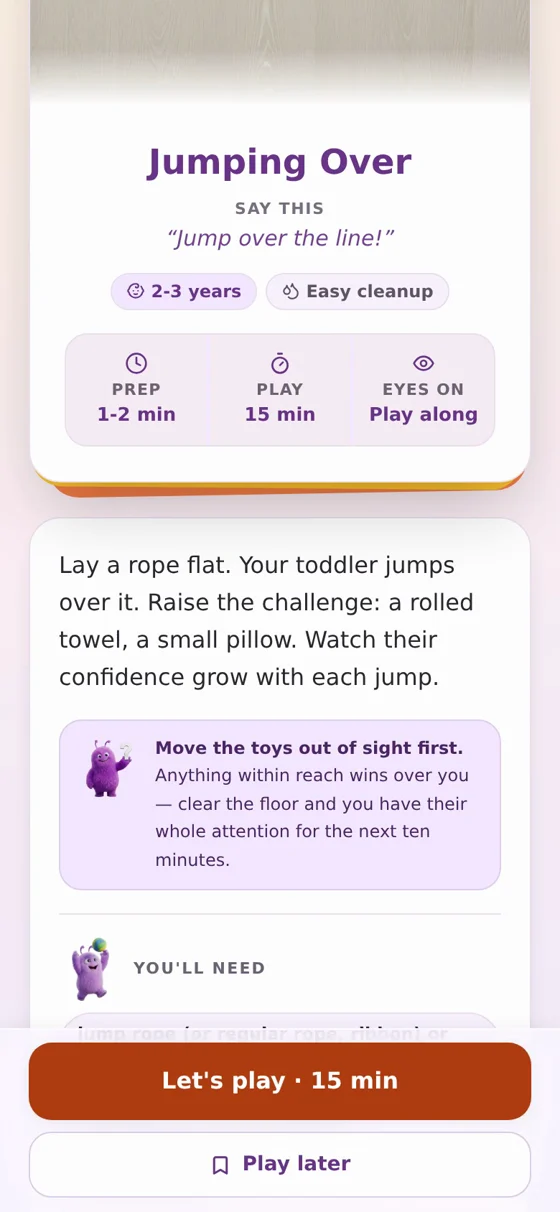
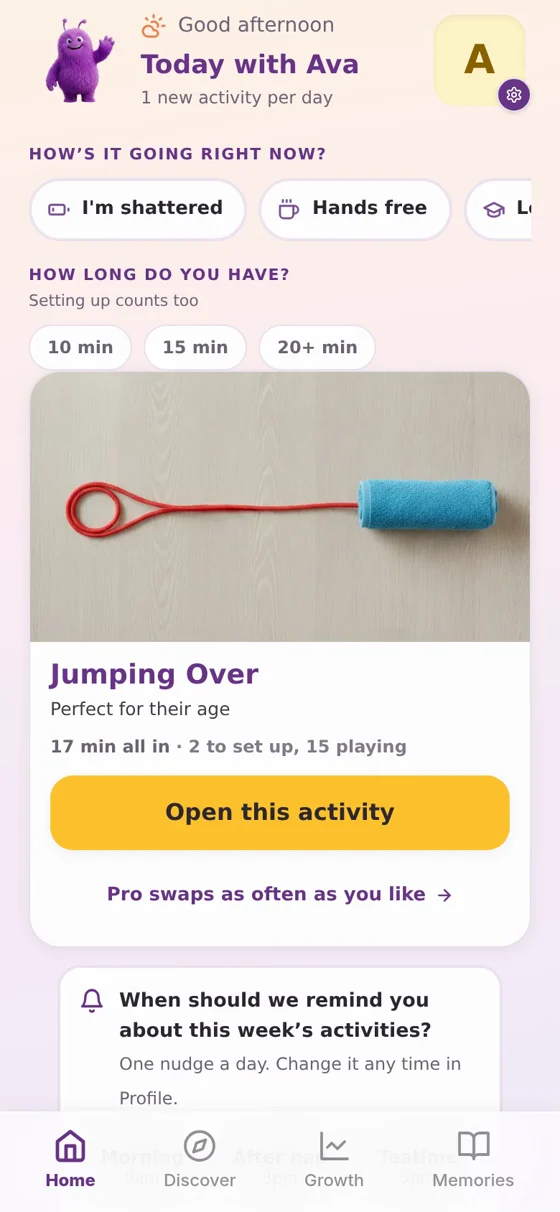
Mooshie activity screen with Say this words to useMooshie Today screen with mood and time options and today's activity
10free ideas on this page
5,918activities for 6 months to 4 years
Say thisthe exact words on every activity
0child details uploaded, ever

Role play ideas for toddlers can start with nothing more than a banana held up to an ear. Pretend play doesn’t need a costume box or a corner shop set from a catalogue. It grows from whatever is on the kitchen counter, and it starts far earlier than most parents expect, often around the first birthday.

Below are ten role play and pretend play ideas from the Mooshie Moments app, running from 6 months to 4 years. Each one uses things you already have at home, takes about 10 minutes, and comes with the exact words to say while you play alongside your child.

How pretend play grows up, stage by stage

Pretend play doesn’t arrive all at once. It builds in three rough stages, and knowing which one your child is in helps you meet them where they are rather than pushing ahead too fast.

Copying you.

From around 6 to 12 months, babies imitate simple actions: holding a “phone” to their ear, patting a toy the way you pat them.

Objects standing in for other objects.

From around 1 to 2 years, a banana becomes a phone, a box becomes a car, a cushion becomes a boat.

Stories with roles.

From around 2 to 4 years, children take on a character: shopkeeper, doctor, postman, astronaut, and hold a whole scene together with rules and a plot.

Pretend play stations from things around the house

Rather than buying a set, turn a corner of the living room into a “station” for a day or an afternoon using what’s already in the cupboard.

The shop.

A row of cushions and some stuffed toys as stock, paper as pretend money.

The café.

Empty cups, saucepans, a tea towel as an apron.

The vet or doctor’s.

A wooden spoon as a stethoscope, a tea towel as a bandage, stuffed toys as patients.

The post office.

Folded paper letters and a bag to deliver them round the house.

Pretend play for 6 to 12 month olds

6 to 12 months10 minutes

1. Banana phone sing-along

Hold a banana to your ear and sing a nursery rhyme into it, then pass it to your baby for their turn. Holding an object to the ear and pretending is one of the very earliest forms of symbolic play.

You’ll need: a banana

How to play
  1. Hold the banana up and say “ring ring!”
  2. Answer with “hello baby!” and sing a line of a nursery rhyme.
  3. Pass it over and say “your turn.”
  4. Repeat with a different song each round.
Say this: “Ring ring banana!” · “Hello?” · “Your turn.”
6 to 12 months10 minutes

2. Spoon mirror talk

Hold a metal spoon in front of your baby’s face so their reflection wobbles. Talk to “baby in the spoon”, then swap to your own face, then back again. This wobbly reflection is a gentle first step towards the “the baby in the mirror is me” moment that comes later.

You’ll need: a metal spoon

Say this: “Look, baby in the spoon.” · “And there’s Mummy.” · “Wibble wobble.”
6 to 12 months10 minutes

3. Doll bath time, no water

Lay a stuffed toy on a tea towel and pretend-wash it with a dry sponge, drying it afterwards. It lets your baby rehearse an emotionally familiar routine, bath time, without any water involved, and watching themselves “care” for a toy plants an early seed of gentleness.

You’ll need: a stuffed toy, a dry sponge, a tea towel

How to play
  1. Sit your baby with you and place the toy on the towel.
  2. Wipe it with the dry sponge, saying “wash, wash.”
  3. Dry it with the towel and say “all clean!”
  4. Repeat with a different toy if they want more.
6 to 12 months10 minutes

4. Phone call tea party

Hand your baby a pretend phone and have a fake conversation with exaggerated voices. Even at this age, the rhythm of “your turn, my turn” is an early rehearsal for the back and forth of real conversation.

You’ll need: a banana, remote or any rectangle-shaped object

Say this: “Ring ring!” · “Hello? It’s for you!” · “Bye-bye!”

Pretend play for 1 to 2 year olds

1 to 2 years10 minutes

5. The yes cupboard

Clear one low cupboard and fill it with plastic bowls, a wooden spoon and a muffin tin, then tell your toddler it’s theirs. They’ll empty it, stir an empty bowl and pack it back in, copying you exactly, right down to the wrist movement, while you get on with cooking nearby.

You’ll need: one low kitchen cupboard, plastic bowls, a wooden spoon, a muffin tin

How to play
  1. Clear one low cupboard and stock it with safe, unbreakable items.
  2. Open the door once and say “this cupboard is yours,” then step away.
  3. Let them haul everything out and “cook” without joining in or tidying up.
  4. Before the next meal, ask them to pack everything back in themselves.
Say this: “This cupboard is yours!” · “You’re cooking!” · “Everything back in!”
1 to 2 years10 minutes

6. Treasure map adventure

Hide a stuffed toy under a cushion and draw a wobbly map with an X on it. Walk your toddler through following the map to find the “treasure”. Following a simple mark on paper to a real object is an early form of the same skill they’ll later use to read words as stand-ins for things.

You’ll need: paper and a pen, a stuffed toy, a cushion

Say this: “X marks the spot!” · “Lift the cushion!” · “Treasure!”

Pretend play for 2 to 3 year olds

2 to 3 years10 minutes

7. Pretend postman

Fold five paper “letters”, write a name on each, and have your toddler deliver them to different toys or family members around the house. Holding five names and five destinations in mind at once is real cognitive work, dressed up as a job.

You’ll need: paper, a pen, stuffed toys

How to play
  1. Fold and address five paper letters.
  2. Hand over the bundle and announce “delivery!”
  3. Walk through each delivery together.
  4. Have each recipient say “thank you, postman!”
Say this: “Special delivery!” · “Letter for teddy!” · “Postman’s done!”
2 to 3 years10 minutes

8. Pretend doctor visit

Your toddler is the doctor, stuffed toys are the patients, a wooden spoon becomes a stethoscope and a tea towel becomes a bandage. Running a whole “clinic” (diagnose, treat, dismiss, repeat) practises sequencing, empathy and decision-making all at once.

You’ll need: stuffed toys, a wooden spoon, a tea towel

Say this: “Where does it hurt?” · “Big bandage time.” · “All better, next patient!”
2 to 3 years10 minutes

9. Pretend restaurant

Your toddler becomes chef and waiter. They take your order, “cook” with rolled-up socks in saucepans, serve you, and take payment in paper money. It’s one of the most complex pretend scenarios at this age, mixing language, sequencing and basic number sense, and toddlers love it because they’re the one in charge.

You’ll need: plates, saucepans, a wooden spoon, rolled socks, paper

How to play
  1. Set up a small “kitchen” on the floor and sit at the “table” yourself.
  2. Have them ask “what would you like?”
  3. Let them cook, plate and serve.
  4. Pay with paper money at the end.

Pretend play for 3 to 4 year olds

3 to 4 years5 minutes

10. Vet for teddy

Bring a teddy in with a “poorly leg” and let your child be the vet. They examine it, explain what’s wrong, and wrap the tea towel round as a bandage while you play the worried owner. It’s a gentle way to talk about being hurt or scared from a safe, capable role.

You’ll need: a teddy, a tea towel

How to play
  1. Carry the teddy in and say “doctor, his leg is hurting.”
  2. Ask “what do you think is wrong with him?” and wait for an answer.
  3. Let them wrap the bandage and pat it flat.
  4. Thank them and ask “when can he walk again?”
Say this: “What do you think is wrong with him?” · “You’re being very gentle with him.”

Hundreds more ideas like these are waiting in the app.

Plus one picked for your child every day, matched to their age and how today is going.

How to join in without taking over

Let them set the plot.

If the doctor decides teddy needs three bandages, teddy needs three bandages. Correcting the “wrong” detail breaks the spell.

Play a supporting role.

Be the patient, the customer, the worried owner. The story works better when your child is the one in charge.

Ask questions inside the story.

“When can he walk again, doctor?” keeps the scene going far longer than stepping outside it to praise them.

Step back when they don’t need you.

Once a scene is running well on its own, a quiet “I’ll be right here” is often enough.

LOVED BY FAMILIES

Parents and experts on Mooshie

“I used to spend 30 minutes looking for an activity on Pinterest, get overwhelmed, and just turn on the TV. Mooshie takes 5 seconds.”
Sarah J.Mum of a 2-year-old
“Finally, an app that tells me to put my phone away. The activities are actually doable with stuff I have in my junk drawer.”
Mark D.Dad of two
“As a pediatric OT, I love that these activities build core developmental skills without feeling like ‘homework’ for parents.”
Dr Emily R.Paediatric occupational therapist
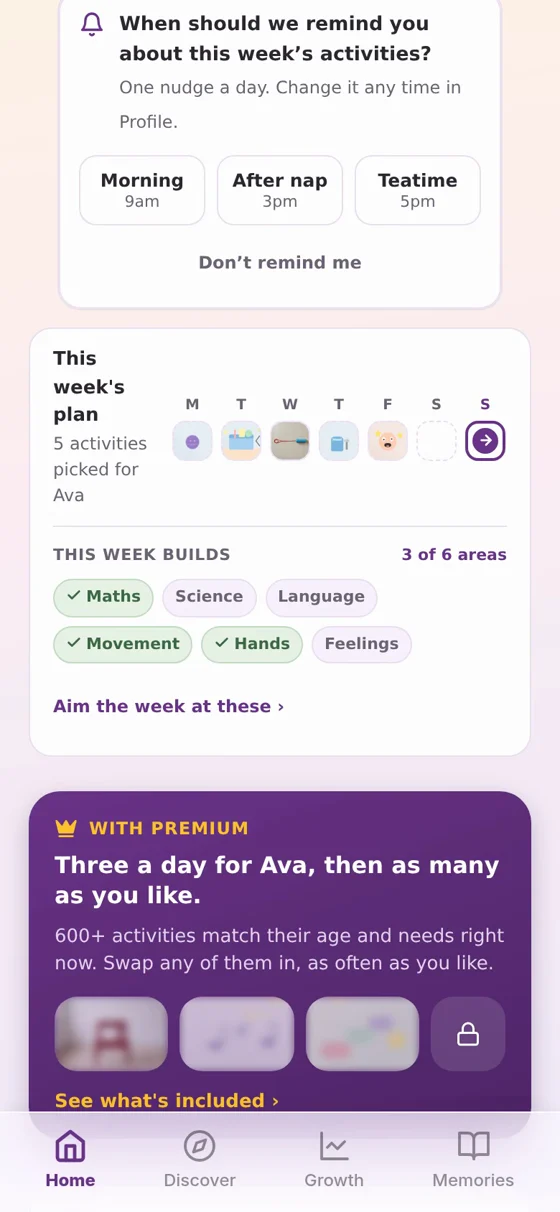
This week's plan showing five activities and the areas they build
HOW MOOSHIE HELPS

How Mooshie helps with pretend play

The Mooshie Moments app has 5,918 activities for ages 6 months to 4 years, using things you already have at home, and it picks one to match your child’s age and how the day is going, whether that’s a big-energy afternoon or a “hands free for ten minutes” one.

  • Every activity has “Say this” phrases built in, so you always have a line ready when the pretend scene needs a nudge.
  • Tap “We’re done” afterwards to see “What that built”, the skills behind the play, and add a photo to save the moment to Memories.
  • A weekly plan of five activities covers six areas including language and feelings, both of which pretend play leans on heavily.

It’s for you, not your child: check the idea in 30 seconds, then put the phone down and play. Free to download, with one new activity a day free and no account needed.

Questions parents ask

What age do toddlers start pretend play?

Simple copying, like holding a toy phone to the ear, often begins around 12 to 18 months. Using one object as another, such as a box as a car, tends to follow from around 18 months to 2 years, with fuller storylines and roles developing between 2 and 4.

My toddler only plays alone. Is imaginative play still happening?

Yes. Many toddlers play “small world” scenes with figures and toys on their own long before they invite you in, and that solo pretend play is just as valuable. Sit nearby and narrate your own version of the same theme rather than joining directly, if they seem to prefer their own space.

What if my child always wants to play the same role?

That’s completely normal and often a sign they’re consolidating a script they’ve nearly mastered. Let them repeat “doctor” or “shopkeeper” as many times as they like. New variations tend to creep in on their own once the basic version feels secure.

Does role play help with speech?

Many parents notice their child using more words and longer sentences during pretend play than at any other time, since a character gives them something to say and a reason to say it. If you have specific concerns about speech, your health visitor is a good first port of call.

How do I stop role play turning into a mess or a meltdown?

Keep props simple, agree an end point in advance (“last customer, then the shop closes”) and let your child know before you tidy away. Most meltdowns come from a scene ending suddenly rather than from the play itself.

Mooshie is a play app, not medical advice. If you’re worried about your child’s development, speak to your health visitor or GP.

Make memories. Build skills. Play together.

Your first moment is ready as soon as you tell us their age.

Mooshie MomentsFree on iPhone
Get it free