
15–30 Minute Connection First Bedtime Routine for Toddlers

Stop screens at least one hour before bed, then move through three or four calm steps in the same order every night: bath or wash, a quiet connection activity like reading or cuddling, one song and a consistent tuck-in phrase. Give yourself 15 to 30 minutes, longer on bath nights. If you want the activity part done for you, an app can provide age-matched, screen-free prompts so you’re not thinking up something new every evening.
TL;DR:
- A consistent bedtime routine should last 15 to 30 minutes, with three or four predictable steps, including hygiene, calming activities, and a closing phrase.
- Connection activities like reading, singing, or gentle back rubs are most effective when repeated nightly and tailored to the child’s age, particularly emphasizing repetition for toddlers under three.
- Heavy sensory activities, scheduled 30 to 60 minutes before winding down, help regulate energetic toddlers and are most effective when done in the same room each time.
- Eliminating screens at least one hour before bed and removing stimulating content or clutter in the bedroom are crucial to improving sleep quality.
- Using a bedtime box with familiar items and visual charts can reinforce the routine, making it easier for toddlers to predict and accept the process.
Table of Contents
- Calming Bedtime Activities Using What’s Already in Your House
- How to Build a 15, 20, or 30 Minute Bedtime Routine
- Sensory Activities for Energetic Toddlers Before Bed
- What to Cut From the Bedtime Hour
- Building a Bedtime Box and Visual Chart
- Why Consistency Beats a Perfect Routine
- Try Mooshie Moments for Ready-Made Bedtime Activity Ideas
- Sources
- FAQ
Calming Bedtime Activities Using What’s Already in Your House
You don’t need a shopping trip to build a good bedtime routine. The best bedtime activities for toddlers pull from what’s already sitting in your kitchen drawers and toy basket, and they work because they’re familiar, not because they’re fancy. Connection matters more than novelty here. A wearable-camera study tracking preschoolers’ evenings found that connection activities like cuddling and bath time were tied to modestly longer total sleep, which backs up what most parents already suspect: the quiet, close moments are doing real work.
Here’s a working menu, organized by what kind of calm your toddler needs that night.
Connection-focused activities:
- Read one short, familiar book. New books can overstimulate; the fifth reread of the same story is the point, not a failure of variety.
- Sing one lullaby, always the same one if you can manage it. Repetition is the signal, not the song choice.
- Give a 2 to 3 minute back rub. The “make me a pizza” game, where you tap, knead, and swirl your hand like you’re topping a pizza, gives toddlers a giggle before they settle.
Quiet play options:
- Set out a single-piece or simple jigsaw puzzle. One puzzle, not the whole bin.
- Build a sensory box: dry rice or pasta in a sealed container with a spoon for scooping. Keep it lidded and supervised.
- Offer soft stacking toys or a tactile fabric book for hands that need something to do while ears listen to a story.
Oral and sensory calming:
- Blow bubbles in the bath. Slow exhales are a built-in breathing exercise toddlers don’t know they’re doing.
- Offer a small water bottle if thirst is a stalling tactic waiting to happen.
- Try slow finger-tracing shapes on your toddler’s back, or a puppet that “walks” gently across their arm.
Age changes what lands well. At 18 to 24 months, keep everything under two minutes and lean on repetition. A single board book and the same two-line song, night after night, works better than variety. At 2 to 3 years, toddlers can handle a slightly longer sequence and start to enjoy simple choices, like picking between two familiar books. At 3 to 4 years, you can introduce short role-play moments; printable scripts like these role-play routines for kids work well folded into a bedtime box for this age.
Public health resources on child development consistently point to shared reading and quiet songs as some of the most reliable pre-bed connection activities, not because they’re exciting, but because they’re predictable. If you want more scripts for narrating quiet play in a way that also builds language, narrating play during bedtime reading gives you exact phrasing to try tonight.
How to Build a 15, 20, or 30 Minute Bedtime Routine
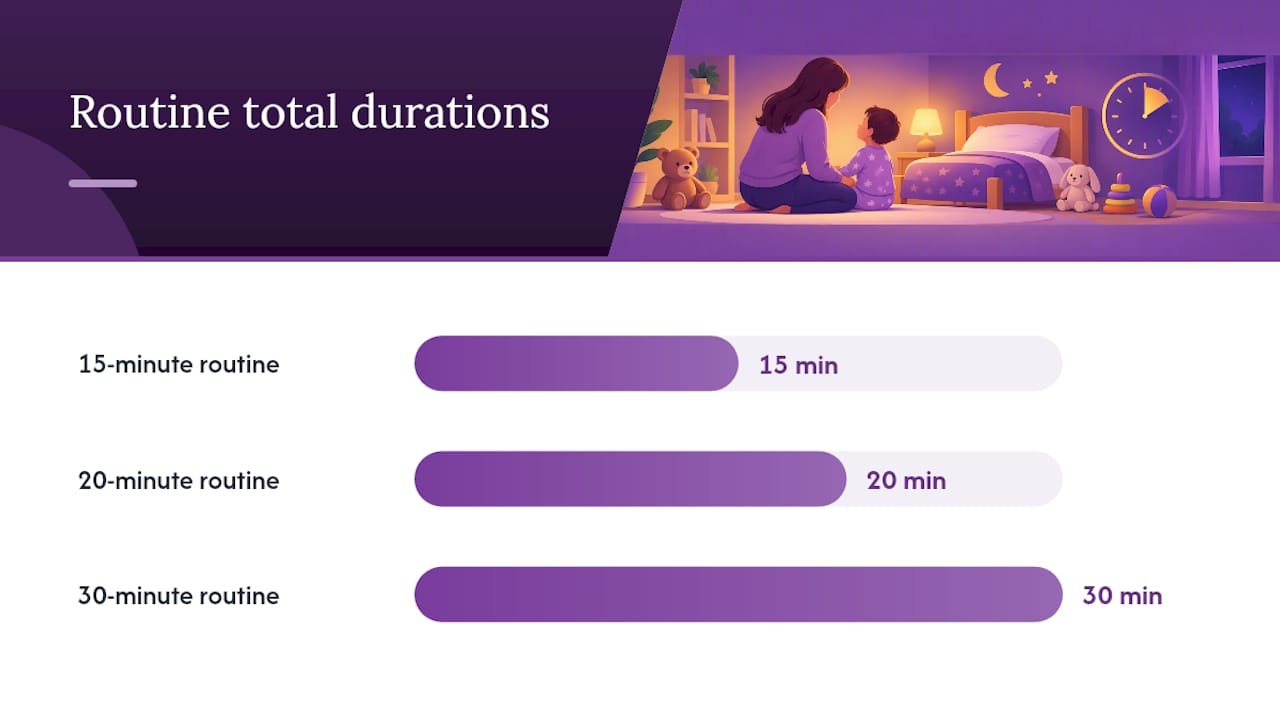
A routine only works if it’s short enough to survive a tired evening and structured enough that your toddler knows what’s coming next. Clinical guidance on children’s sleep hygiene recommends a consistent routine of three to four brief stages, which is exactly the skeleton behind each template below.
The 15-minute version (no bath):
- Pyjamas and teeth (3 minutes) — the need-to-do step, non-negotiable.
- One calming activity: back rub or bubble breathing (5 minutes).
- One short book (5 minutes).
- Same closing phrase and lights out (2 minutes).
The 20-minute version (light play added):
- Pyjamas, teeth, potty or nappy (5 minutes).
- Quiet play: sensory box or puzzle (5 minutes).
- Book plus lullaby (7 minutes).
- Closing phrase and tuck-in (3 minutes).
The 30 minute version (bath included):
- Bath or wash (10 minutes).
- Pyjamas and teeth (3 minutes).
- Quiet connection activity: back rub or role-play moment (7 minutes).
- Two books or one book plus lullaby (7 minutes).
- Closing phrase and lights out (3 minutes).
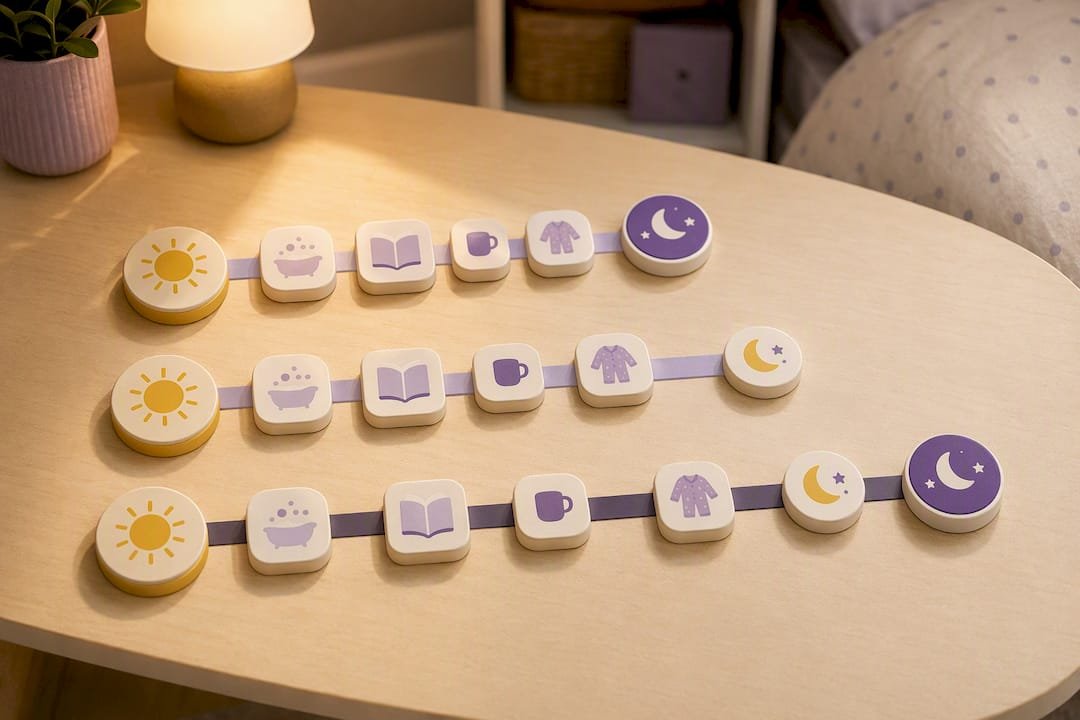
“Need-to-do” steps are the hygiene basics: teeth, pyjamas, toilet or nappy. They’re not up for debate and shouldn’t be dressed up as optional. “Nice-to-do” steps are the connection activities, the backbone that makes bedtime feel safe rather than rushed. NHS-adjacent guidance on toddler sleep routines recommends visual timetables and timers to help toddlers understand where they are in the sequence, which cuts down on stalling because the child can see what’s left rather than guessing.
Pick one consistent phrase to open the routine every night, something like “time for our quiet time,” and use it identically each evening. On nap-transition days, illness nights, or travel, keep the order intact even if you shorten each step; the sequence itself is the anchor, not the exact minute count. When you’re shifting bedtime earlier or later, move it in small increments over several nights rather than jumping straight to the new time.
Sensory Activities for Energetic Toddlers Before Bed
Some toddlers can’t go from full sprint to storytime in one step, and forcing that switch is often where bedtime resistance actually starts. Sensory-seeking kids benefit from deep pressure and proprioceptive input, heavy-work activity, before quiet time even begins. This kind of input helps regulate a nervous system that’s still running hot from the day.
The timing matters as much as the activity. Heavy work works best scheduled 30 to 60 minutes before the actual wind-down routine, giving your toddler time to feel the calming effect before you ask for stillness. Jumping straight from wall pushes into “lie down and be quiet” rarely works; the body needs a runway.
- Wall pushes: stand facing a wall, hands flat against it, and push as if trying to move it. Ten reps, resting between each.
- Laundry basket push: load a plastic basket with a few books or cushions and have your toddler push it across the floor. Two or three trips across the room is plenty.
- Animal walks: bear crawls or crab walks across the living room floor for a minute or two.
- Slow pillow squeezes: have your toddler lie on a soft surface while you apply gentle, even pressure with a pillow along their arms and legs. Always ask first and stop if they say no.
- Wheelbarrow walks: hold your toddler’s ankles while they walk on their hands for a short stretch, always on a soft, cleared floor.
Pro Tip: Do heavy work in the same room every time, not right on the bed. That keeps the bed itself associated with calm, not activity.
The evidence for restructuring the pre-bed hour isn’t just theoretical. A pilot randomized trial that removed screens in the hour before bed and replaced them with a structured bedtime box of alternative activities found the swap was not only feasible but led to modest gains in sleep efficiency and fewer reported night wakings. Families in that trial stuck with it, too. If you’re trying a new sensory strategy, give it three to seven nights before judging whether it’s helping; switching several things at once tends to confuse a toddler’s sense of what’s coming next rather than clarify it.
What to Cut From the Bedtime Hour
A few habits quietly undo everything else in the routine, and most of them are easy to fix once you spot them.
- Screens within the hour before bed. NHS guidance is direct on this: stopping electronic devices at least one hour before bedtime reduces blue light exposure and stimulating content that delays sleep onset.
- New or emotionally loaded tasks right before wind-down. Save the exciting new toy, the big conversation, or the tricky puzzle for earlier in the evening, not the final ten minutes.
- Sugary or caffeinated snacks close to bed. If your toddler needs a bite, keep it light and low in sugar; save juice and treats for well before the routine starts.
- A cluttered, noisy, or bright bedroom. Dim the lights, cut background noise, and keep phones and tablets out of the room entirely, not just switched off.
None of these rules require extra effort. They’re mostly about subtraction, cutting the last stimulating thing out of the hour rather than adding a new calming one in.
Building a Bedtime Box and Visual Chart
A bedtime box removes decision fatigue for both of you. Fill a small container with two familiar books, one quiet toy, a small sensory item like a fabric scrap or squishy ball, a toothbrush, and a small water bottle. Keep it in the same spot every night so reaching for it becomes part of the ritual itself.
- Draw or print a simple visual chart with pictures for each step: bath, teeth, book, lights out.
- Post the chart at your toddler’s eye level, near the bed or bathroom door.
- Use a visual timer or a toddler clock to show how much time is left in quiet play before the next step starts.
- Do a 30-second reset each morning, restocking the box so it’s ready without a scramble that evening.
For more age-specific pieces to rotate into the box, activities for 2 year olds offers a solid rotating list you can pull from without reinventing the routine every week.
Why Consistency Beats a Perfect Routine
Bedtime routines fail less often because parents pick the wrong activity and more often because the order changes every night. A predictable sequence, even an imperfect one, teaches a toddler’s brain what’s coming, and that predictability is what actually settles them, not the specific song or book chosen. One reliable “nice-to-do” step done every single night will outperform five different activities rotated at random.
Small hacks make forgiving nights possible. Swap who runs bedtime between caregivers so no one burns out doing it solo every night. Keep a “go-to” pile of two or three books by the bed so you’re never hunting for one at the worst possible moment. And settle on one closing phrase, the same words every night, that tells your toddler the routine is ending and sleep is next.
If a night falls apart, it isn’t evidence the routine doesn’t work. It’s evidence you’re tired, and that’s allowed.
Try Mooshie Moments for Ready-Made Bedtime Activity Ideas
Mooshie Moments is the option for parents who don’t want to be the one inventing tonight’s calming activity from scratch. The app gives you screen-free, age-tailored suggestions built from everyday household items, matched to your toddler’s age and however many minutes you actually have left before collapse.
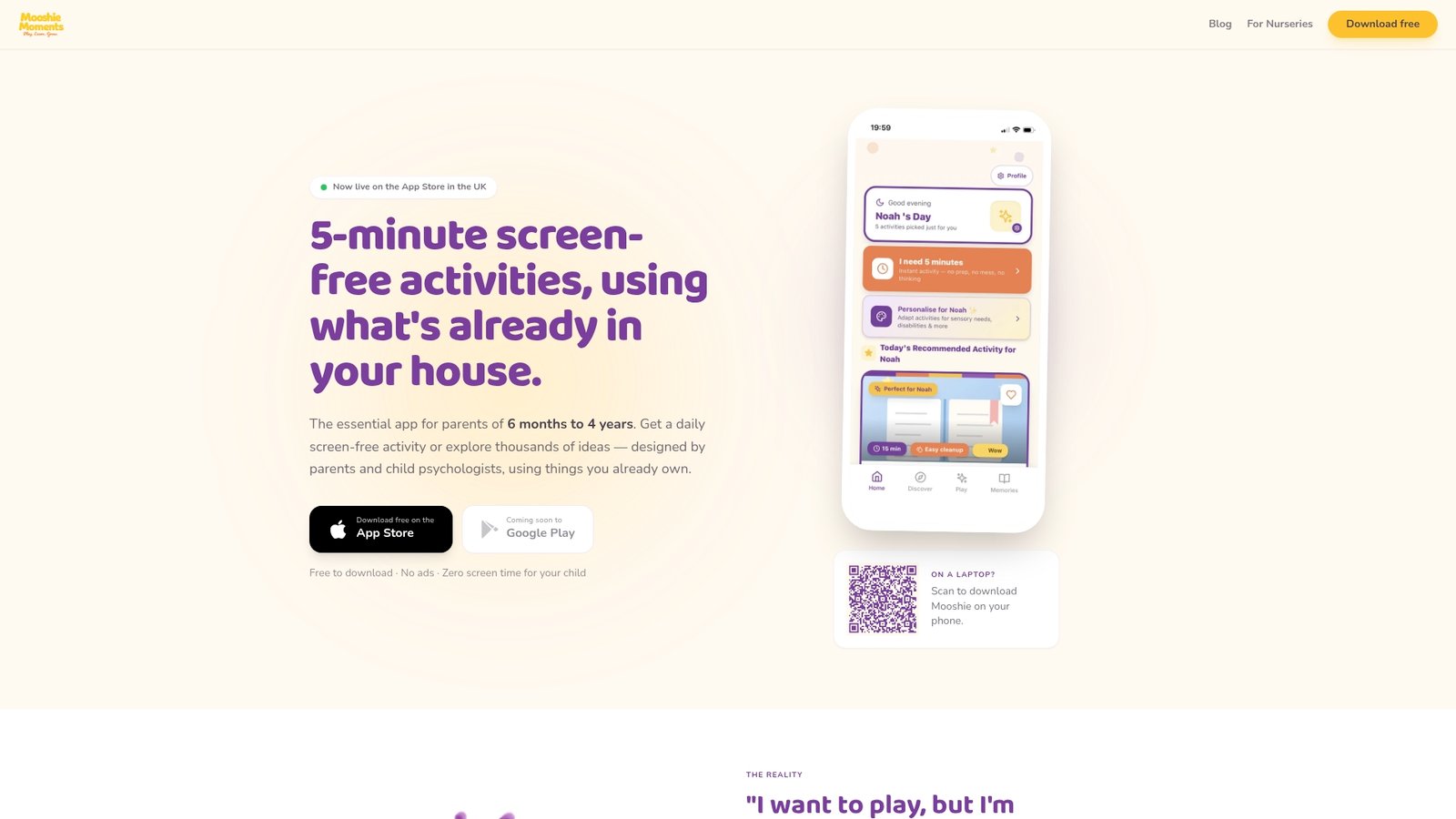
It maps directly onto everything above: quick connection activities for the 15 minute nights, sensory options for the evenings your toddler needs heavy work first, and bedtime box ideas ready whenever you need a fresh prop without a shopping trip. Every suggestion explains the developmental reasoning in plain language, so you know why it works, not just that it does.
If you run a nursery or early years setting, the Partnership Pack offers printable, research-aligned activity resources for the families you work with. Otherwise, try Mooshie Moments tonight and see what it suggests for your toddler’s age and your available time.
Sources
For the guidance behind this article, see the NHS sleep routines guidance, the PASTI pilot trial on screen removal, GOSH sleep hygiene guidance, and the AAP review of behavioral sleep interventions.
- Sleep routines for toddlers and children
- Parent-administered screen time intervention (PASTI) pilot randomized clinical trial
FAQ
What are some good activities to do before bed for toddlers?
Reading one familiar book, singing a single lullaby, a short back rub, and quiet sensory play like a rice-filled sensory box all work well. The PASTI trial found a structured bedtime box of alternative activities was both feasible and effective at replacing screen time. Apps like Mooshie Moments can suggest age-specific versions of these if you want a new idea without the planning.
What is the 3/2/1 bedtime rule?
There’s no single universally agreed definition of a “3/2/1” bedtime rule in toddler sleep guidance, and versions vary across sources. The more consistent, evidence-backed approach for toddlers is stopping screens at least one hour before bed and following a short, repeated three to four step wind-down sequence.
What is a good bedtime routine for toddlers?
A good routine runs 15 to 30 minutes and follows the same order every night: hygiene basics like teeth and pyjamas, one calming connection activity such as reading or a back rub, and a consistent closing phrase before lights out. Clinical guidance recommends keeping the sequence to three or four brief stages so toddlers can predict what’s coming next.
What is the 5-3-3 rule for sleep training?
Like the 3/2/1 rule, “5-3-3” isn’t a standardized framework in the peer-reviewed sleep literature, and definitions differ depending on the source. Rather than chase a numbered rule, focus on proven approaches such as bedtime fading and consistent routines, which controlled trials show reduce sleep onset delays without harming attachment.
Recommended
- 40 Fun 2 Year Old Activities to Start Right Now
- 12 Low Prep Toddler Activities for Grandparents With Seated Options
- Fun 9-Month-Old Activities for Busy Parents
- How to Narrate Play for Your Toddler’s Language Growth
Want a new idea every day, matched to your child's age?
Mooshie Moments gives you simple, guided play ideas for ages 6 months to 4 years.
Download free on the App StoreMore like this

Babysitting Toddlers: 12 Low Prep Ideas and Why They Help
Explore 12 low prep toddler activities for babysitters, with developmental benefits, age adaptations, UK safety advice, and optional activity coaching.
10 EYFS Backed Sock Games for Toddlers Under Five Minutes
Ten EYFS aligned sock games to start in under five minutes, each with a one line developmental benefit, simple adaptations, and two…

Busy Parents: 12 No Prep Shopping Activities for Toddlers
Busy parents: keep toddlers learning and calm at the store with 12 no prep, screen free activities that take under five minutes…