Sleep Regression: A Calmer Wind-Down, Age by Age

HELP FOR HARD MOMENTS · AGES 1 TO 4

Sleep Regression: A Calmer Wind-Down, Age by Age

Sleep regression explained by age, from 4 months to 2 years, with ten calming wind-down activities and scripts. Not medical advice, free to try today.

  • Free to download
  • No account needed
  • No screen time for your child
QR code to download Mooshie MomentsOn a laptop?
Scan to get Mooshie on your iPhone.
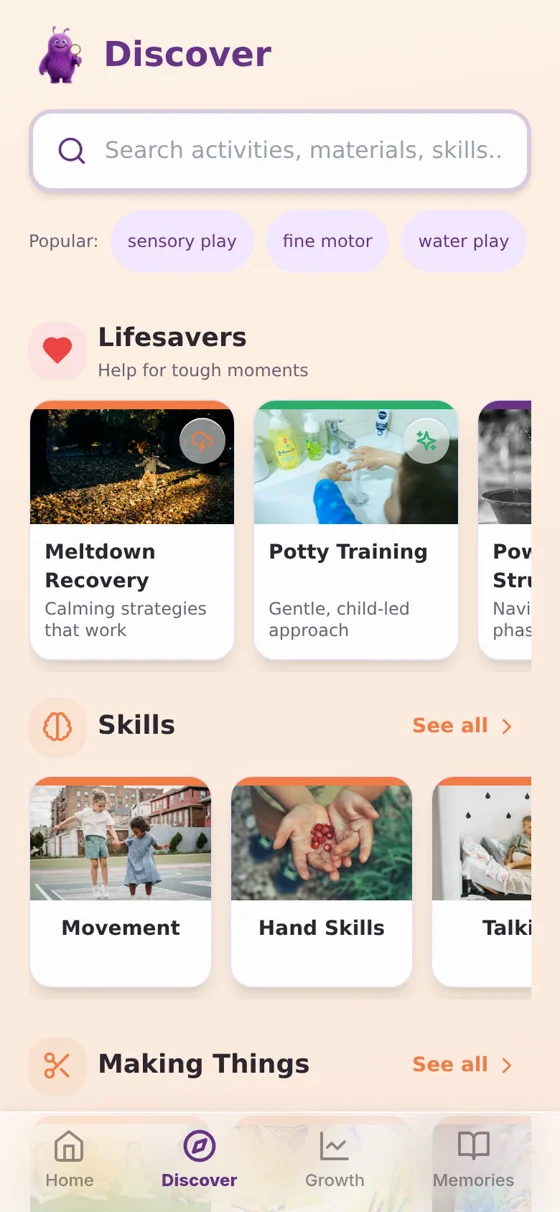
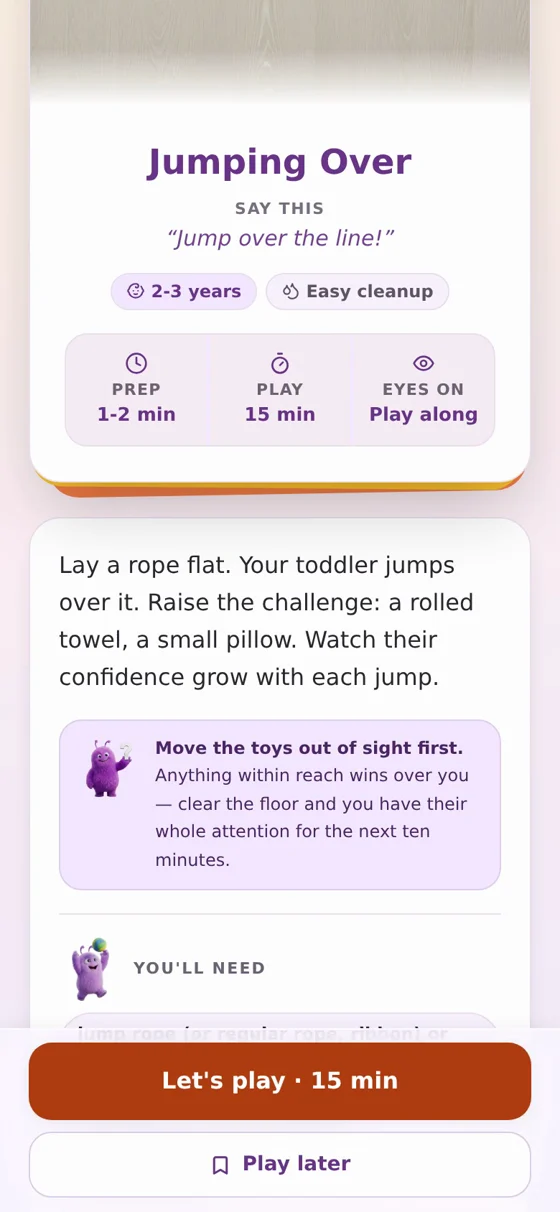
Mooshie Discover screen with Lifesavers for meltdowns and potty trainingMooshie activity screen with Say this words to use
10free ideas on this page
5,918activities for 6 months to 4 years
Say thisthe exact words on every activity
0child details uploaded, ever

A sleep regression can’t really be fixed, but a calmer wind-down makes it much easier to ride out. When a baby or toddler who was sleeping fine suddenly wakes repeatedly, fights bedtime, or drops naps overnight, it usually settles again within a few weeks as their brain and body catch up with whatever leap is going on.

Below is a look at the common ages sleep regressions turn up, followed by ten activities from the Mooshie Moments app for children aged 1 to 4, covering daytime play and a calmer bedtime routine. Each uses things you already have at home and comes with the exact words to say. Mooshie’s activities start from 6 months, so for the younger regressions below, the wind-down ideas rather than the app itself are what applies.

Common ages, in plain terms

Sleep regressions tend to cluster around certain ages, though every baby’s timing is different and not every child has a rough patch at each one.

Around 4 months.

Sleep cycles change to a more adult pattern, with lighter sleep between cycles, which often means more waking. This one tends to hit hardest because it’s usually the first.

Around 8 to 10 months.

Object permanence and separation anxiety are developing together, so babies wake and want reassurance you’re still there. Crawling or pulling to stand often lands around here too, and babies sometimes practise the new skill in their sleep.

Around 12 months.

Walking and a wave of new language often coincide with disturbed nights, as a busy brain processes the day.

Around 18 months.

A nap transition, often dropping from two naps to one, can throw bedtime and night waking off for a few weeks.

Around 2 years.

Imagination is taking off, which is wonderful in the day and occasionally unsettling at night, alongside a growing sense of independence that can turn into bedtime stalling.

These are general patterns, not guarantees, and there’s rarely one single cause. If sleep has changed suddenly and stays badly disrupted for more than a few weeks, or you’re worried about anything else going on, it’s worth mentioning to your health visitor. For babies, keep following safe sleep guidance throughout, such as the advice from the Lullaby Trust, on a firm flat mattress, on their back, in a clear cot.

Daytime play that helps

What happens in the day affects the night. A little independence practice and a body that feels settled both help, without any pressure at bedtime itself.

1 to 210 minutes

1. Stay in Bed Practice

Turn “staying in bed” into a light daytime game with a timer, so the skill is already familiar before it’s needed for real at night.

You’ll need: their bed

How to play
  1. Set a timer for two minutes and ask them to stay lying down.
  2. Praise them warmly when the timer beeps.
  3. Let them hop straight back up afterwards.
  4. Repeat every few days, stretching the time slightly.
1 to 210 minutes

2. New Bed Explorer

If a bed change is part of what’s unsettled things, let your toddler choose their own bedding and properly explore the new bed in daylight, well before bedtime.

You’ll need: their new bed, bedding they’ve chosen

How to play
  1. Show them two or three bedding options and let them choose.
  2. Make the bed together.
  3. Invite them to lie down, roll around and get used to how it feels.
  4. Let curiosity lead, without rushing them off it.
1 to 210 minutes

3. Gradual Distance

Sit close at bedtime to start with, then move your chair back by a few feet every few nights, so your toddler discovers gradually that they can settle with you a little further away.

You’ll need: a chair

How to play
  1. Sit right beside the bed for the first few nights.
  2. Move the chair back slightly every few nights.
  3. Say the same reassuring line each time: “I’m nearby.”
  4. Keep going at whatever pace your child can manage.

A calmer wind-down routine

Whatever’s driving the regression, a predictable run-up to bed, same steps, same order, gives an unsettled body something steady to lean on.

2 to 35 minutes

4. Bathroom Before Bed

A quick toilet visit slotted in after dinner, before pyjamas, is a small practical habit that can reduce night wake-ups.

You’ll need: nothing

How to play
  1. Build it into the same spot in the routine every night.
  2. Keep it brief and matter-of-fact.
  3. Cut stimulating screens and rough play for the hour before bed.
  4. Keep the bedroom cool, dark and boring.
2 to 35 minutes

5. Song and Kiss Ritual

The same song, and the same little kiss on the same spot, every single night, becomes a bridge that tells the body it’s time to rest, even on a rough week.

You’ll need: nothing

How to play
  1. Keep the exact order the same, even if bedtime feels wobbly.
  2. Sing the same short song each night.
  3. Give the same small kiss in the same place.
  4. Keep your voice low and the room dim throughout.
2 to 3varies

6. Parent Chair Method

If your presence at bedtime has become part of the routine, shrink it gradually over a few weeks rather than all at once: chair by the bed, then the foot of the bed, then the door.

You’ll need: a chair

How to play
  1. Sit next to the bed for the first stretch of nights.
  2. Move to the foot of the bed the following week.
  3. Move to the doorway once they’re settled at that distance.
  4. Keep your words to a minimum each time they call out.
3 to 415 minutes

7. Slow Snowman Melt

Standing tall as a “snowman” and melting slowly, one body part at a time, is a physical way to ask a wound-up body to release tension before lights out.

You’ll need: a rug or the bed

How to play
  1. Stand together and say “you’re a snowman, tall and frozen.”
  2. Melt one part at a time, head first, then shoulders, then arms.
  3. Pause once they’re a “puddle” on the floor.
  4. Help the puddle climb straight into bed.
3 to 415 minutes

8. Roll The Burrito

Rolling your child up snugly in a flat blanket, arms tucked in, gives even pressure across the body, which many children find calming before sleep.

You’ll need: one light blanket

How to play
  1. Lay the blanket flat and have them lie at one edge.
  2. Ask them to roll themselves up slowly, arms tucked in.
  3. Pat the bundle gently and pause for a moment.
  4. Unroll slowly and settle straight under the covers.
3 to 415 minutes

9. Shadow Lies Down

If the dark itself is part of the worry, a hand shadow that gets sleepy and lies down turns the wall into something your child controls, rather than something to fear.

You’ll need: a small torch

How to play
  1. Shine a torch on the wall and make a hand shape together.
  2. Slowly let your own shadow droop and “yawn.”
  3. Ask if their shadow is getting tired too.
  4. Have them switch the torch off once the shadow “sleeps.”
3 to 415 minutes

10. Order A Dream

Let your child “order” tonight’s dream the way you’d order food, writing it down and sliding the ticket under the pillow, which gives an active mind something pleasant to settle on.

You’ll need: a scrap of paper, a pencil

How to play
  1. Ask what they’d like to dream about tonight.
  2. Write it down as they talk.
  3. Read the order back to check it’s right.
  4. Slide the paper under the pillow together.

Hundreds more ideas like these are waiting in the app.

Plus one picked for your child every day, matched to their age and how today is going.

LOVED BY FAMILIES

Parents and experts on Mooshie

“I used to spend 30 minutes looking for an activity on Pinterest, get overwhelmed, and just turn on the TV. Mooshie takes 5 seconds.”
Sarah J.Mum of a 2-year-old
“Finally, an app that tells me to put my phone away. The activities are actually doable with stuff I have in my junk drawer.”
Mark D.Dad of two
“As a pediatric OT, I love that these activities build core developmental skills without feeling like ‘homework’ for parents.”
Dr Emily R.Paediatric occupational therapist
Mooshie Discover screen with Lifesavers for meltdowns and potty training
HOW MOOSHIE HELPS

How Mooshie helps through a sleep regression

Sleep regression is one of Mooshie’s built-in topics, alongside meltdown recovery and separation anxiety, so there’s somewhere specific to turn on a hard week. Activities in the app start from 6 months, so the ideas above cover the earlier ages where the app itself doesn’t yet apply.

  • Offers one activity a day fitted to your child’s stage and your free minutes.
  • Every activity has “Say this” phrases and a parent tip, so the wind-down script is already written for you.
  • 5,918 activities, matched to your child’s age and stage.
  • Free to try, with a new activity waiting every day.

Nothing in the app is for your child to watch or tap. Have a quick look, then leave the phone in another room.

Questions parents ask

How long does a sleep regression usually last?

Most sleep regressions ease within two to six weeks as your child’s brain and body adjust to whatever developmental leap is underway. Keeping the routine steady through it tends to shorten the rough patch.

What’s happening in the 8 month sleep regression?

Around this age, many babies are developing object permanence and separation anxiety together, and often practising crawling or pulling to stand, all of which can disturb sleep for a while.

Is the 2 year sleep regression really about imagination?

It’s often linked to a mix of things at this age, including a leap in imagination, growing independence, and sometimes a nap transition, rather than one single cause. It tends to settle as the new skills bed in.

Should I change my child’s whole routine during a regression?

Generally no. Keeping the routine as consistent as possible, rather than introducing new steps, new pyjamas or a different bedroom, usually helps more than changing things up.

When should I speak to a health visitor about sleep?

If disrupted sleep continues for more than a few weeks, seems linked to pain or illness, or you’re worried for any other reason, speak to your health visitor or GP. Always follow safe sleep guidance for babies, such as sleeping on their back on a firm, clear mattress.

Mooshie is a play app, not medical advice. If you’re worried about your child’s development, speak to your health visitor or GP.

Make memories. Build skills. Play together.

Your first moment is ready as soon as you tell us their age.

Mooshie MomentsFree on iPhone
Get it free