A Toddler Bedtime Routine That Actually Works

HELP FOR HARD MOMENTS · 6 MONTHS TO 4 YEARS

A Toddler Bedtime Routine That Actually Works

A calm, play-first toddler bedtime routine with wind-down activities for every age. Find tonight's idea in the Mooshie Moments app and settle bedtime.

  • Free to download
  • No account needed
  • No screen time for your child
QR code to download Mooshie MomentsOn a laptop?
Scan to get Mooshie on your iPhone.
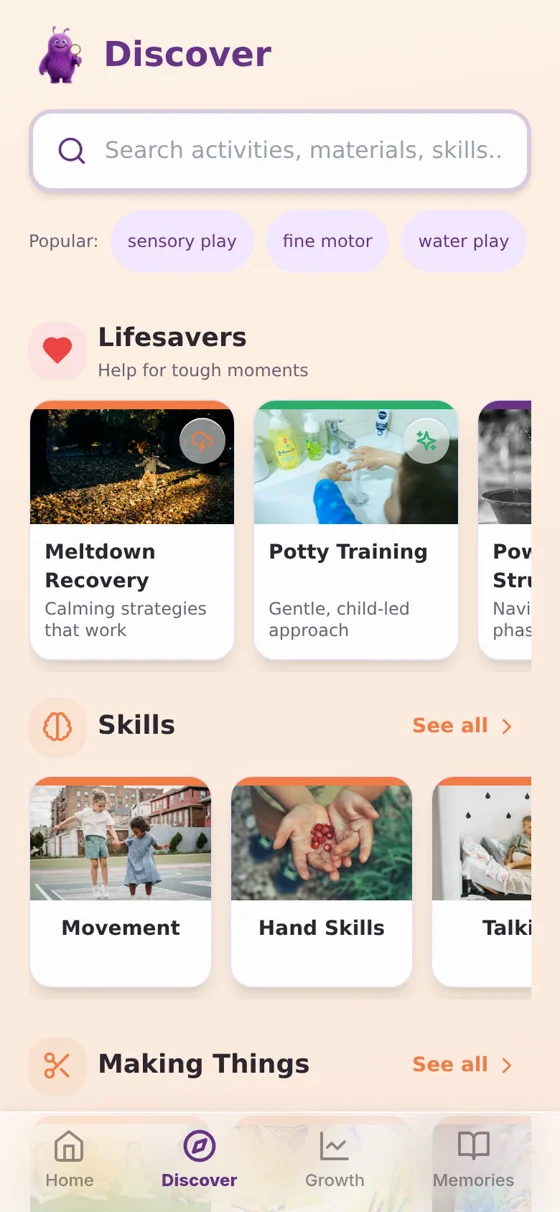
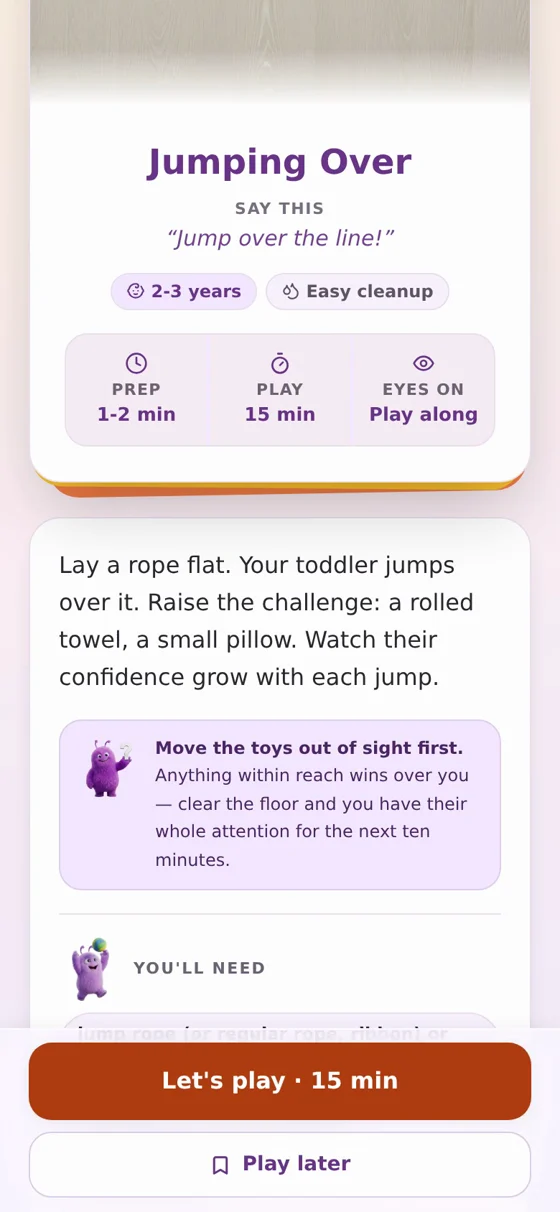
Mooshie Discover screen with Lifesavers for meltdowns and potty trainingMooshie activity screen with Say this words to use
9free ideas on this page
5,918activities for 6 months to 4 years
Say thisthe exact words on every activity
0child details uploaded, ever

A good toddler bedtime routine isn’t about finding the magic activity that knocks them out. It’s about doing the same handful of steps, in the same order, at roughly the same time, so often that your child’s body starts winding down before you’ve even said “time for bed.”

Below is a sample 30-minute routine, followed by wind-down activities from the Mooshie Moments app for children from 6 months to 4 years, and scripts for the snags that come up most nights. Every activity uses things you already have at home and comes with the exact words to say. This is play-first advice, not medical guidance, so if you’re worried about your child’s sleep, your health visitor or GP is the right person to talk to.

A sample 30-minute routine

You don’t need to copy this exactly. The order matters less than the fact that it’s the same order every night.

Bath (10 minutes).

Warm water is genuinely calming, and it draws a clear line under the day.

Milk or a small snack (5 minutes).

A full but not overfull tummy helps.

Teeth (2 minutes).

Same song, same spot, every night.

Two books (8 minutes).

Agree on two before you start, so “one more” isn’t a fresh negotiation each time.

A song (2 minutes).

The same one, always.

Lights off (3 minutes).

A final cuddle, then out of the room while your child is drowsy but still awake, where that’s the approach you’re using.

Wind-down activities for babies, 6 to 12 months

6 to 12 months5 minutes

1. The goodnight tour

Carry your baby slowly through the house, saying goodnight to objects, pets and family members as you go, ending at the cot. This gives a baby concrete closure on the day: everything has been said goodnight to, so now it’s safe to rest.

You’ll need: nothing but your home

How to play
  1. Pick your baby up and walk slowly through the house.
  2. Say goodnight to meaningful things: “goodnight, kitchen. Goodnight, chair.”
  3. Wave at each one as you pass.
  4. Finish at the cot with “goodnight, [name]. I love you.”
Say this: “Let’s say goodnight to our house.” · “The toys are going to sleep too.” · “Goodnight, world.”
6 to 12 months5 minutes

2. Light switch goodnight tour

Carry your baby to each lamp in turn, saying “goodnight, lamp” and switching it off, click by click, until the room settles into dim, quiet dark. The same words at each click give the whole routine a clear, repeatable shape.

You’ll need: the lamps or light switches you already have

Say this: “Goodnight, light!” · “All the lights are sleeping.” · “Goodnight, baby.”
6 to 12 months10 minutes

3. Whisper lullaby routine

In a dim corner, whisper a single lullaby very slowly, stretching each line out, then sit quietly rocking for half a minute before saying goodnight. Because you’re whispering, your baby has to go still to hear you, and that stillness does more of the settling than the tune itself.

You’ll need: just your voice

How to play
  1. Dim the lights and settle your baby against your shoulder.
  2. Whisper the first line of a lullaby slowly, pausing between phrases.
  3. Sway gently, left then right, and whisper the next line.
  4. Finish with the same words every time: “goodnight, baby.”
6 to 12 months5 minutes

4. Washcloth wipe wake-down

Wipe your baby’s face and hands slowly with a warm, not hot, washcloth before wrapping them in a blanket. The warmth and the slow pace of the wiping helps signal that things are slowing down for the night.

You’ll need: a soft washcloth, warm water, a blanket

Say this: “Warm water, feels nice.” · “Down and down, slow and sleepy.” · “All clean and warm, bedtime.”

Wind-down activities for toddlers, 3 to 4 years

3 to 4 years15 minutes

5. Slowest walk ever

Turn the walk from sofa to bedroom into a game where the slowest person wins. One enormous step, a long pause, then the other foot. Asking a busy three-year-old’s body to move at half speed for the length of a hallway is often enough to run off whatever energy is left over from the day.

You’ll need: nothing, just a clear path

How to play
  1. Announce the new rule: “the slowest one to bed wins.”
  2. Take one giant, slow step and freeze.
  3. Let them slow down to beat you, then go slower still.
  4. Near the bed, whisper “almost there, don’t rush it now.”
Say this: “The slowest one to bed wins.” · “Don’t rush it now.” · “Slowest in the house.”
3 to 4 years15 minutes

6. Deal the order

Draw four quick pictures: teeth, pyjamas, story, lights off. Shuffle them and let your child deal out tonight’s running order themselves. Handing over which-comes-first authority, while keeping every step of the routine intact, often turns a nightly argument into a job your child is proud to run.

You’ll need: four scraps of paper, a pencil

Say this: “Tonight you’re the boss of the order.” · “Deal them out.” · “You ran bedtime tonight.”
3 to 4 years15 minutes

7. The last song

Let your child choose one “official” last song of the day. When it ends, they press stop themselves, and play ends with it. A song has an audible finish a three-year-old can hear coming, so the stop feels like the music’s decision rather than yours.

You’ll need: music from any speaker

How to play
  1. Ten minutes before bed, say “pick the last song.”
  2. Play it and say “this is the one, nothing after it.”
  3. Move slowly while it plays: no chasing, no wrestling.
  4. As it fades, let them press stop and pause in the quiet.
3 to 4 years15 minutes

8. House goes dark

Your child becomes “light captain”, flipping off five lights room by room while you count down together, finishing at their own bedside lamp, which they switch off when they’re ready. Counting down five gives the wind-down a shape they can hear finishing, so the final flip feels expected rather than sudden.

You’ll need: the lights you already have

Say this: “You’re the light captain tonight.” · “Four left.” · “The whole house is asleep now.”
3 to 4 years15 minutes

9. Lay tomorrow out

Your child lays tomorrow’s clothes out flat on the floor in the shape of a person: shirt, trousers underneath, socks at the ends. A “flat kid” appears on the rug, and they say goodnight to it before climbing into bed. Building a picture of tomorrow themselves makes bed feel like a beginning rather than an ending.

You’ll need: tomorrow’s clothes, a clear patch of floor

How to play
  1. Hand over tomorrow’s shirt and say “put it down flat, like a person lying there.”
  2. Add trousers, then socks, asking “where do the socks go?”
  3. Step back together and say “look, a flat kid!”
  4. Wave it goodnight before bed.

Hundreds more ideas like these are waiting in the app.

Plus one picked for your child every day, matched to their age and how today is going.

Common bedtime snags, and what to say

“One more book.”

Agree the number before you start, and hold the line kindly: “we said two, and we did two. Tomorrow’s book is the first one.” Then follow through, calmly, every time.

Stalling for a drink, a wee, a different teddy.

Build one “extra” request into the routine on purpose, right before lights off, so there’s genuinely nothing left to stall for.

Calling out after you’ve left.

A brief, boring check-in (“still bedtime, night night”) tends to work better than a long conversation, which rewards the calling out with attention.

Fighting the routine itself.

Try the “deal the order” activity above. Toddlers who feel some control over the running order often stop fighting the routine altogether.

LOVED BY FAMILIES

Parents and experts on Mooshie

“I used to spend 30 minutes looking for an activity on Pinterest, get overwhelmed, and just turn on the TV. Mooshie takes 5 seconds.”
Sarah J.Mum of a 2-year-old
“Finally, an app that tells me to put my phone away. The activities are actually doable with stuff I have in my junk drawer.”
Mark D.Dad of two
“As a pediatric OT, I love that these activities build core developmental skills without feeling like ‘homework’ for parents.”
Dr Emily R.Paediatric occupational therapist
Mooshie Discover screen with Lifesavers for meltdowns and potty training
HOW MOOSHIE HELPS

How Mooshie helps with wind-down time

The Mooshie Moments app has 5,918 activities for ages 6 months to 4 years, using things already at home, and one of its lifesavers is built specifically for the hard bedtime moments alongside topics like sleep regression and separation anxiety.

  • Tell it how the evening is going, from “shattered” to “hands free”, and how many minutes you’ve got, and it picks one calm activity to match.
  • Every activity comes with “Say this” phrases and a parent tip, so you have the words ready without thinking them up at 6.45pm.
  • Tap “We’re done” afterwards to see “What that built” and add a photo to Memories, if the moment’s worth keeping.

It’s for you, not your child: check the idea in 30 seconds, then put the phone down. Free on iPhone, no sign-up, and a fresh activity every day.

Questions parents ask

What’s a good bedtime for a toddler?

Most toddlers do well settling between 7pm and 8pm, though this varies with age, nap length and your family’s routine. Watching for tired signs (rubbing eyes, going quiet, getting clumsy) is usually more reliable than the clock alone.

How long should a wind-down routine last?

Around 20 to 30 minutes tends to work well: long enough to properly slow down, short enough that it doesn’t become its own source of stalling. Shorter routines for babies, closer to 10 minutes, are usually plenty.

My toddler keeps getting out of bed. What should I do?

Keep your response short, calm and boring every single time: walk them back, say goodnight once, and leave. Consistency matters more than anything you say, since an exciting or lengthy response can unintentionally reward the behaviour.

Should babies have the same bedtime routine every night?

Yes, as much as you can manage. Predictability is one of the most reliable tools for helping a baby settle, and the exact activities matter far less than doing them in the same order each time.

When should I ask for help with my child’s sleep?

If sleep problems are severe, sudden, or come with other worries such as snoring, breathing pauses, or your child seeming unwell, speak to your health visitor or GP. This page is play-first advice and isn’t a substitute for medical guidance.

Mooshie is a play app, not medical advice. If you’re worried about your child’s development, speak to your health visitor or GP.

Make memories. Build skills. Play together.

Your first moment is ready as soon as you tell us their age.

Mooshie MomentsFree on iPhone
Get it free