Fussy Eaters: Food Play That Takes the Pressure Off

HELP FOR HARD MOMENTS · AGES 1 TO 3

Fussy Eaters: Food Play That Takes the Pressure Off

Calm, play-first ideas for a picky eater toddler, from food art to mealtime scripts. Find your next low-pressure activity in the Mooshie Moments app.

  • Free to download
  • No account needed
  • No screen time for your child
QR code to download Mooshie MomentsOn a laptop?
Scan to get Mooshie on your iPhone.
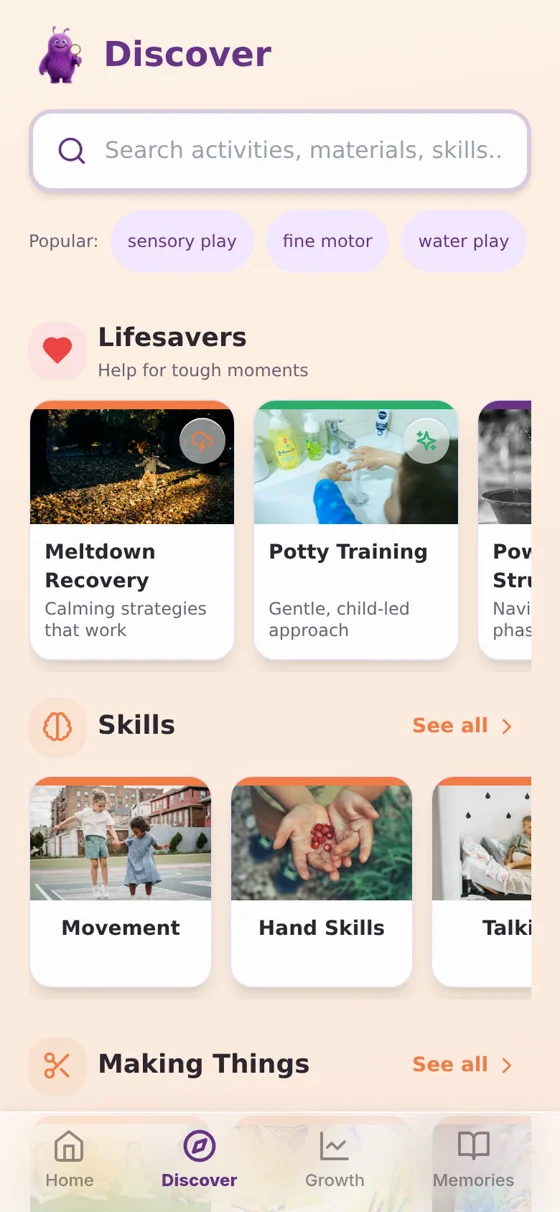
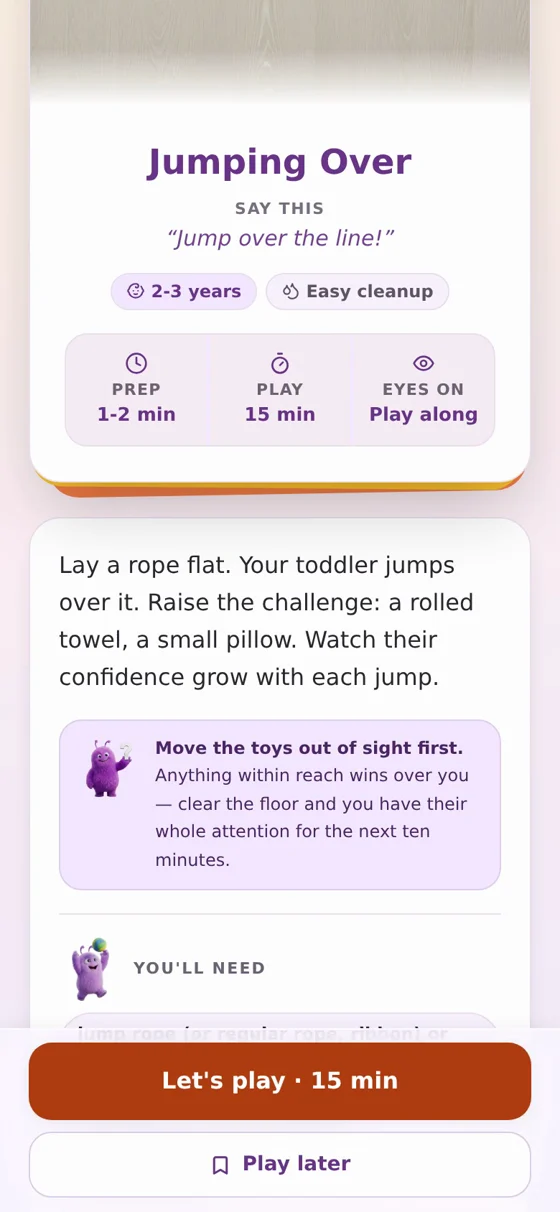
Mooshie Discover screen with Lifesavers for meltdowns and potty trainingMooshie activity screen with Say this words to use
10free ideas on this page
5,918activities for 6 months to 4 years
Say thisthe exact words on every activity
0child details uploaded, ever

A picky eater toddler is exhausting at mealtimes, but the fastest way to loosen things up often has nothing to do with the plate. Letting your child touch, smell and play with food away from the table takes the pressure off both of you, and pressure is usually what makes fussy eating worse, not better.

Below are ten food play activities from the Mooshie Moments app for children from 1 to 3 years, plus scripts for mealtimes themselves. Each activity uses food you already have in the kitchen, takes 10 to 15 minutes, and comes with the exact words to say. This is play-first advice, not medical guidance, so if you’re worried about weight, choking, gagging or a very restricted diet, please speak to your health visitor or GP.

You choose what and when, they choose how much

A simple way to think about mealtimes is to split the job in two. You decide what food is offered and roughly when. Your child decides whether to eat it, and how much. Trying to control both halves is where most mealtime battles start.

Offer the same meal to everyone.

A separate “safe” meal cooked to order removes any reason to try what’s on the table.

Put one thing they’ll definitely eat on the plate

alongside the new or less-liked food, so nobody goes hungry over it.

Let plates come and go without comment.

A plate that goes back untouched is information, not a failure.

Keep it boring when it’s ignored.

No bargaining, no bribing, no “just one more bite.” A neutral response is far less interesting to push back against than a big one.

Food play for exploring new foods

1 to 2 years10 minutes

1. Tiny taste

Put a single pea-sized piece of a new food on the plate and mean it when you say there’s no pressure. They can look at it, touch it, lick it or taste it, in that order or not at all, and their body gets to decide.

You’ll need: one pea-sized piece of a new food

How to play
  1. Put the tiny piece on the plate, away from the rest of the meal.
  2. Say “have a look” and leave it be.
  3. Let them touch or lick it if they want, with no encouragement needed.
  4. If it’s ignored, take it away without comment and try again another day.
Say this: “One tiny piece, just there.” · “Not today, leave it on the plate.” · “All done.”
1 to 2 years10 minutes

2. Eat it too

Eat the same food you’ve put in front of your toddler, and let them watch. Genuine, unforced modelling, “mmm, crunchy carrot”, often does more than any amount of encouragement, because toddlers are usually watching your mouth, not the food itself.

You’ll need: the same food you’re offering them

Say this: “I’m having some of this.” · “Crunchy, really crunchy.” · “Want a bit of mine?”
1 to 2 years10 minutes

3. Pick fruit from a basket

Fill a low basket with a few pieces of fruit or veg and let your toddler pick each one out, examine it, and drop it into a bag. It’s simple gathering and handling, not eating, which is exactly what makes it low pressure.

You’ll need: a low basket, 4 to 5 pieces of fruit or veg, a bag

How to play
  1. Set out the basket and ask “pick one, what do you want?”
  2. Let them examine it: “it’s round, it’s red.”
  3. Offer the bag and say “put it in!”
  4. Repeat until the basket is empty.
Say this: “Pick one, what do you want?” · “Round and heavy, that one.” · “Basket empty, bag full.”

Food play as art and craft

1 to 2 years10 minutes

4. Veggie stamp painting

Cut a vegetable in half, dip the flat side in washable paint, and stamp it onto paper. It’s art, not eating, and the point is simply that your toddler handles the same vegetable without any expectation attached.

You’ll need: a carrot, cucumber or potato, washable paint, paper

Say this: “Look what the carrot printed.” · “Press down, don’t slide it.” · “A full page of prints!”
1 to 2 years10 minutes

5. Banana smash sandwich

Give your toddler a peeled banana and a fork and let them smash it on a plate, then spread the mush onto toast themselves. Making the food gives them ownership over it, which often makes eating it feel like their own idea rather than yours.

You’ll need: a ripe banana, a fork, bread or toast

How to play
  1. Peel the banana onto a plate and hand over a fork.
  2. Let them smash it: “look at that, all gooey!”
  3. Slide over bread or toast and let them spread it.
  4. Cut in half and let them eat what they made, with no fuss either way.
1 to 2 years10 minutes

6. Shape sandwich surprise

Cut a simple sandwich into a star, heart or animal shape with a large cookie cutter, then cut a piece of soft fruit into the same shape. A familiar food in an unusual shape often catches a toddler’s interest for reasons that have nothing to do with taste.

You’ll need: bread, a filling, a large cookie cutter, soft fruit

Say this: “A star, you made a star.” · “Star sandwich, star melon, eat up.”

Food play for 2 to 3 year olds

2 to 3 years15 minutes

7. Food colour sort

Put out four clearly coloured foods, a pepper, a banana, a cucumber, a tomato, and have your toddler find a toy or object of the same colour to sit next to each one. Nobody eats anything. The food is simply an object to look at and match, which lowers the stakes considerably.

You’ll need: four brightly coloured foods, a few household objects to match

How to play
  1. Set out the coloured foods and say “we’re matching today, not eating.”
  2. Send them off to “find something red.”
  3. Lay the matched pairs side by side.
  4. Photograph the finished line and put the food away without comment.
2 to 3 years15 minutes

8. Smoothie making

Let your toddler help add berries, banana and milk to a blender and press the button. Being involved in making a drink that tastes like a treat is often an easier way in to a new fruit or vegetable than offering it plain on a plate.

You’ll need: a blender, fruit, milk

Say this: “You’re the smoothie chef today.” · “Watch it swirl!” · “You made that.”
2 to 3 yearsvaries

9. Grow and pick herbs

Plant fast-growing seeds like basil or cress together, water them daily, and pick a leaf to smell and maybe taste once they’ve sprouted. Children are often far more curious about food they’ve grown themselves, even if a taste doesn’t follow straight away.

You’ll need: seeds, a small pot, soil, water

How to play
  1. Fill a small pot with soil and poke a few holes.
  2. Drop in the seeds together and cover with soil.
  3. Water together and check daily for sprouts.
  4. Pick, pinch and smell a leaf once it’s grown.
2 to 3 years15 minutes

10. Same food, different way

Take a food they’ll happily eat, like apple, and show it to them raw, cooked and as a smoothie or purée, all in the same sitting. Seeing the same familiar food take different shapes helps a toddler’s brain link the new form to something already known and accepted.

You’ll need: one food they already accept, in a few different forms

Say this: “Same apple, different way.” · “No pressure, just looking.” · “Try it again another day.”


Hundreds more ideas like these are waiting in the app.

Plus one picked for your child every day, matched to their age and how today is going.

Mealtime scripts to avoid, and what to try instead

Avoid:

“Just one more bite and you can get down.” Try instead: “You can get down when you’re finished.” Let them decide when that is.

Avoid:

“If you eat your vegetables, you can have pudding.” Try instead: serve pudding alongside the meal sometimes, so it isn’t framed as a reward that makes vegetables the obstacle.

Avoid:

big praise for eating a new food (“amazing, you’re so clever!”). Try instead: a calm, matter-of-fact “you tried it,” so eating doesn’t become a performance for your approval.

Avoid:

commenting on every bite, or the lack of one. Try instead: talk about your day, not the plate. Most toddlers eat more when the table isn’t all about them eating.

LOVED BY FAMILIES

Parents and experts on Mooshie

“I used to spend 30 minutes looking for an activity on Pinterest, get overwhelmed, and just turn on the TV. Mooshie takes 5 seconds.”
Sarah J.Mum of a 2-year-old
“Finally, an app that tells me to put my phone away. The activities are actually doable with stuff I have in my junk drawer.”
Mark D.Dad of two
“As a pediatric OT, I love that these activities build core developmental skills without feeling like ‘homework’ for parents.”
Dr Emily R.Paediatric occupational therapist
Mooshie Discover screen with Lifesavers for meltdowns and potty training
HOW MOOSHIE HELPS

How Mooshie helps with picky eating

The Mooshie Moments app has 5,918 activities for ages 6 months to 4 years, using things already at home, and picky eating is one of its lifesavers for hard moments, alongside topics like toddler tantrums and power struggles.

  • Tell it how the day is going and how long you’ve got, and it picks a food-play or mealtime idea to match.
  • Every activity comes with “Say this” phrases and a parent tip, so you have a calm script ready before the meal starts.
  • Tap “We’re done” afterwards to see “What that built” and save a photo to Memories if it’s a moment worth keeping.

The app is for the adult: half a minute to read, then the phone goes down. No account, no cost to start, one new activity daily.

Questions parents ask

How do I get my toddler to eat vegetables?

Repeated, no-pressure exposure tends to work better than persuasion. Offering the same vegetable regularly, alongside food they already accept, and letting them play with, prepare or grow it away from mealtimes, often does more than any single mealtime tactic.

How many times should I offer a food a toddler has refused?

Many children need to see or be offered a new food a good number of times before accepting it, sometimes over several weeks. Offering it again later without comment, rather than giving up after one or two refusals, is usually the more effective approach.

Is it normal for toddlers to go through fussy phases?

Yes, very. Many toddlers become more cautious about new foods somewhere around 18 months to 2 years, which is a widely recognised, and usually temporary, stage rather than a sign of a lasting problem.

Should I make a separate meal if my toddler won’t eat what’s offered?

Generally, no. Offering the same family meal, with at least one food you know they’ll eat included, tends to work better over time than a separate “safe” meal made to order, which removes any reason to try the rest.

When should I get help for picky eating?

If your child is losing weight, gagging or choking often, eating an extremely limited range of foods, or you’re worried for any other reason, speak to your health visitor or GP. Everything here is play-based and doesn’t replace professional advice.

Mooshie is a play app, not medical advice. If you’re worried about your child’s development, speak to your health visitor or GP.

Make memories. Build skills. Play together.

Your first moment is ready as soon as you tell us their age.

Mooshie MomentsFree on iPhone
Get it free