
Nature Play Ideas for Toddlers: 12 Simple Activities to Try
Updated 22 October 2026 · 9 minute read
The best nature play ideas for toddlers need almost nothing: a patch of outdoor space, a few things from your kitchen cupboard, and ten minutes. Think water painting on a fence, a bug hotel made from twigs, a scavenger hunt on the way to the shops, or a muddy digging session in a puddle-free corner. Below you will find 12 ideas we love, how to adapt them by age, and the safety checks worth doing before you head outside.
TL;DR
- Toddlers get plenty from simple nature play: digging, pouring, collecting, sorting and looking closely. You do not need a forest or special kit.
- Reviews of the research link nature play with more active movement and more imaginative play in young children.
- Most of these ideas use things you already own: jugs, spoons, sieves, pots, old paintbrushes and a basket.
- Do a two-minute safety sweep first: choking hazards smaller than a 2p coin, poisonous plants, animal droppings and any standing water.
- Short and repeated beats long and elaborate. Ten minutes in the same spot every day is a good start.
Table of Contents
- Why nature play works so well for toddlers
- Before you go out: a two-minute safety sweep
- 12 nature play ideas for toddlers
- Match the idea to your toddler
- No garden? No problem
- Keep it short, keep it regular
- Our perspective: why we like nature play so much
- Try it with Mooshie
- FAQ
- Sources
Why nature play works so well for toddlers
A toddler’s job is to explore. Leaves, stones, mud and water are interesting in a way a plastic toy is not, because they change every time. A puddle is deep one day and gone the next. A leaf is crunchy in October and soggy in November.
That variety seems to matter. A 2022 systematic review of nature-based early childhood education looked at links with social, emotional and cognitive development, and its authors describe nature as a kind of blank canvas that offers richer, ever-changing sensory input than manufactured, static settings.
There is a movement benefit too. A 2020 systematic review in PLOS One of unstructured nature play found consistent positive effects on physical activity and on imaginative, dramatic play. Other work summarized there links nature play to more time spent moving and less time sitting for children aged 2 to 7, which supports balance and agility.
The practical part is the best news for tired grown-ups. UK NHS family health guidance points out that plastic jugs, spoons, sieves and pots are all you need for sensory and water play, and suggests painting with a pot of water and brushes or making bug hotels from twigs and leaves for ages 1 to 3. No shopping trip. No prep.
Before you go out: a two-minute safety sweep
Nature play is low risk when you do the boring checks first. We do these every time, and they take less time than finding wellies.
Choking and small objects
Toddlers mouth things. That is normal exploring, but small natural objects are the biggest hidden danger outdoors. The Wirral and Wigan child safety pack is blunt about it: anything smaller than a 2p coin (about 25.9mm) is a choking risk. Before play starts, clear the area of small litter, sharp stones and animal droppings. Hold back acorns, berries, small pebbles and conkers for children who still put everything in their mouths, or keep them on a tray you control.
The Hillingdon families guidance on choking notes that children aged 1 to 5 often put objects in their mouths and that marbles, beads and button batteries are just the right size to get stuck. Stay within arm’s reach and keep your eyes on your toddler’s hands.
Water, even a little
Water play is a favorite, and it needs your full attention. Berkshire Healthcare’s child safety advice says young children can drown in as little as 5cm (2 inches) of water in under 20 seconds, so stay with them constantly around puddles, ponds and paddling pools. Empty buckets and tubs when you finish.
Plants, sun and prams
Keep poisonous plants out of reach, indoors and outdoors, and do not let toddlers eat anything they pick unless you have identified it as safe yourself. If you are unsure what is growing in your garden or local park, ask a garden centre or your pharmacist, and call 111 or 999 in an emergency if your child has eaten something you are worried about.
On sunny days, use a clip-on parasol or sunshade rather than draping a blanket over the buggy. The Berkshire Healthcare guidance warns that covering a pram or buggy with blankets or muslins can stop air circulating, which risks dangerous overheating and raises the risk of Sudden Infant Death Syndrome.
12 nature play ideas for toddlers
Each idea has a rough time, an age steer and a tip to make it easier. Ages are a guide, so follow your child.
1. Water painting
Time: 5 to 10 minutes. Age: 12 months and up.
Give your toddler a pot of water and a decent paintbrush, or a clean make-up brush, and let them “paint” the fence, the patio or a wall. It dries and disappears, which means there is no mess and they can start again. This one is straight from the NHS play ideas list.
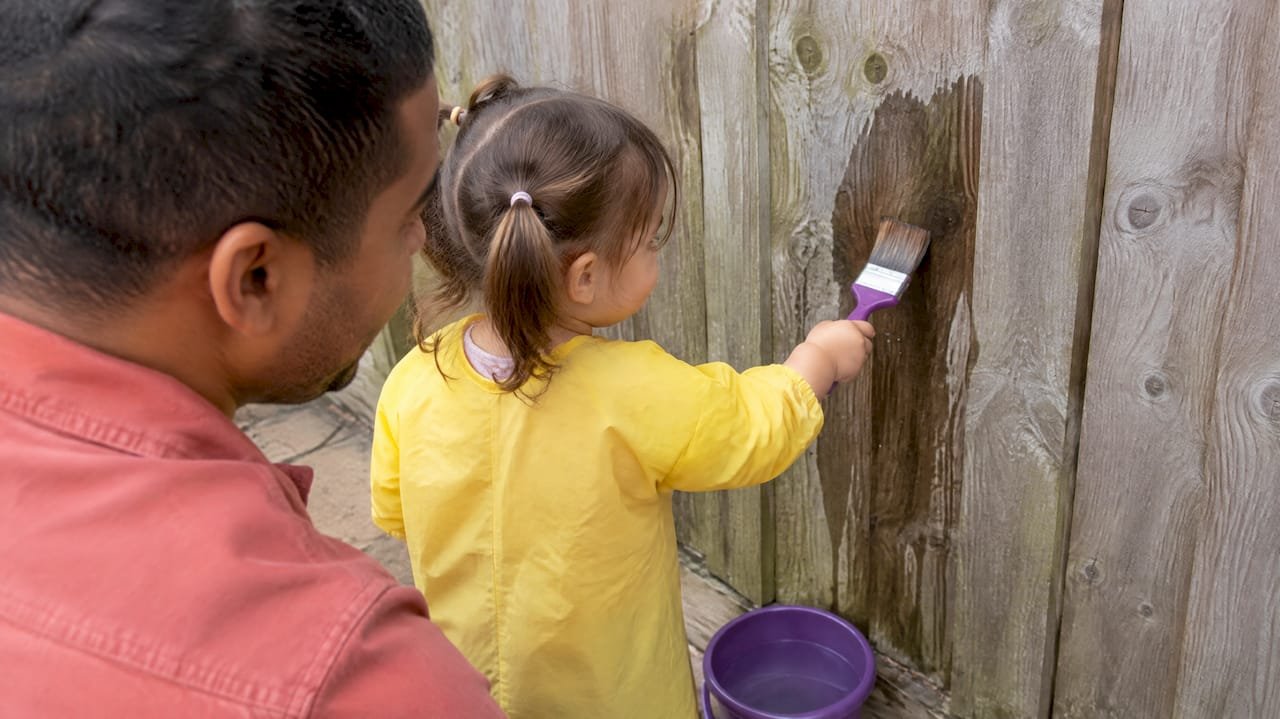
Tip: On a dry day, name colors as the wet patch turns darker. Try thick lines, dots and circles.
2. A walking treasure hunt
Time: 10 minutes. Age: 18 months and up.
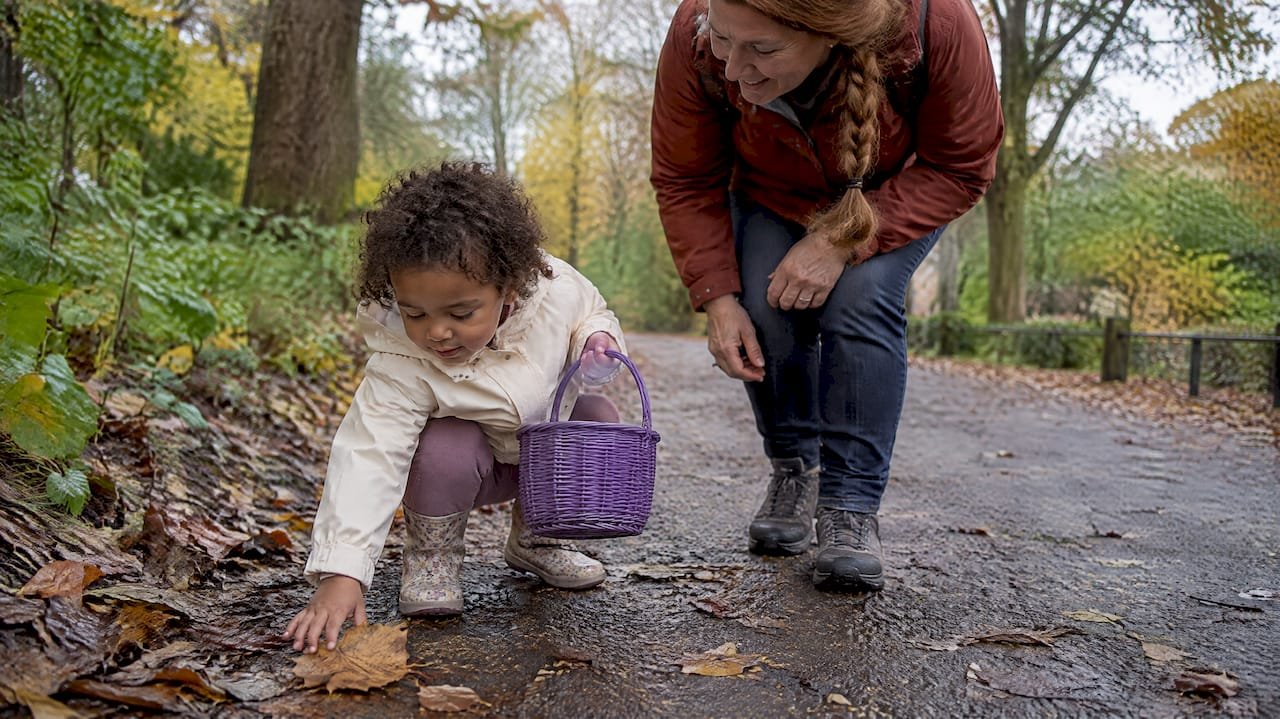
Take a basket or an egg box. Say what you are looking for: something soft, something bumpy, something yellow. Toddlers love the job of carrying. Younger ones can simply point and you do the collecting.
Tip: No reading needed. Use words like “find a big leaf” and “find a tiny one”. Tip everything out at home and sort it into piles.
3. Bug hotel from twigs and leaves
Time: 10 to 15 minutes. Age: 2 years and up.
Collect sticks, dry leaves and bits of bark, then stuff them into an old plant pot, a wooden crate or a gap behind a bush. The NHS guidance above recommends this for ages 1 to 3. Check back over the next few weeks to see who has moved in.
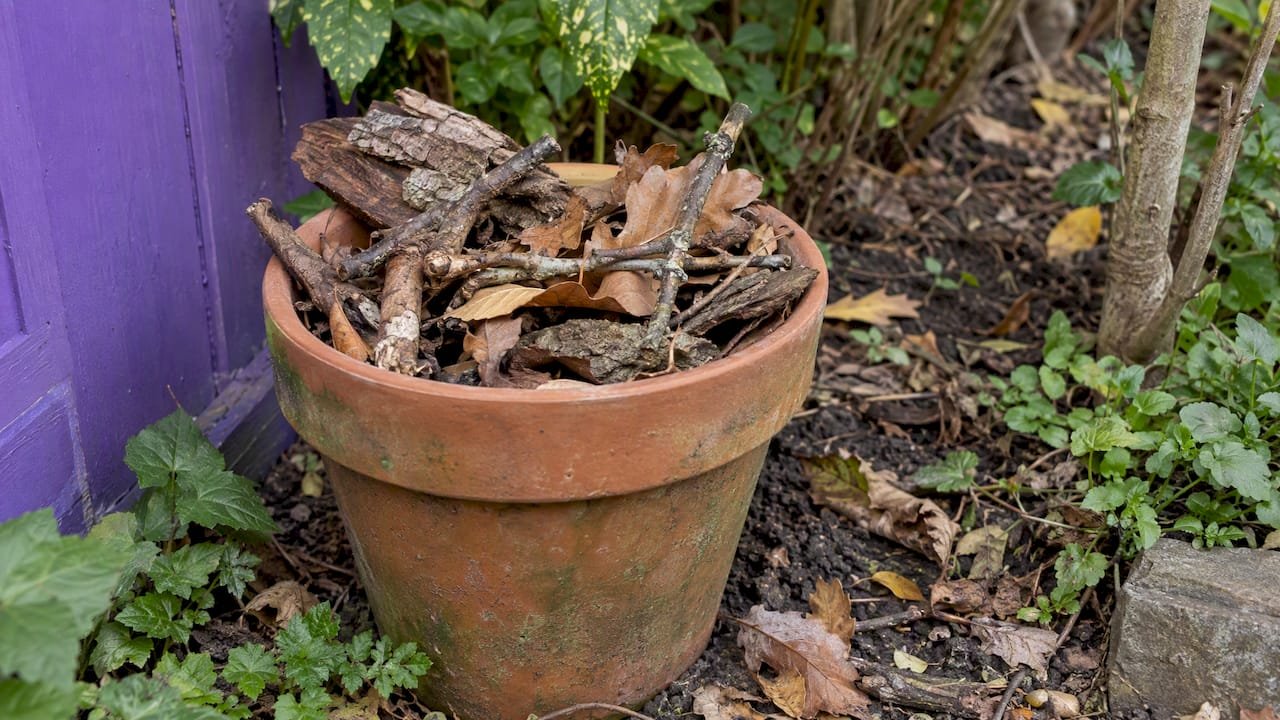
Tip: Keep sharp or splintery sticks for yourself to handle and pick thumb-sized, smooth pieces for your toddler.
4. Mud kitchen with what you already own
Time: 10 to 20 minutes. Age: 18 months and up.
An old pan, a wooden spoon, a sieve and a jug turn a corner of the garden into a kitchen. Add soil and a little water, then stir, pour and sieve. The UK guidance on household tools for water and sensory play covers exactly these items.
Tip: Dress for mess, put a mat or old towel down, and keep a bucket of clean water nearby for rinsing hands. Supervise closely, because water and mud mix quickly.
5. Puddle jumping and splash lab
Time: 10 minutes. Age: 15 months and up.
Wellies, a waterproof suit and a rainy day are all you need. Count jumps, compare big and small puddles, and see what floats: a leaf, a twig, a bit of bark.
Tip: Choose shallow puddles on pavements or paths and stay close. See the water safety point above.
6. Leaf monsters and nature collage
Time: 15 minutes. Age: 2 years and up.
Collect fallen leaves in autumn, then stick them onto paper or card with a glue stick. Add googly eyes if you have them, or draw faces with a crayon. Practical nature play guides from family support services suggest collages and mud painting as easy starters.
Tip: Large leaves are easier for small hands. Pressing a leaf under paper and rubbing with a crayon makes a fine pattern.
7. Planting seeds in a pot
Time: 10 minutes, then a few days of checking. Age: 2 years and up.
A windowsill, a yoghurt pot and some compost are enough. Cress is quick and gives results within days. Toddlers can scoop compost, sprinkle seeds and water with a small jug.
Tip: Cress and similar seeds still shouldn’t be treated as a snack for a young toddler without adult checking. Wash hands afterwards.
8. Sensory sticks and stones tray
Time: 10 minutes. Age: 2 years and up, supervised.
On a tray, put large smooth stones, pine cones, bark, feathers found on the ground (wash your hands afterwards) and big leaves. Let your toddler touch, sort, line up and stack. For a quick guide to the wider benefits, read this explanation of sensory play and child development, which also covers low-cost water play with jugs and sieves.
Tip: Keep to large items only. Anything that fits through a 2p coin is for later.
9. Digging for treasure
Time: 15 minutes. Age: 18 months and up.
Bury large pine cones or a toy animal in a sandpit, a deep tray of soil or a patch of earth, and hand over a trowel or old spoon. Toddlers love dig, find, repeat.
Tip: Stay with toddlers who still mouth things, and clear the digging area of litter and animal droppings first.
10. Sound walk
Time: 5 to 10 minutes. Age: 12 months and up.
Stand still outside and listen. Birds, wind, a car, a dog. Say “I hear a bird” and point. Then crunch leaves underfoot, swish a long stick through grass and tap a tree trunk with your hand.
Tip: This is a lovely wind-down before a nap, with no kit and no setup.
11. Stick and leaf boats
Time: 10 to 15 minutes. Age: 2 years and up.
Fill a washing-up bowl with a few centimeters of water, set it on the ground and float bark, large leaves and lolly sticks. Blow gently to make them sail.
Tip: Shallow water is still water. Stay with your toddler and tip the bowl out when you finish.
12. Sunflower, snail and bug spotting
Time: 10 minutes. Age: 15 months and up.
Turn over a plant pot or a flat stone, look underneath and name what you see. Be gentle and put things back as you found them, which is a first lesson in caring for wildlife.
Tip: Look, do not touch, for anything you cannot identify. Wash hands before snacks.
Match the idea to your toddler
| Age | What they enjoy | Ideas to start with |
|---|---|---|
| 6 to 12 months | Looking, touching, listening | Sound walk, feeling grass and leaves on a blanket (supervised) |
| 12 to 18 months | Pouring, banging, carrying | Water painting, puddle splash, digging |
| 18 months to 2 years | Collecting, sorting, copying | Treasure hunt, mud kitchen, leaf collage |
| 2 to 3 years | Pretend play, patterns, caring for living things | Bug hotel, planting seeds, boats |
| 3 to 4 years | Longer projects, questions | Nature journal with drawings, seasonal collections, scavenger hunt with pictures |
If you want a wider range of garden and outdoor options with a similar low-prep approach, see our guides to garden activities for toddlers and screen-free outdoor activities. For a whole-year spin, our autumn activities for toddlers page is full of leaf and conker-season ideas.
No garden? No problem
You do not need your own outdoor space. A park, a verge, a school-run path or a communal courtyard all work. Window boxes and balcony pots can grow herbs, flowers and vegetables, as family support services point out. Even indoors you can bring nature to the table: a tray of leaves, a bowl of water and a few shells.
For babies who are mouthing everything, you might prefer a taste-safe sensory play approach for the indoor version. If you want more on the “no new toys” idea, we cover sensory play ideas for toddlers in detail.
Keep it short, keep it regular
The tired-parent version of nature play is a ten-minute habit, not a day out. A few ways to make it stick:
- Pick one spot. The same tree, bush or corner of the garden. Toddlers love noticing what has changed.
- Keep a basket by the door. Put in a pot, a brush, a sieve and a spoon. You will not have to hunt for them.
- Go in all weathers. A waterproof suit and wellies make rain part of the fun.
- Follow their lead. If your toddler wants to carry one stick for 10 minutes, that is the activity.
- Narrate. Use short words: “wet”, “bumpy”, “big leaf”. That is language learning without a flashcard.
If your child needs a calm, predictable approach, our page on autism activities for toddlers shows how to keep play simple and repeatable, and our wheelchair-friendly and seated activities cover how to bring nature to a child who plays seated.
Grandparents and other carers can do all of this too. Our activities for grandparents include seated options, and our guide to bonding activities for toddlers is built around very short bursts.
Our perspective: why we like nature play so much
We built Mooshie Moments for grown-ups who are tired and short on ideas, with children aged 6 months to 4 years. Nature play is one of the easiest answers we know. It needs no shopping, no setup and no screen, and it gives you something to do together that is not on your phone.
What we hear most is that parents do not lack love or effort. They lack a quick idea at 4pm when everybody is cranky. So we think the useful question is not “what is the perfect nature activity?” but “what can we do in ten minutes with what is in the kitchen?” A jug, a spoon and a muddy corner usually beats a complicated plan.
We also think the “why” matters. When you know that pouring practices hand control, that sorting builds early maths and that naming things builds language, it is easier to enjoy the mess. Every activity in the app explains the developmental reason in plain words, and we match ideas to your child’s age and the time you have.
One more thing: you do not have to be the expert on trees and bugs. Say “I wonder what that is” and look together. That is real play and real bonding.
— samit
Try it with Mooshie
If you would like a fresh idea each day without searching, the Mooshie app gives you quick, screen-free activities based on your toddler’s age and how much time and energy you have, all using household items. It is free to download. You can also try our low-prep activities by skill area for more ideas.
Run a nursery, daycare or childminding setting? See our activities for nurseries and childminders and the Partnership Pack for home-learning resources to share with your families.
FAQ
What are the best nature activities for a one-year-old?
Keep it sensory and close. Water painting on a fence, listening on a sound walk, feeling grass and big leaves, and splashing in a shallow tub are all good at this age. Stay within arm’s reach and avoid anything small enough to swallow.
How long should nature play last for toddlers?
Ten minutes is plenty to begin with, and many toddlers will happily stay longer if they are enjoying it. Follow your child’s interest rather than a timer. Short, regular sessions tend to work better than one big outing.
Do I need a garden for nature play?
No. A park, a path with a few trees, a window box or a tray of leaves and water indoors all count. Pots on a windowsill or balcony can grow cress, herbs or flowers.
What should I watch out for with nature play?
The main risks are choking on small objects, poisonous plants and berries, animal droppings, and water. Clear the area first, supervise closely, and keep anything smaller than a 2p coin away from children who mouth things. If your child swallows something you are worried about, call 111, or 999 in an emergency.
Sources
- Nature-Based Early Childhood Education and Children’s Social, Emotional and Cognitive Development (MDPI, 2022)
- The impacts of unstructured nature play on health in early childhood development (PLOS One, 2020)
- Play ideas for your toddler (Derbyshire Family Health Service, NHS)
- Safety. Sorted! Parents Pack (Wirral and Wigan NHS)
- Choking (Hillingdon Families 0-19)
- Child safety (Berkshire Healthcare NHS Foundation Trust)
- Sensory Play and Child Development: A Parent’s Guide
Recommended
- Ten Minutes: Screen Free Outdoor Activities for UK Toddlers
- 15 Low Prep Garden Activities for UK Toddlers, Rain or Shine
- No New Toys Needed: Sensory Play Ideas Parents Can Use With Toddlers
- Montessori Toddler Activities for UK Homes: 16 Ideas, No Shopping
Want a new idea every day, matched to your child's age?
Mooshie Moments gives you simple, guided play ideas for ages 6 months to 4 years.
Download free on the App StoreMore like this

Toddler Activities With No Supplies: 25 Ideas to Try Now
Toddler bored and nothing in the cupboard? Here are 25 no-supplies activities using only your body, your voice and things already in…
Christmas Activities for Toddlers: Easy Ideas at Home
Easy Christmas activities for toddlers using things you already have at home: sensory trays, simple crafts, games and traditions, plus safety tips…
Morning Activities for Toddlers: Quick, Screen-Free Ideas
Simple morning activities for toddlers using things you already have at home. Screen-free ideas for early wakers, busy mornings and babies joining…