Christmas Activities for Toddlers: Easy Ideas at Home
The best Christmas activities for toddlers are short, hands-on and made from things already in your cupboards: a sensory tray, a cardboard tree, homemade playdough, a winter walk, a song with actions. You don’t need a craft haul or a perfect Pinterest table. You need ten minutes, a little patience and a child who wants you nearby. Below we’ve pulled together ideas for babies from about 6 months up to 4-year-olds, with notes on what suits each age and what to watch for.
Reading time: about 10 minutes
TL;DR
- Use what you have: cardboard, milk cartons, wrapping paper, pom-poms, flour and salt are enough for most festive play.
- Keep sessions short (5 to 15 minutes) and follow your toddler’s lead rather than aiming for a finished craft.
- Match the activity to the age: sensory boxes and songs for babies, tree decorating and playdough for 1 to 2 year olds, role play and simple baking for 3 to 4 year olds.
- Check small parts, button batteries, cords and choking foods before every activity. Under 4s need extra care.
- Build in quiet time. December is exciting, and little ones can get overstimulated.
Table of Contents
- Why simple Christmas play works better than elaborate play
- Quick sensory ideas for babies and young toddlers
- Cardboard and recycling crafts that cost nothing
- Easy Christmas activities by age
- Pretend play, music and movement
- Small traditions to repeat every year
- Safety first: what to check before you play
- Leave room for quiet
- Our perspective: play that fits real December days
- Want more ideas without the planning?
- FAQ
- Sources
Why simple Christmas play works better than elaborate play
December can feel like one long to-do list. Add “make memorable toddler crafts” and it gets heavier. The good news is that toddlers don’t need elaborate. The National Day Nurseries Association suggests keeping children at the centre of open-ended Christmas activities, planning around their interests, offering flexible materials and following each child’s lead. That’s good news for tired grown-ups. It means a box and some tinsel can be the whole plan.
The Words for Life team at the National Literacy Trust adds a useful angle: shared play at Christmas supports language, learning, social skills and your bond with your child. It works best when you join in where they want to play, talk about what is happening, repeat their words and practise taking turns. You are the main ingredient, not the craft kit.
Quick sensory ideas for babies and young toddlers
Sensory play suits the youngest children because it asks nothing of them except exploring. Action for Children explains that sensory play stimulates touch, sight, hearing, smell and taste, and helps children make sense of the world from birth. Christmas is full of new textures and smells, so it’s an easy season for it.
A festive sensory tray
Put a few safe items in a baking tray or shallow box: pine cones, wrapping bows, a length of tinsel, a bauble that can’t break, a bell. Action for Children suggests a Christmas-themed sensory tray like this, and stresses making sure there are no small items. Sit with your child and name things as they touch them: “soft”, “spiky”, “jingly”. For a baby, hold the tray steady and stay within arm’s reach the whole time.
Homemade festive playdough
Mix flour, salt, water and a little oil, then add food coloring, glitter or a spice. Action for Children suggests scenting dough with peppermint, vanilla or ground cinnamon. Toddlers will squish, poke, roll and sniff. Cookie cutters help, but a rolling pin made from a cardboard tube is just as popular. If your child still mouths everything, keep the dough plain and taste-safe. Our guide to taste safe sensory play has ideas for mouthing toddlers.
If you’d like to understand why this kind of play matters, this overview of sensory play and child development explains how touch, smell and sight exploration build early learning. For more no-purchase ideas, we also have a page of sensory play ideas for toddlers.
A baby’s first Christmas box
BBC Tiny Happy People suggests a sensory box with safe textured items for babies. Name each item, sing with actions, put on a sock-puppet show, or go on a short winter walk. Wrapping paper is a hit too: let your baby crinkle and scrunch it while you watch closely, and take it away if it goes toward the mouth.
Pom-pom push
Cut holes in a cardboard box and let your child push pom-poms through. Teaching Littles describes this as practice for pointing, pincer grasp and fine motor skills for older babies and toddlers. Use big, chunky pom-poms, and put the activity away if anything starts going into a mouth. For more of this kind of play, see our fine motor activities.
Cardboard and recycling crafts that cost nothing
December produces a mountain of packaging. BBC Tiny Happy People has a whole list of ways to play with packaging, including a DIY postbox, a cardboard Christmas tree and homemade skittles, and it notes that you can turn surplus cardboard into snowflakes, a tree or Rudolph’s head.
Cardboard tree decorating
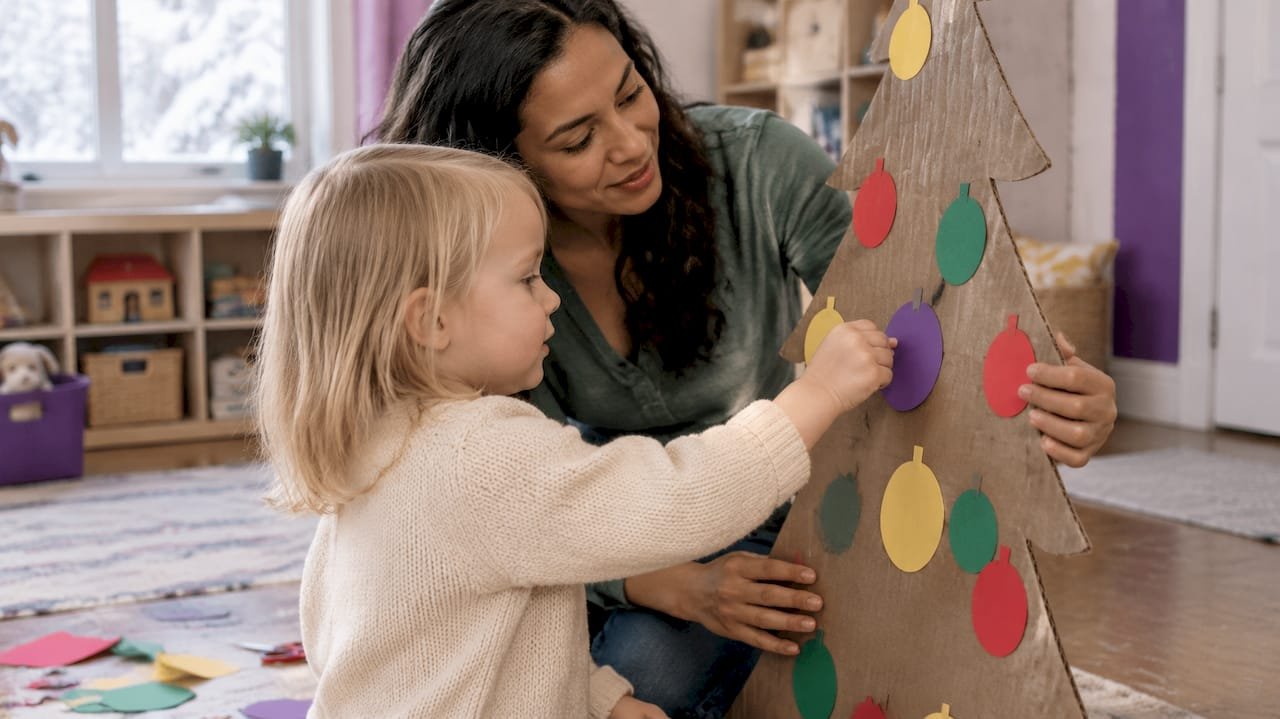
Cut a tree shape from a delivery box and stand it against the wall. Give your toddler chunky crayons, large stickers or scraps of paper to stick on. Two-year-olds will happily spend five minutes on this. Three- and four-year-olds might want to decide which colors go where, which is a lovely chance to chat.
The family postbox
Cut a slot in a box and decorate it with whatever you have. Your child can post cards, drawings or paper “letters” to family members, then you deliver them together. It’s a gentle way to practise posting, a skill many toddlers love, and it makes a nice tradition.
Milk carton skittles
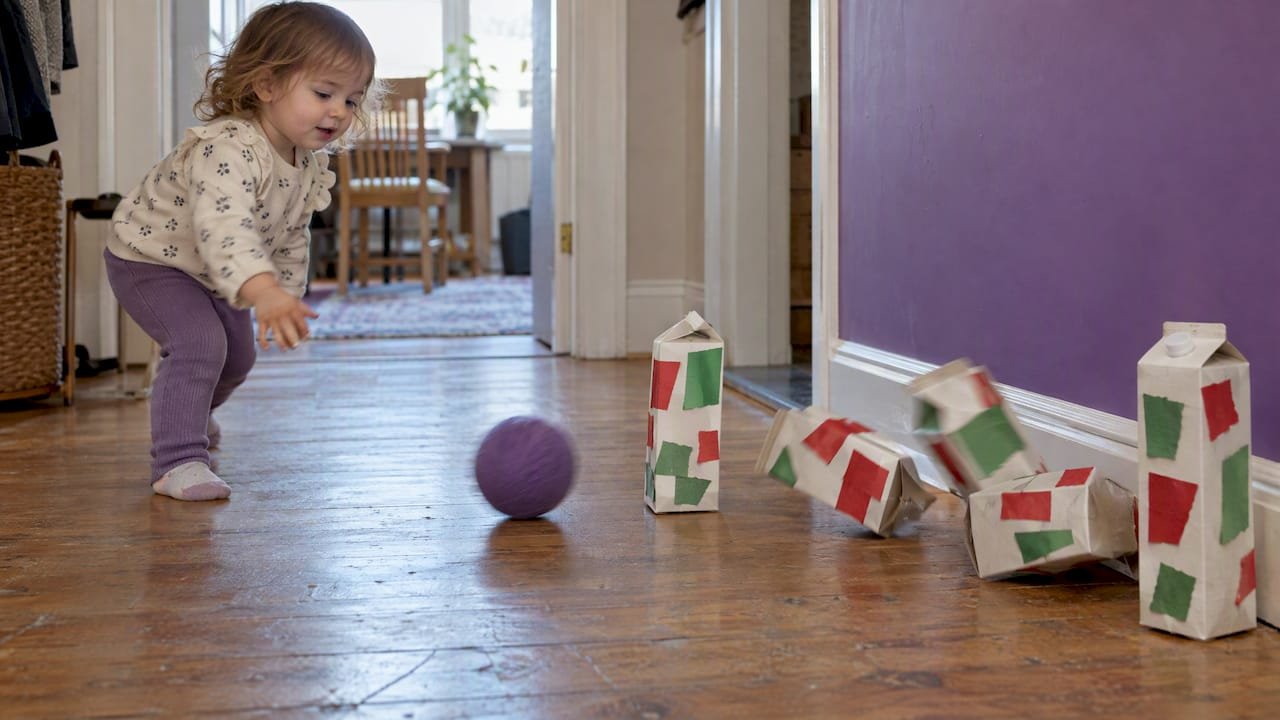
Empty, rinsed milk and juice cartons make good bowling pins. BBC Tiny Happy People says homemade bowling pins from cartons build coordination and gross motor skills and let toddlers practise counting. Stick on a bit of red and green paper, roll a soft ball and count what falls. Our counting games for toddlers page has more ways to do this without any kit.
Handprint wreaths and cards
Trace your child’s hand on green card, cut out several and arrange them in a circle. Younger toddlers can press their hand into a shallow tray of washable paint. This is messy, so lay down newspaper and keep wipes close. The finished wreath makes a lovely gift for grandparents.
Easy Christmas activities by age
Not every idea fits every child. This table is a starting point, and you know your child best.
| Age | What they enjoy | Ideas to try |
|---|---|---|
| 6 to 12 months | Textures, sounds, faces | Sensory box with safe items, sock puppets, singing with actions, winter walk |
| 1 to 2 years | Pushing, dropping, squishing, copying | Pom-pom push, playdough, cardboard tree with stickers, skittles, dancing to a Christmas song |
| 2 to 3 years | Pretend play, simple rules | Wrapping teddies as presents, a pretend postbox, a picnic beside the tree, a lights walk |
| 3 to 4 years | Making, helping, stories | Paper chains, salt-dough ornaments, window snowflakes, simple baking, a kindness jar |
Parentkind lists many of the older-age ideas, including paper chains, salt-dough ornaments, window snowflakes, story time, a kindness jar, dress-up and simple baking. It also reminds parents to plan downtime and explain what will happen, which toddlers appreciate more than we expect.
Pretend play, music and movement
Not everything needs materials. The NDNA recommends seasonal role-play, music and movement and seasonal walks alongside craft and sensory exploration.
- Wrap a teddy. Give your child old wrapping paper and a soft toy to wrap, unwrap and “deliver”.
- Freeze dance. Play a favorite Christmas song and stop it suddenly. Toddlers love the surprise.
- Kitchen band. BBC Tiny Happy People notes that household sounds and rhythms can build listening and concentration. A wooden spoon and a pan are all you need.
- Den time. Action for Children suggests draping a blanket over furniture or using a pop-up tent, hanging fairy lights inside and reading Christmas books or singing rhymes. Use battery fairy lights designed for indoors and keep them where small hands can’t pull them down.
- Winter walk. Look for lights, frost and bare branches. Our pages on nature play and ice play have extra ideas if the weather is cold enough.
Small traditions to repeat every year
Toddlers love knowing what comes next. BBC Tiny Happy People suggests traditions such as dancing to a Christmas song, making a winter treasure box, decorating with household materials or nature, and making snowmen year after year. You can decorate the home together using safe decorations at your toddler’s level.
Pick one or two that fit your family. A tradition doesn’t need to be big. “We always dance to this song when we put the tree up” is enough. A year from now, your child will expect it, and you’ll have a ready-made 10-minute activity.
Safety first: what to check before you play
Christmas brings tinsel, baubles, batteries, nuts, sweets and extra visitors. All of those can be risks for under 4s. Please read this section even if you’re in a rush.
- Small objects and batteries. The NHS says to keep small objects, magnets and button batteries out of reach, choose toys suited to your child’s age, check for loose parts and keep cords out of reach. If you think your child has swallowed a button battery, get emergency medical help straight away.
- The 2p test. NHS guidance says toys for under 3s should not have sharp edges or small parts, and that anything smaller than a 2p coin can choke a baby or young child. Use this for pom-poms, beads and craft bits too.
- Soft toys and decorations. The same NHS page advises checking that plastic eyes or buttons are sewn on securely. Choose shatterproof baubles for the lower branches.
- Foods. NHS guidance for children under 4 says to avoid peanuts, whole grapes, boiled sweets and chocolate eggs with small toys inside. The same source says choking happens quickly, so sit children down and supervise them when they eat. Cut grapes into quarters, as the NHS advises.
- Cords. Keep blind and curtain cords tied up and out of reach. That includes the cords on your tree lights.
- Supervision. The NDNA stresses risk assessment, age-appropriate materials and adequate supervision. At home, that means staying close and putting things away when you finish.
If you have worries about choking or a swallowed object, call 999 or go to A&E. For general questions about your child’s development or safety, your health visitor or GP is the right person to ask.
Leave room for quiet
A run of exciting days can be a lot for a small child. GOV.WALES parenting guidance says that routines, individual attention and regular quiet periods help children feel secure, and that calming options include reading, puzzles, baths, songs and fresh-air breaks when babies and children get overstimulated.
So don’t stack activities. One short activity in the morning and one in the afternoon is plenty. If your toddler melts down halfway through the cardboard tree, that’s not a failed craft. It’s a sign to put it down and try again tomorrow.
Our perspective: play that fits real December days
We build Mooshie Moments for tired grown-ups, so we think about Christmas a certain way. The season puts a lot of pressure on parents to do more, buy more and plan more. Toddlers don’t ask for that. They want you nearby, doing something with them, away from a screen.
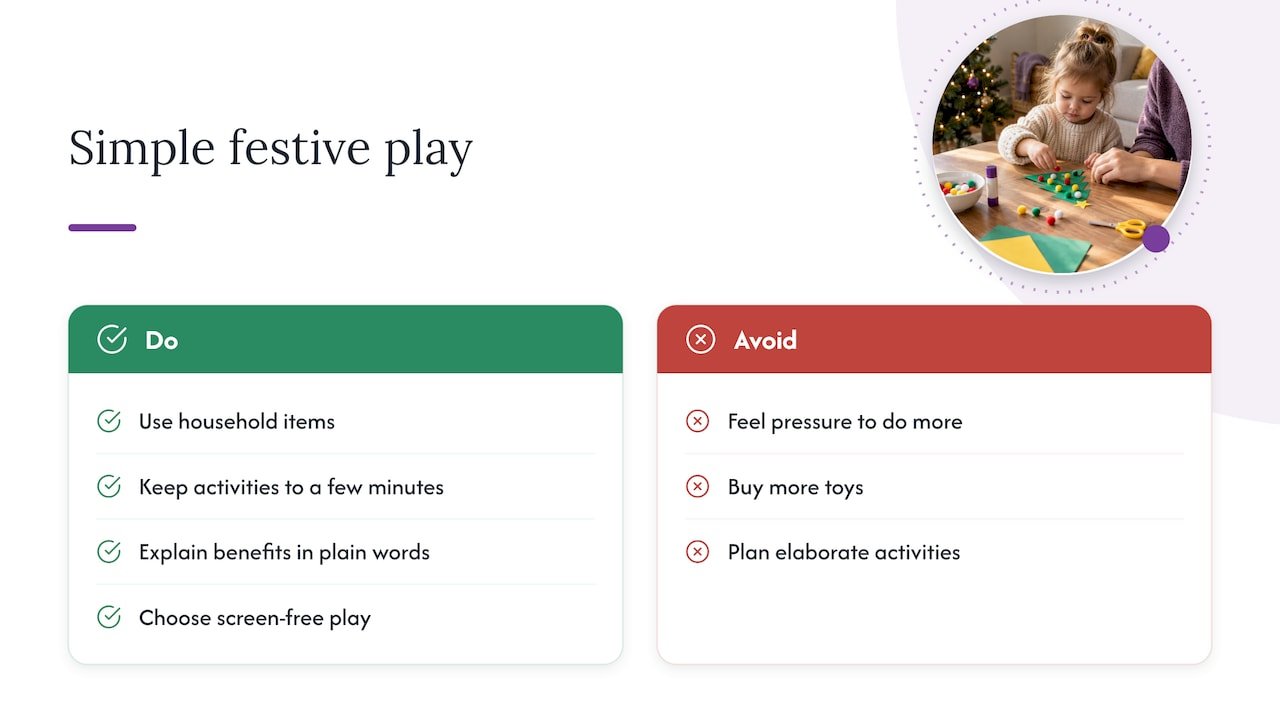
That’s why we favor activities built from household items, kept to a few minutes, and explained in plain words so you know why they help. Sorting pom-poms, pushing things through holes and rolling dough all build hand skills. Naming textures builds language. Dancing together builds connection. None of it needs a shopping trip.
We’d also say this to grandparents, aunties and uncles: you don’t need toys to bond with a toddler at Christmas. A wrapping-paper tube, a wooden spoon and a song will do. And when the day gets loud, a quiet five minutes with a book counts as a festive activity too.
— samit
Want more ideas without the planning?
If you’d like fresh ideas without scrolling through lists, Mooshie suggests quick, screen-free activities using household items, matched to your child’s age and the time you have. Each one explains the developmental reason behind it in plain language. You can find out more about Mooshie and try it in the app. If you work in a nursery or early years setting, our Partnership Pack gives you a home-learning resource to share with families.
While you’re here, you might like our guides to toddler bonding activities and low prep toddler activities by skill area.
FAQ
What can I do with my 2-year-old at Christmas?
Keep it short and physical. Try decorating a cardboard tree with chunky crayons and large stickers, pushing pom-poms through a box, rolling scented playdough or dancing to a Christmas song. Two-year-olds also love wrapping and unwrapping a teddy. Aim for 5 to 10 minutes and follow their lead.
What are some easy Christmas activities for toddlers with no prep?
A winter walk to spot lights, a picnic beside the tree, singing with actions, a kitchen band and a blanket den with fairy lights need almost no setup. Cardboard and milk cartons from your recycling bin can become a tree, postbox or skittles in a couple of minutes. Check anything small before you hand it over.
What Christmas activities suit a baby?
For babies, offer safe textured items in a sensory box and name each one, sing songs with actions, put on a sock-puppet show or take a short winter walk. Wrapping paper can be fun to crinkle under close supervision. Keep small objects and button batteries out of reach and stay within arm’s reach throughout.
How do I stop my toddler getting overexcited in December?
Keep routines as normal as you can, and build in quiet time between busy moments. Reading, puzzles, a bath, songs or a short fresh-air break can all help calm things down. One-to-one attention from you also helps your child feel secure.
Sources
- BBC Tiny Happy People: 7 fun ideas for baby’s 1st Christmas
- BBC Tiny Happy People: 5 Christmas traditions
- BBC Tiny Happy People: ways to play with packaging
- BBC Tiny Happy People: homemade bowling pins
- BBC Tiny Happy People: musical activities
- Parentkind: festive pack for parents
- Action for Children: Christmas activities and crafts
- Action for Children: what is sensory play
- NDNA: Have yourself a child-led Christmas
- Words for Life: Play Together at Christmas
- Teaching Littles: Christmas pom-pom push
- NHS: baby and toddler safety
- NHS: preventing choking
- NHS: toy safety
- NHS Derbyshire: keeping babies and children safe
- GOV.WALES: tips for coping with Christmas
Recommended
- Valentine’s Activities for Toddlers: Easy Ideas at Home
- Ice Play Activities for Toddlers: 12 Easy, Safe Ideas
- Nature Play Ideas for Toddlers: 12 Simple Activities to Try
- Montessori Toddler Activities for UK Homes: 16 Ideas, No Shopping
Want a new idea every day, matched to your child's age?
Mooshie Moments gives you simple, guided play ideas for ages 6 months to 4 years.
Download free on the App StoreMore like this

Toddler Activities With No Supplies: 25 Ideas to Try Now
Toddler bored and nothing in the cupboard? Here are 25 no-supplies activities using only your body, your voice and things already in…

Morning Activities for Toddlers: Quick, Screen-Free Ideas
Simple morning activities for toddlers using things you already have at home. Screen-free ideas for early wakers, busy mornings and babies joining…
Halloween Activities for Toddlers: Easy, Not Too Scary Ideas
Easy Halloween activities for toddlers using things you already have at home: sensory play, games, a blanket den and safety checks, with…