Halloween Activities for Toddlers: Easy, Not Too Scary Ideas
Updated 24 October 2026 · 10 minute read
The best Halloween activities for toddlers are short, gentle and made from things already in your house: a pumpkin to squish and paint, a blanket den with a torch, a string spider web to crawl through. You don’t need a craft kit or a costume, and you don’t need anything scary. Toddlers mostly want you, a bit of silliness and something to do with their hands. Below we share ideas for babies and toddlers, plan them by how much time you have, and cover the safety checks worth making before the big night.
TL;DR
- Choose painting, squishing and hiding games over carving, candles and spooky sounds. They suit toddlers better and need almost no setup.
- Most ideas here use a pumpkin, string, a sheet, a torch, a sock or a cereal box. Nothing needs buying.
- If you only have five minutes, try a ghost story with a sound effect, a hide-and-find game or a pumpkin sensory bag.
- Check costumes, craft parts and batteries for choking and fire risks. Anything smaller than a 2p coin can choke a young child.
- Let your child set the pace. Skipping the costume or the scary bits is a perfectly good Halloween.
Table of Contents
- Why Halloween play works so well for toddlers
- Pick by time: Halloween activities in 5, 10 and 20 minutes
- Sensory and craft ideas with a pumpkin and a few bits from the kitchen
- Movement and den games that burn off energy
- Games, stories and snacks for bonding
- Keeping Halloween gentle for sensitive toddlers
- Safety checks before the fun starts
- Perspective: what we have learned about Halloween with toddlers
- A little help for busy days
- FAQ
- Sources
Why Halloween play works so well for toddlers
Halloween hands you a ready-made theme: new colors, odd textures, funny noises and pretend characters. For a toddler that is a lot of free learning material, and none of it needs to be spooky.
The NHS says baby and toddler play doesn’t need to be difficult or expensive. Household objects, books, songs and nursery rhymes all count, and having an adult join in helps learning. Pennine Care NHS Foundation Trust adds that play and conversation help toddlers build language, relationships, emotional understanding and confidence, with hiding games and pretend play especially useful.
So the goal is not a Pinterest-perfect October. It is a few relaxed minutes where you are paying attention to your child. If you want more everyday ideas in the same spirit, our low prep toddler activities by skill area are a good place to browse.
Pick by time: Halloween activities in 5, 10 and 20 minutes
Most parents don’t search for Halloween ideas with a free afternoon. You are usually tired, it is nearly teatime, and you want something that works now. Here is how we would sort the ideas.
| Time you have | Try this | What you need |
|---|---|---|
| 2 to 5 minutes | Ghost story with a sound effect | Nothing |
| 2 to 5 minutes | Hide-and-find around the room | A few soft toys or healthy snacks |
| 5 to 10 minutes | Pumpkin sensory bag (for babies) | Pumpkin insides, a zip bag, tape |
| 5 to 10 minutes | Paint a pumpkin | A pumpkin, paint, fingers or brushes |
| 10 to 15 minutes | String spider web | String, two chairs |
| 10 to 20 minutes | Blanket den with torch shadows | Sheets, cushions, a torch |
| 10 to 20 minutes | Halloween color hunt | Anything black, orange, green or purple |
None of these need a shopping trip. If your energy is at rock bottom, start at the top of the table. A two-minute game you actually play beats a twenty-minute craft you never start.
Sensory and craft ideas with a pumpkin and a few bits from the kitchen
Paint a pumpkin instead of carving it
Carving is a job for grown-ups, and sharp tools and toddlers don’t mix. BBC Tiny Happy People suggests painting pumpkins rather than carving them, using fingers or tools. Let your child dab, smear and splodge. It does not need to look like anything.
A few ways to keep it easy:
- Put the pumpkin on a tray or an old towel so the mess stays put.
- Offer two or three colors only. Too many choices can overwhelm a small child.
- Use a wide brush, a sponge or just hands.
- Let it dry outside or on a high shelf, then admire it together.
If your child still mouths things, check the paint is suitable for young children first, or skip paint and try one of the taste-safe options in our guide to taste safe sensory play for mouthing toddlers.
Pumpkin stamping
The same BBC page suggests cutting pumpkin pieces into shapes for stamping and for naming. An adult does the cutting, then your toddler presses the pieces into paint and onto paper. A triangle, a circle, a long thin piece: each makes a different mark, and you can talk about what you see.
No paper? The NHS suggests drawing or painting with crayons, felt tips or powder paint and says you can use cereal-box card or old envelopes if you have no paper. That makes a very low-cost Halloween picture. Our cardboard box toddler activities have more ideas if you have a recycling pile to use up.
Pumpkin sensory bag for babies
If you have a baby as well as a toddler, or a baby on his own, the Carmarthenshire family information guide lists a pumpkin sensory bag. You put pumpkin insides in a sealed zip bag and tape it to a highchair tray or the floor. The baby squashes and squeezes it through the plastic.
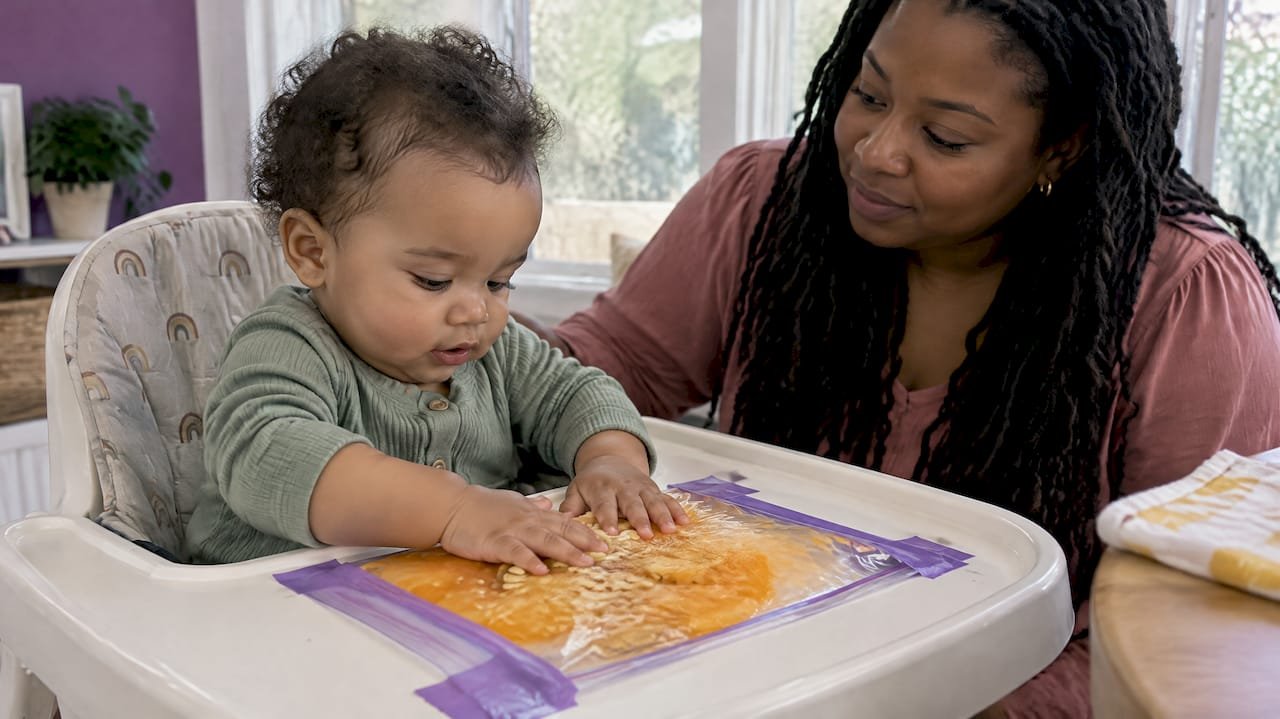
Seal the bag well and tape down every edge. Stay next to your baby and check the bag stays closed. Toddlers love this one too, and it is mess-free enough to try at the end of a long day. We have more along these lines in no new toys needed: sensory play ideas.
Halloween color hunt
BBC Tiny Happy People suggests naming Halloween colors such as black, orange, green and purple, and talking about textures and reactions like “ooh” and “yuck”. That turns a simple game into vocabulary practice.
Here is how to play:
- Say a color: “Let’s find something orange!”
- Walk around the house together and pick things up: a sock, a carrot, a cup.
- Name the color and the feel: “Orange. Bumpy. Soft.”
- Put everything in a bowl, then take items out one by one.
It works in five minutes and fits neatly with our color sorting activities for UK toddlers.
Movement and den games that burn off energy
Spider web crawl
The Carmarthenshire guide describes a spider web movement game: wrap string between chair legs so children can crawl under, over, around and through it. Keep the string loose and low, and stay with your child the whole time so nobody gets tangled. Take the string down when you finish.
This is a good one for a toddler who needs to move. Add words as they go: “under the web, over the web, through the web.” For more ideas like this, see our gross motor activities for toddlers.
Blanket den with torch shadows
The same guide suggests a den made from sheets, blankets and cushions, with torch shadows, stories, jokes or Halloween books inside. This is our pick for a calm end to the day. A torch is also safer than a candle, which we come back to below.
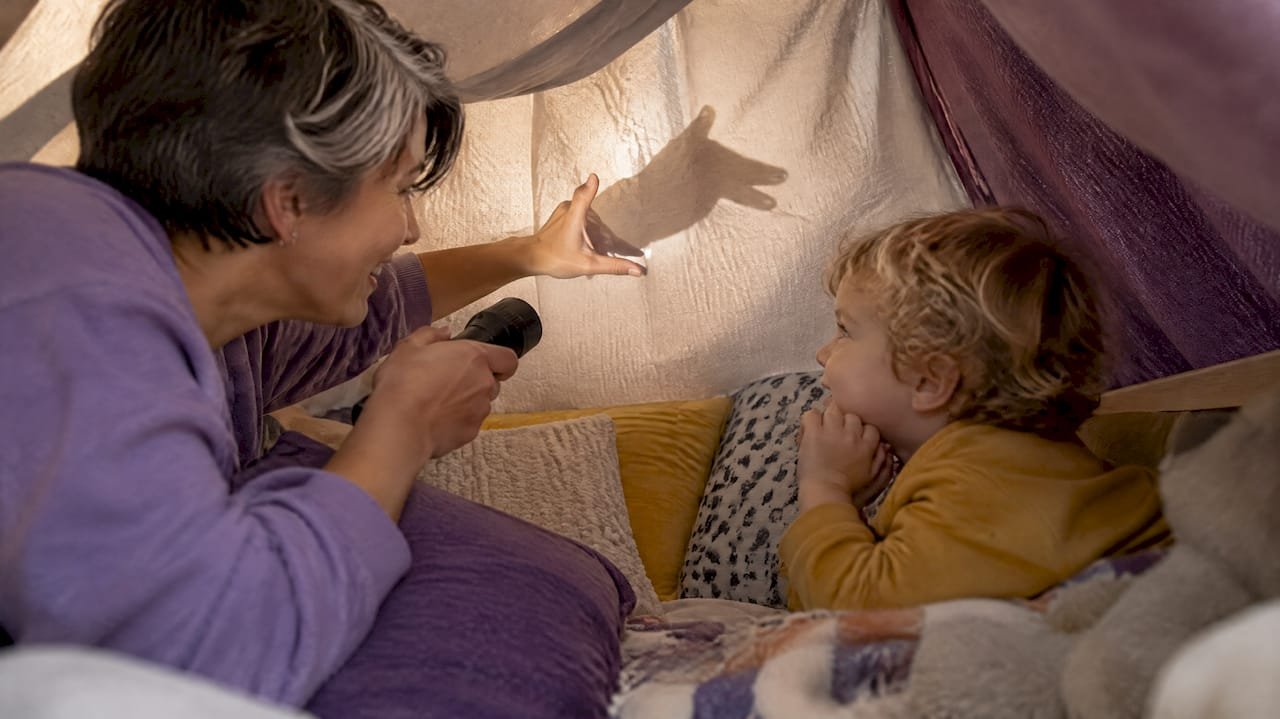
Try making hand shadows on the wall. A ghost is just a floppy hand. A bat is two hands linked at the thumbs. Toddlers don’t mind if yours look nothing like them.
Sock monsters and sock ghosts
Odd socks are the best Halloween prop in the house. Pop one on your hand, give it a silly voice and let it “eat” soft toys. Some of our favorite ideas are in 10 EYFS backed sock games for toddlers, and every one takes under five minutes.
Games, stories and snacks for bonding
Hide-and-find
BBC Tiny Happy People suggests hiding treats, healthy snacks, ornaments or toys around the home and giving simple location instructions. It practises listening and following directions. For a toddler, keep it to two or three hiding spots and use simple clues: “It’s under the cushion.” Choose snacks that suit your child’s age and allergies, and keep small, hard items away from under-threes.
A ghost story with a sound effect
The same page recommends a bedtime ghost story in which children make a sound effect each time they hear a repeated word. It supports listening skills. You might tell a story about a friendly ghost who loses his sheet. Every time you say “ghost”, your toddler says “boo!” in a tiny voice. It needs no props and takes as long as you like.
For more story ideas that fit into a busy day, see our storytelling ideas for toddlers.
Dress-up and pretend play
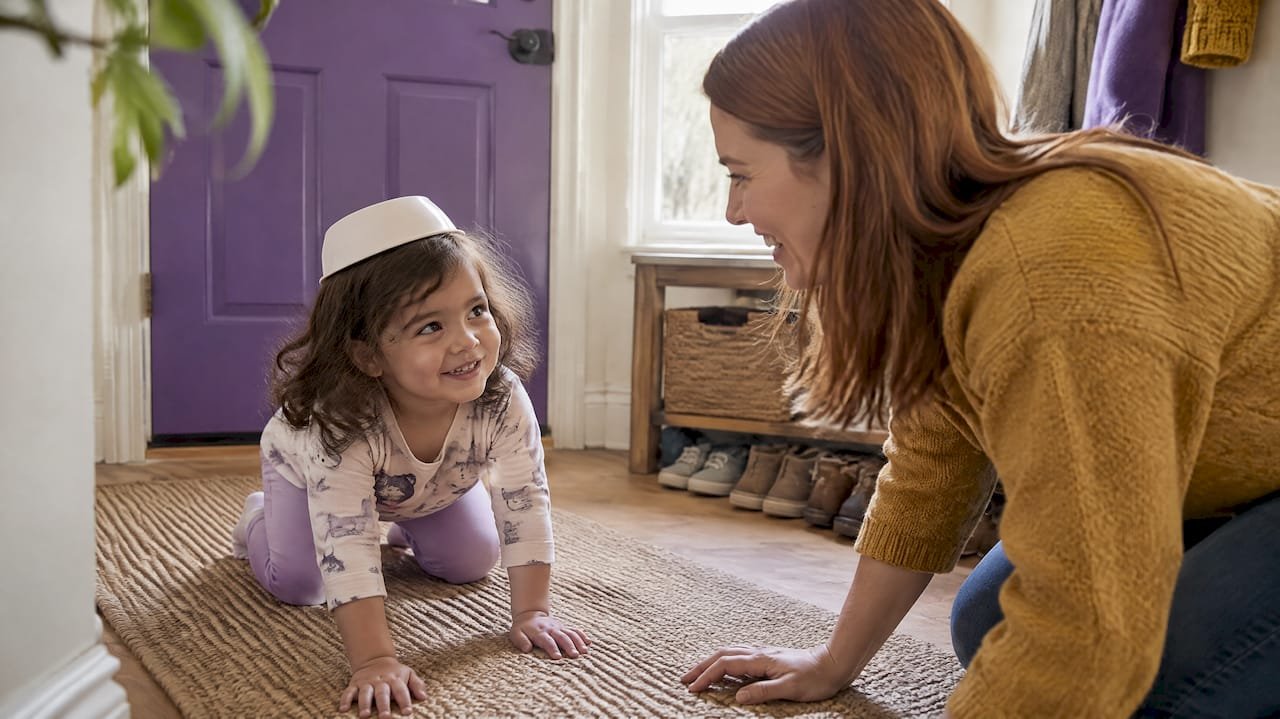
Halloween is a natural time for pretend play: being a cat, a pumpkin, a friendly dragon. Pretend play helps toddlers practice communication and confidence, and there is a good overview in this piece on pretend play development in toddlers. You can do it with a scarf, a bowl on the head or a cardboard box. A costume is optional.
Talk as you play
BBC Tiny Happy People’s view is that sensory play becomes developmental when adults name colors, textures and children’s preferences. You don’t need a script. Say what your child is doing: “You’re squishing the pumpkin. It’s wet and slippy.” Our guide to narrating play for your toddler’s language growth shows how, and the speech and language activities page has more to try.
Keeping Halloween gentle for sensitive toddlers
Some toddlers love a cackle and a mask. Others cry at the first loud noise. Both are normal.
Worcestershire Acute Hospitals NHS Trust advises introducing potentially upsetting sounds gradually, explaining them, allowing the child some control and never forcing a child to stay while distressed. It also notes that humour can reduce fear. In Halloween terms, that means showing your child the doorbell before the trick-or-treaters arrive, or letting them press the button on a noisy toy themselves.
Family Action suggests that Halloween can be adapted around sensory needs: children can dress a toy, wear familiar clothes or choose non-scary alternatives rather than being pushed into a costume. Some ideas that follow from that:
- Dress a teddy as a ghost instead of dressing your child.
- Choose a soft, familiar outfit with an orange or black accessory.
- Keep decorations friendly: smiling pumpkins, paper bats, fairy lights.
- Keep a quiet room free of decorations to retreat to.
If your child is autistic or needs predictable routines, our autism activities for toddlers offer calm play ideas. If seated play suits you better, see wheelchair-friendly and seated activities. Most of the activities above work seated with a few tweaks.
Safety checks before the fun starts
Halloween brings a few risks that are easy to miss in a house full of small props. Here are the ones that matter most for babies and toddlers.
Choking and small parts
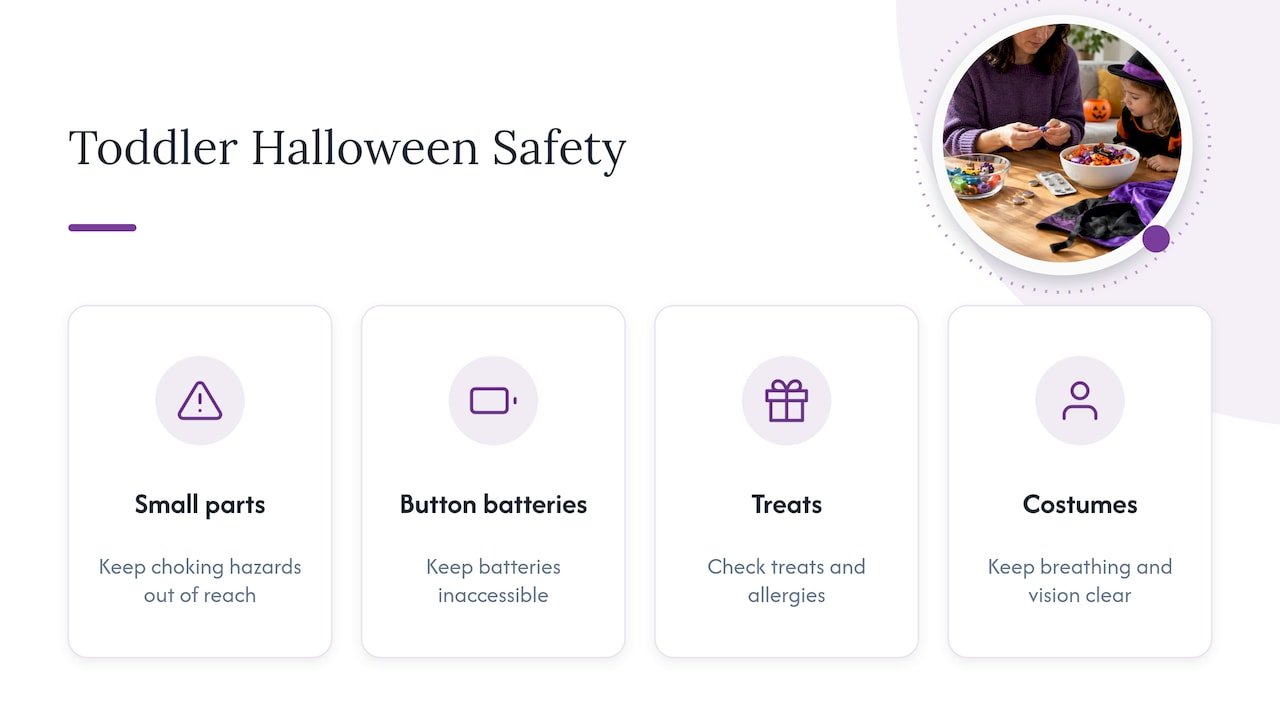
Cambridgeshire and Peterborough Children’s Health says that anything smaller than a 2p coin can choke a baby or young child. It recommends close supervision and checking toys for cracks, breaks and small parts. Google-eyes, buttons, glitter and pom-poms all fall into this group, so keep craft extras for older children or leave them out.
HealthyChildren.org also advises avoiding costume parts that can become choking hazards, as well as long or bulky costumes, long props and anything that blocks vision or breathing.
Costumes and fire
Devon and Somerset Trading Standards’ Halloween safety warning, issued on 22 October 2025, advises:
- Well-fitting, thicker, flame-resistant costumes.
- No trailing fabric or neck cords for children under seven.
- CE or UKCA marks on costumes.
- Torches or glow sticks instead of candles or sparklers.
That last point is why we suggest torch shadows in the den and a battery tea light behind the pumpkin, not a real flame. Keep glow sticks and battery lights out of mouths and check that the battery compartment is closed.
Button batteries
The UK Office for Product Safety and Standards has recalled a light-up Halloween pumpkin craft kit because accessible button batteries created choking and serious internal-injury risks, and the product failed the Toys (Safety) Regulations 2011. If a light-up decoration or craft kit has a button battery your child can reach, put it away. If you think a child has swallowed a button battery, get emergency help straight away.
Treats and allergies
HealthyChildren.org advises checking every treat if your child has a food allergy. For very young toddlers, you may prefer to skip sweets and use a hide-and-find game with snacks you have already checked. If you are unsure about a food allergy or about what is safe for your child’s age, ask your health visitor or GP.
Perspective: what we have learned about Halloween with toddlers
We built Mooshie Moments for grown-ups who are worn out and short on ideas. Halloween is a good example of why. The internet is full of themed crafts that need a trip to the shop, a clear table and forty minutes. Most of us don’t have those.
Our view is simple. A toddler gets as much from a pumpkin and a spoon as from a kit, as long as you are there, talking, laughing and following their lead. Every activity in our app explains the “why” in plain language, so you can see what your child is practising, whether that is listening, pointing, naming or squeezing. We also believe play should get you off your phone, not onto it, so we keep ideas screen-free and based on things you already own.
If you take one thing from this article, let it be this: you do not have to do all of it. One small game, played with full attention, is plenty.
— samit
A little help for busy days
If you want fresh, quick ideas all year, not just in October, the Mooshie app suggests screen-free activities using household items. They are matched to your child’s age, the time you have and how much energy you’ve got. If you work in a nursery or early years setting, we also offer a Partnership Pack and home-learning resource for your families.
If Halloween is part of a wider autumn plan, our autumn activities for toddlers and EYFS page has leaves, conkers and cozy-day ideas that carry you through to bonfire night.
FAQ
What are the best Halloween activities for a one-year-old?
Keep it sensory and simple. A pumpkin sensory bag taped to a highchair tray lets a baby squish safely, and painting a pumpkin with fingers works for many one-year-olds if the paint is suitable. Name the colors and textures as you go. Stay within arm’s reach the whole time, because small parts and loose bags can be a hazard.
What can I do with my toddler if I only have five minutes?
Tell a short ghost story with a sound effect, or hide a few soft toys and play hide-and-find. A color hunt around one room works too. None of these need preparation, and all of them give you a few minutes of eye contact and laughter.
Should my toddler wear a costume at Halloween?
No, it is up to your child. If they enjoy dressing up, choose a well-fitting, flame-resistant costume with no trailing fabric, and check it carries a CE or UKCA mark. If they dislike costumes, dress a teddy instead or add a simple orange or black accessory to familiar clothes.
How can I make Halloween less scary for my toddler?
Choose friendly pumpkins and ghosts, introduce noises and masks slowly and explain what is happening. Let your child stay in control and don’t make them stay if they are upset. A bit of silliness helps: a ghost who says “boo” in a squeaky voice is much less frightening than a loud one.
Are there Halloween activities that don’t need anything from the shop?
Yes. A blanket den with a torch, a string spider web, a color hunt, sock ghosts and a told story all use things you already own. A pumpkin is the only item you might need to buy, and painting or stamping it gives you several activities from one purchase.
Sources
- Baby and toddler play ideas, NHS
- Your toddler and you, Pennine Care NHS Foundation Trust
- Halloween play ideas, Carmarthenshire Family Information Service
- Halloween games for kids and toddlers, BBC Tiny Happy People
- Sound sensitivity: practical ways to help your child, Worcestershire Acute Hospitals NHS Trust
- Supporting neurodivergent children at Halloween, Family Action
- Toy safety, Cambridgeshire and Peterborough Children’s Health
- Halloween safety warning, Devon and Somerset Trading Standards
- Product recall: Paint Your Own Halloween Pumpkins, GOV.UK
- Easing Babies and Toddlers into Halloween Fun, HealthyChildren.org
Recommended
- Babysitting Toddlers: 12 Low Prep Ideas and Why They Help
- Busy Parents: 8 Easy, Research Based Storytelling Ideas for Toddlers
- No New Toys Needed: Sensory Play Ideas Parents Can Use With Toddlers
- Cardboard Box Toddler Activities: 12 Ideas by Age
Want a new idea every day, matched to your child's age?
Mooshie Moments gives you simple, guided play ideas for ages 6 months to 4 years.
Download free on the App StoreMore like this
Eco-Friendly Toddler Activities Using Things You Already Have
Simple eco-friendly toddler activities using things you already have: water play, nature hunts, junk modelling and garden play, with safety tips for…
Paper Plate Crafts for Toddlers: 9 Easy Ideas With Household Items
Nine quick paper plate crafts for toddlers using things you already have, with age adaptations, prep times and safety tips for parents…
Toilet Roll Crafts for Toddlers: 10 Easy Ideas by Age
Easy toilet roll crafts for toddlers and babies: binoculars, skittles, ball runs and animals, with safety tips and ideas to match your…