
60–90 Minute Playdates for UK Toddlers With Low Prep Activities

For toddlers, the easiest successful playdate is short, sensory-focused, and low-prep. Aim for a short duration playdate with two or three simple activity stations, one calm and one active. Skip the elaborate themes. A water bin, some playdough, and a snack break will beat a Pinterest-perfect setup every time toddlers are involved.
TL;DR:
- Using duplicate materials such as water bins, playdough, and sensory bins for each toddler prevents waiting and reduces meltdowns during playtime.
- Setting out supplies, staging hazards, and preparing snacks before guests arrive avoids chaos and makes supervision more manageable.
- Managing tantrums with quick redirection, short breaks, and reinforcing self-use phrases helps maintain a calm environment amid typical toddler frustrations.
- Limiting the group to two or three toddlers and matching activities to their developmental stages ensures smooth interactions and easier supervision.
Table of Contents
- Playdate Activities for Toddlers That Actually Work
- A Quick Setup Checklist Before Guests Arrive
- How Long Should a Toddler Playdate Last?
- What To Do When the Playdate Goes Off-Script
- Why Household-Item Play Actually Builds Toddler Skills
- Managing Toddler Behavior Challenges During Playdates
- Safety Considerations for Toddler Playdates
- How Many Toddlers Should You Invite?
- Want Ready-Made Playdate Ideas Without the Planning?
- Keeping It Real: Playdates Don’t Need to Be Perfect
- Sources
Playdate Activities for Toddlers That Actually Work
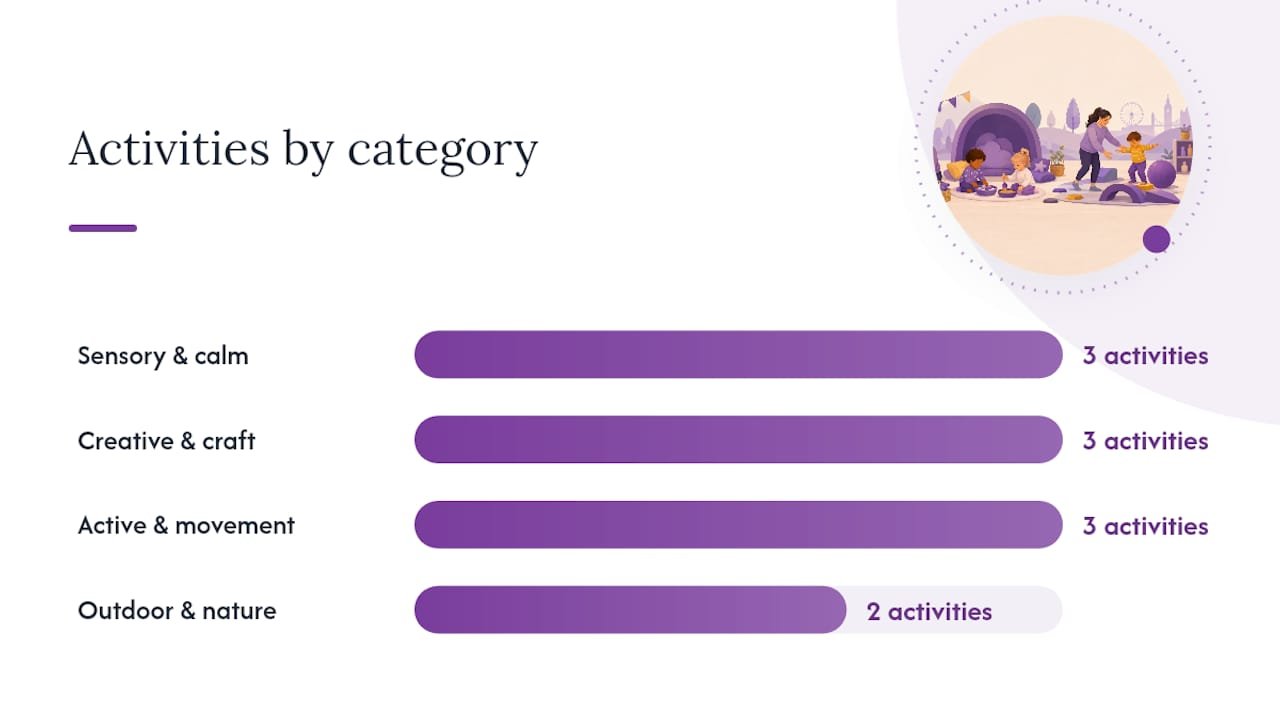
You don’t need a craft cupboard or a backyard obstacle course to pull off a good toddler playdate. You need a few duplicate materials, a plan for transitions, and low expectations for how long anything holds their attention. Here’s a grouped list of activities that consistently work, organized by type so you can mix one calm option with one active one.
Sensory and calm activities give toddlers a familiar, low-pressure way to play side by side without needing real cooperation, which matters because sensory play acts as a comforting anchor for kids who feel unsure in someone else’s home.
- Water bin with cups and spoons. Fill a shallow tub, add measuring cups, and let two toddlers pour side by side. Set out at least two of everything so nobody waits.
- Playdough station. Give each child their own ball of dough plus a butter knife or cookie cutter. Parallel play, not sharing, is the goal here.
- Rice or pasta sensory bin. Dry rice, dried pasta, or oats in a large bowl with scoops and small containers keeps hands busy and mess contained.
Creative and craft activities work best when the materials are forgiving and there’s no “right” way to do it.
- Sticker collage. A sheet of paper and a pack of dollar-store stickers. Zero cleanup, instant sense of accomplishment.
- Finger painting. Washable paint on a taped-down sheet of butcher paper. Have a second sheet ready when the first gets soggy.
- Cardboard-box fort. One or two boxes, some tape, and crayons for decorating. Household items like cardboard and masking tape turn into forts, tunnels, and car tracks with almost no setup, and a junk-modelling approach stretches this into a full session if the kids are engaged.
Active and movement activities burn off energy between the quieter stations.
- Dance freeze. Play music, dance, pause it, freeze. Works indoors on a rug or outdoors on grass.
- Soft obstacle course. Couch cushions, a laundry basket to crawl through, a pillow to step over.
- Bubble chase. A bottle of bubbles turns any yard or living room into ten minutes of pure entertainment.
Outdoor and nature activities add variety when the weather cooperates.
- Nature scavenger hunt. A short list (a leaf, a rock, something yellow) keeps toddlers moving with a simple goal.
- Picnic with simple props. A blanket, some toy dishes, and snacks turns lunch into an activity in itself.
For each of these, the trick isn’t the activity itself. It’s having enough supplies for every child and framing the invitation loosely, so nobody feels like they’re doing it wrong.
Pro Tip: Set out two of every material before guests arrive. Waiting for a turn is the number one trigger for toddler meltdowns at playdates, and duplicate supplies solve most of it before it starts.
A Quick Setup Checklist Before Guests Arrive
Ten minutes of prep saves you from twenty minutes of chaos later. Here’s what to do before the doorbell rings.
- Clear obvious hazards and designate one messy zone using a tarp or an old shower curtain liner.
- Set out duplicate materials for each planned activity so toddlers aren’t stuck waiting for a turn.
- Prep a snack tray of finger foods in advance. A ready snack tray gives toddlers an easy shared focus that lowers tension right at drop-off.
- Point out the potty the moment guests arrive, before anyone gets distracted.
- Stage towels, spare clothes, wipes, and a small first-aid kit somewhere you can grab them without leaving the room.
That last step matters more than it sounds. Keeping playdates short and showing guests the toilet on arrival are two of the simplest fixes for the most common playdate hiccups.
Pro Tip: Keep a spare set of clothes for your own toddler AND a couple of neutral sizes for guests. Nothing ends a playdate early faster than a soaked outfit with no backup.
How Long Should a Toddler Playdate Last?
Sixty to ninety minutes is the sweet spot for toddlers, based on their developmental capacity for social interaction before overstimulation sets in. Preschoolers can often stretch to two hours, but toddlers rarely benefit from more time.
Structure that window by pairing one high-energy activity with one calm one, and use snack time or a short story as a mid-session reset. Age-fit swaps help too:
- 12 to 24 months: stick to parallel sensory play. Two water bins side by side beat one shared toy.
- 2 to 3 years: simple guided activities work, like a scavenger hunt with two items on the list.
- 3 to 4 years: short cooperative games, such as rolling a ball back and forth, start to click.
What To Do When the Playdate Goes Off-Script
Toddlers are still building the social skills that make cooperative play possible, so your job as the host is to facilitate, not supervise from a distance. That means having duplicate materials ready, modeling sharing out loud (“Can I have a turn after you?”), and stepping in fast when frustration builds instead of waiting to see if it resolves itself.
When an activity starts falling apart, don’t try to save it. Move on.
- Snack break. Food resets the mood faster than almost anything else.
- A movement song or dance. Gets everyone up and out of a stuck moment.
- Step outside. Fresh air alone can turn a rough ten minutes around.
Prioritizing the environment and schedule over elaborate activities is the real skill here. If you sense the whole thing winding down, end on your terms.
- Set the end time at drop-off so nobody is surprised.
- Have a short, friendly script ready: “We’re going to wrap up in five minutes so everyone can head home for a nap.”
Pro Tip: Decide your exit line before the playdate starts, not in the middle of a meltdown. Something like “time for lunch” works every time and needs no explanation.
Why Household-Item Play Actually Builds Toddler Skills
Sensory play supports both motor and language development, and parallel play, where toddlers play side by side rather than together, is developmentally normal at this age, not a sign anything is wrong. Everyday items like spoons, boxes, and dough offer the right kind of challenge: simple enough to avoid frustration, open-ended enough to invite cause-and-effect exploration instead of rigid rules. Some activity apps build on exactly this idea, turning research into short, age-tailored activity prompts parents can pull up in seconds.
Managing Toddler Behavior Challenges During Playdates
Grabbing, hitting, and sudden meltdowns aren’t bad behavior at a toddler playdate. They’re what happens when kids without full language or impulse control get frustrated. Expect at least one flashpoint, usually over a toy, and plan your response before it happens rather than reacting in the moment.
The fastest de-escalation move is redirection, not negotiation. A two-year-old rarely responds to “let’s talk about how that made you feel.” They respond to being physically moved to a new activity with a toy already in hand. Keep a couple of “reset” items, a favorite book or a wind-up toy, out of sight until you need them.
Watch for the warning signs before the blowup: repetitive whining, grabbing at multiple toys without settling, or hovering too close to another child. Stepping in at that stage, with a quick “let’s find you your own cup,” heads off most conflicts before they escalate.
Give toddlers a script they can use themselves. Teaching a simple phrase like “my turn next” or “can I have a turn” during calm moments means they’re more likely to use it, or something close to it, when frustrated. It won’t work every time. It will work often enough to make the playdate feel manageable instead of chaotic.
And when a meltdown does happen, resist the urge to force an apology or a shared toy on the spot. A short separation, a change of scene, or your own calm narration of what happened tends to resolve it faster than insisting on an instant fix.
Safety Considerations for Toddler Playdates
Toddler safety at a playdate comes down to supervision ratios and hazard-proofing, not elaborate childproofing. If you’re hosting more than two toddlers, you need a second adult. One caregiver genuinely cannot watch three or four mobile toddlers at once, especially once snacks, choking hazards, and stairs enter the picture.
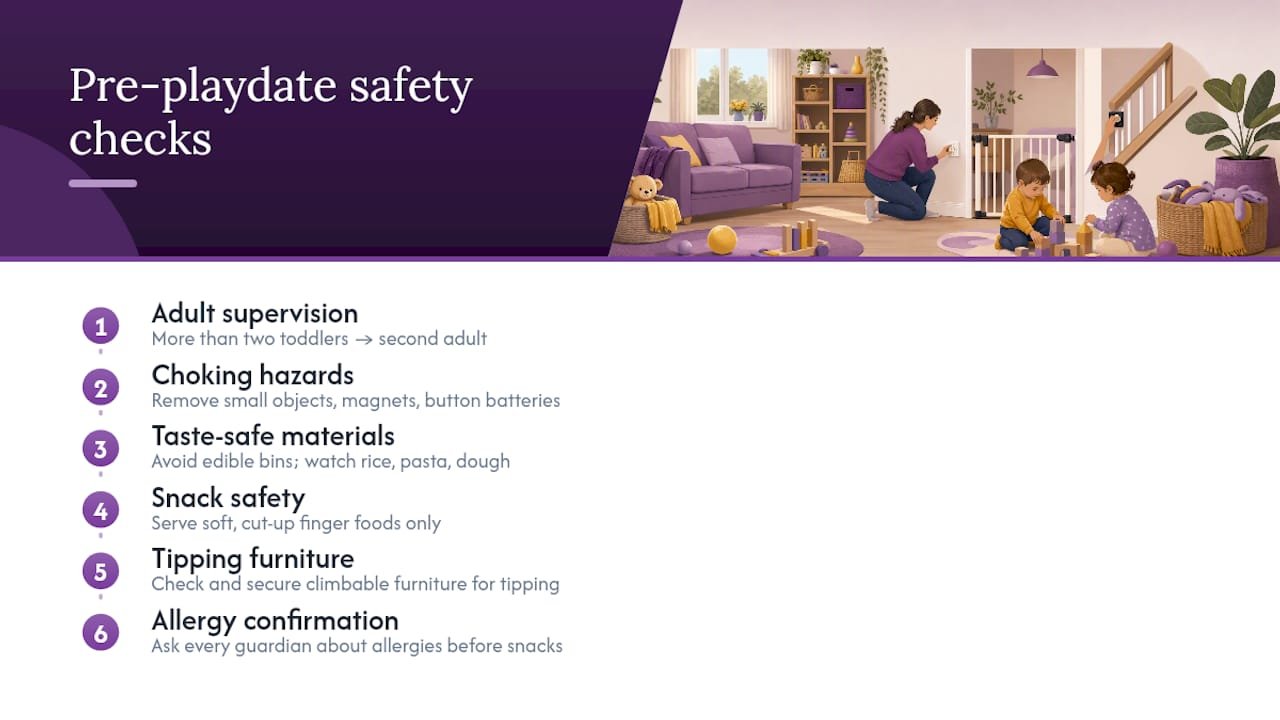
Walk the play area before guests arrive and remove small objects, choking-sized toys, and anything with small magnets or button batteries. Toddlers explore with their mouths well past their first birthday, so a “taste-safe” mindset for sensory materials matters more than most hosts expect, especially with rice, pasta, or dough bins where a curious toddler might sample the play material.
Snacks deserve their own pass. Grapes, whole nuts, and hard candy are common choking risks at this age, so stick to soft, cut-up finger foods for the whole group, not just your own child.
Check furniture for tipping hazards if toddlers will be climbing, and keep any pet food, cleaning supplies, or medications well out of reach, even in a home you’ve visited before. Familiar spaces get a false sense of security fast.
Finally, confirm allergies with every guardian before you plan snacks or sensory materials, since food dyes, nut products, and even certain playdough recipes can trigger reactions you won’t know about until it’s too late to swap them out.
How Many Toddlers Should You Invite?
Two to three toddlers, plus their caregivers, is the realistic ceiling for a smooth playdate. Beyond that, you’re not hosting a playdate anymore. You’re running a small daycare, and the dynamics shift fast once a group gets bigger than that.
Smaller groups mean fewer conflicts over shared toys, shorter wait times at each activity station, and an easier time keeping every child in your sightline. A group of two also makes parallel play, which is developmentally where most toddlers still are, feel natural instead of forced.
If you’re inviting toddlers of different ages, lean toward the younger end when planning activities. A three-year-old can usually flex down to a simpler sensory bin. A one-year-old cannot flex up to a cooperative game. Matching the activity to your youngest guest keeps everyone included instead of watching one child struggle on the sidelines.
Consider spacing out invitations by developmental stage too. A toddler who just turned one and a toddler close to three have very different attention spans and mobility levels, and cramming both into the same hour-long window often means one of them ends up bored or overwhelmed. When in doubt, smaller and more frequent playdates beat one big group gathering.
Want Ready-Made Playdate Ideas Without the Planning?
Some apps skip the searching and guessing that eats up a Sunday night before a playdate. Instead of scrolling for activity lists, you can open an app, enter your child’s age and available time, and get a short, screen-free activity built from things already in your kitchen or toy box.

A typical prompt might pair a five-minute sensory tray with a ten-minute dance-and-freeze reset, timed almost exactly to a toddler’s attention span during a playdate. Every activity comes with a plain-language note on the developmental skill it’s building, whether that’s fine motor control, early language, or cause-and-effect thinking, so you’re not just filling time. If you’re hosting a two-year-old’s playdate this weekend, the collection of 2-year-old activities is the fastest place to start pulling ideas together.
Keeping It Real: Playdates Don’t Need to Be Perfect
Half the playdates I’ve watched fall apart in the first twenty minutes and turn out fine anyway, because someone reached for snacks or a bubble wand instead of trying to fix it. My go-to reset is the simplest one: bubbles outside, every time, no exceptions. Pick one low-prep activity, try it once, and adjust next time based on what actually held their attention, not what looked good on paper.
— samit
Sources
- Smart Kids Day Nursery — Toddler playdate ideas
- Pampers — Playdates for toddlers
- Zero to Three — Play activities for 12–24 months
Recommended
More like this

Five Minute Routine Activities to Help Speech Delay in UK Toddlers
Quick, routine based activities UK parents can use in 5–15 minutes to support a toddler with speech delay. Evidence backed techniques and…
Three Minute Mess Free Sensory Play For UK Parents
Quick, reusable sensory activities UK parents can set up in minutes. Sealed bags, sticky wall art, safety checks, storage tips, and Mooshie…
10 Quiet Bin Ideas UK Parents Can Build in 5 Minutes
Practical, EYFS-aligned quiet-bin ideas UK parents can assemble in five minutes. Includes 10 ready bins, a five-bin rotation, safety checks, and quick...