
5–15 Minute Five Day Weekly Toddler Activity Plan for UK Parents
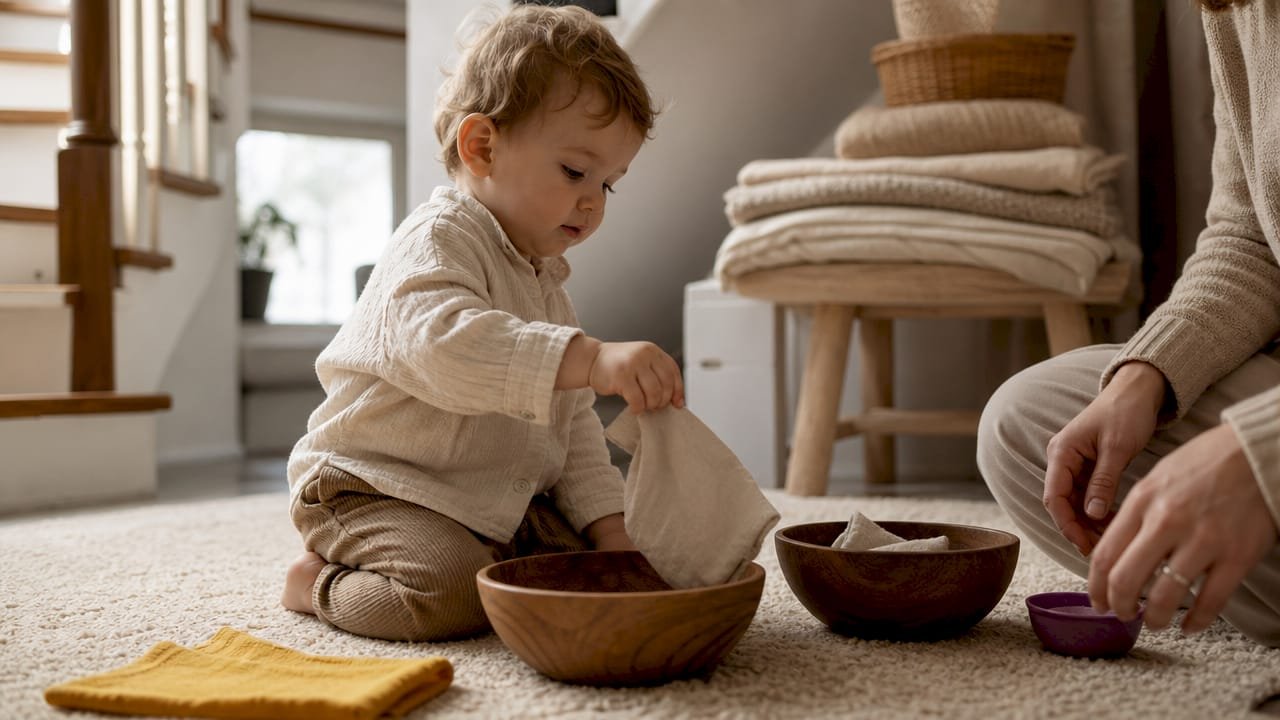
A weekly toddler activity plan works best as a simple five-day rhythm of 5 to 15-minute learning bursts across sensory, fine motor, gross motor, language, and creative play. It fits toddlers 12 to 36+ months, needs only household items, and each day covers roughly four short activity slots plus a family moment. Plans can be built automatically, tailored to your child’s age and however much time you actually have.
TL;DR:
- Sensory activities should stay brief, around 5 to 8 minutes for younger toddlers and up to 15 minutes for older ones, to match their attention span.
- Reusable play zones, such as sensory bins and building areas, help maintain a flexible rhythm and reduce prep time across the week.
- Adjust activity challenge levels based on age, simplifying tasks for under 24 months and adding complexity like sorting or counting for toddlers over two.
- Incorporate quick backup activities for waiting times and errands with simple narration to support language growth and keep toddlers engaged.
- Consistency in activity slots and materials encourages routine without rigidity, supporting developmentally appropriate play across all toddler ages.
Table of Contents
- Your Copyable Weekly Template for Toddler Activities
- Why Each Activity Type Matters (and How to Pick One Fast)
- How Do You Adjust the Plan by Age?
- Setting Up Rhythms Instead of Rigid Routines
- Fast Activities for Waiting Rooms and Snack Time
- How Mooshie Moments Turns This Plan Into Your Plan
- Keep It Flexible, Celebrate the Small Wins
- Try Mooshie Moments for a Plan Built Around Your Week
- Sources
- FAQ
Your Copyable Weekly Template for Toddler Activities
Every good weekly toddler activity plan runs on repetition, not reinvention. The daily slots stay the same. Only the activities inside them change.
Here’s a five-day skeleton you can copy straight into a notebook, whiteboard, or fridge magnet planner:
- Morning circle (language/story), 10 minutes: Shared book time with sound imitation. Read one page, pause, and let your toddler fill in the animal noise or repeated phrase.
- Mid-morning (sensory/fine motor), 10 minutes: Colander and pom-pom transfer. Poke pom-poms through the colander holes, or use tongs to move them into a bowl.
- Post-nap (gross motor), 15 minutes: Cardboard tube tunnel crawl. Tape a few empty tubes end to end, or just line up boxes for a crawling obstacle course.
- Creative or messy play, 10 minutes: Shaving-cream finger painting on a tray, or torn-paper collage on cardboard.
- Family extension, 5 minutes: Whoever’s around, from a sibling to a grandparent, joins the last five minutes to repeat or extend the activity.
The materials list barely changes week to week: a colander, tongs or a spoon, pom-poms or dry pasta, cardboard tubes or boxes, shaving cream or yogurt for a taste-safe option, and a stack of board books. That’s the entire kit.
| Day | Language/story | Sensory/fine motor | Gross motor |
|---|---|---|---|
| Monday | Animal sound book | Pom-pom transfer | Tube tunnel crawl |
| Tuesday | Rhyming song | Spoon and rice scoop | Cushion mountain climb |
| Wednesday | Picture naming walk | Playdough squeeze | Laundry basket push |
| Thursday | Puppet story | Sticker peel and stick | Bubble chase |
| Friday | Favorite book repeat | Water and sponge squeeze | Music and freeze dance |
Swap in whatever you have on hand. A muffin tin works as well as a colander. An empty tissue box makes a fine tunnel piece.
Why Each Activity Type Matters (and How to Pick One Fast)
Each category in a weekly toddler activity plan targets a different skill, so rotating through all of them beats repeating your child’s one favorite thing every day.
- Sensory play builds nervous system regulation and vocabulary for texture and temperature. Try water beads in a tray, dried beans in a bin, or frozen fruit in a bowl to touch and describe.
- Fine motor strengthens the hand muscles needed for holding spoons and, later, pencils. Clothespins on a box edge, threading pasta onto string, or a squeeze bottle for “painting” with water all work.
- Gross motor develops balance and coordination through big body movement. A pillow obstacle course, stair climbing with supervision, or a laundry basket to push and pull all fit.
- Language and story grows vocabulary and listening stamina. Repeating a favorite book, naming objects on a walk, or singing with hand motions all count.
- Creative and craft introduces cause and effect and early self-expression. Finger painting, crayon scribbling, or junk modeling with recyclables are all low-mess wins.
- Outdoor and nature adds fresh air and sensory variety that indoor play can’t fully replace. A leaf hunt, puddle stomping, or simply sitting outside naming what you hear all apply.
For toddlers learning English as an additional language, narrate slowly in short phrases and repeat key words often. For toddlers with sensory sensitivities, offer a dry alternative (rice instead of water) or let them watch before joining in.
How Do You Adjust the Plan by Age?
A 14-month-old and a 34-month-old need the same categories but very different pacing. The CDC’s milestone guidance for 1 year olds points to simple back-and-forth actions and single words, so activities in that range should stay short, one-step, and highly repeatable.
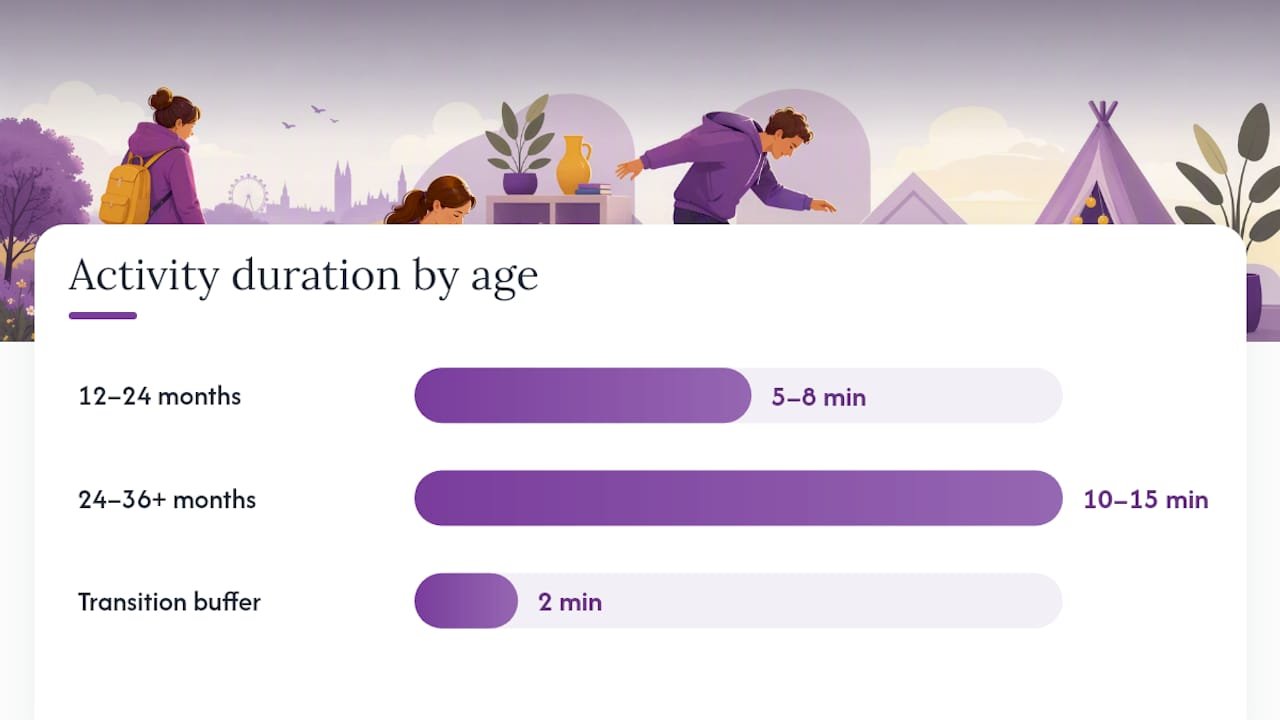
For 12 to 24 months, aim for 5 to 8 minute bursts. Watch for wandering eyes or a toddler trying to leave the activity area; that’s your cue to wrap up, not push through.
For 24 to 36+ months, the CDC’s 2 year milestone list describes two-step instructions and early word combinations, which means activities can stretch to 10 to 15 minutes and carry a bit more challenge.
- Simplify for younger toddlers: drop from three steps to one (“put it in the bowl”).
- Add challenge for older toddlers: ask them to sort by color, count aloud, or predict what happens next.
- Scaffold language either way: narrate what you see them doing in short, clear sentences.
Pro Tip: Keep a two-minute buffer between activities for cleanup and a snack. Toddlers transition better with a small ritual, like a clean up song, than with a sudden switch.
Setting Up Rhythms Instead of Rigid Routines
A rhythm bends when the day doesn’t cooperate. A rigid routine snaps. The NAEYC’s guidance on developmentally appropriate practice backs play-based, child-led learning over strict scheduling, and that principle holds up well for home use, too.
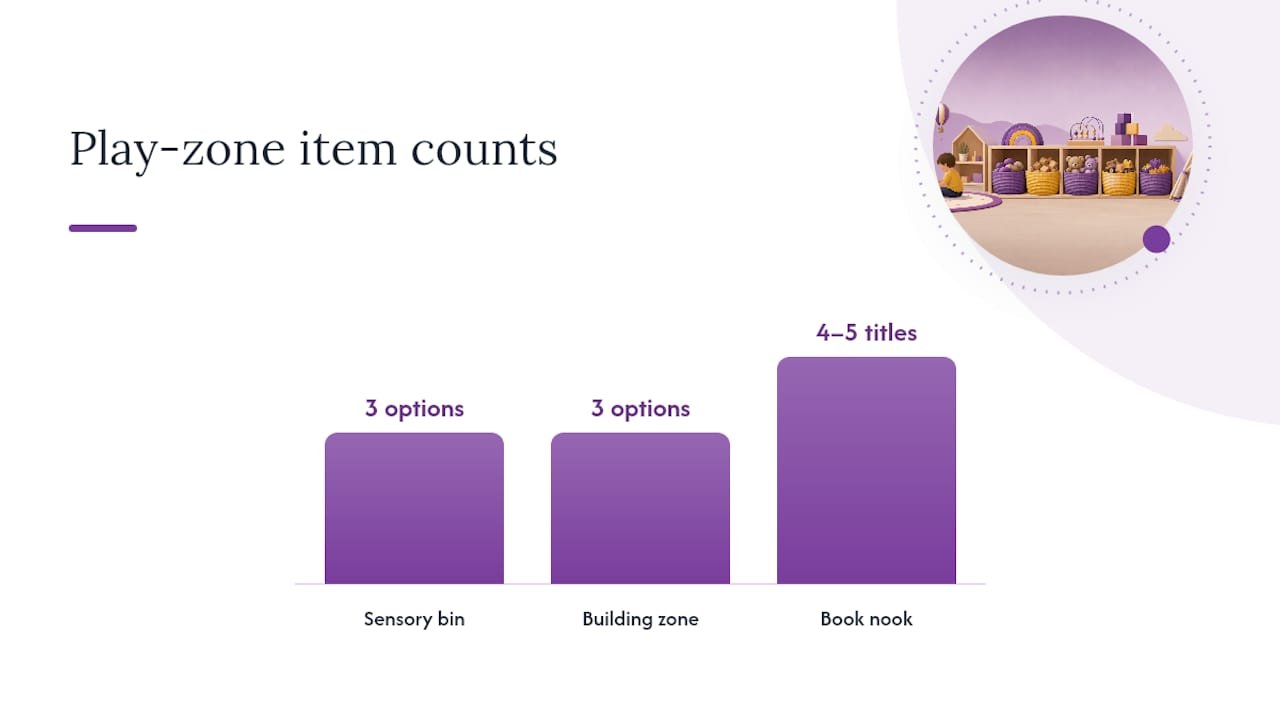
Continuous provision means setting up two or three reusable play zones that stay accessible all week, so your toddler can return to them independently between planned activities.
- A sensory bin (dried rice, water beads, or fabric scraps) that stays out on a low shelf all week.
- A building zone with blocks, boxes, or stacking cups within easy reach.
- A book nook with four or five rotating titles rather than the whole collection dumped out.
Prep once: fill the bin, clear one table corner, and stash spare materials in a labeled box. Rotate one zone’s contents every few days to keep things fresh without starting from scratch.
Fast Activities for Waiting Rooms and Snack Time
Every weekly toddler activity plan needs a backup list for the moments that don’t go as scheduled. Practitioners generally favor these short bursts precisely because they need no setup and travel well.
- Language on the go: name three things you see, sing the alphabet slowly, or play “I spy” with colors.
- Fine motor in your bag: unzip and rezip a pouch, peel a sticker, or stack coins.
- Gross motor in place: marching on the spot, reaching up high then low, or tiptoe walking for five steps.
- Sensory in a pinch: squeeze a stress ball, crumple then flatten paper, or trace shapes on your palm.
A simple script helps every time: “You’re stacking them so high!” or “Feel how bumpy that is.” Narrating out loud does more for language growth than the activity itself. If a sensory item is small enough to swallow, always supervise closely, and skip loose small parts entirely for toddlers who still mouth objects.
How Mooshie Moments Turns This Plan Into Your Plan
This template gives you a starting rhythm, but every toddler and every week is different. Some apps take the same categories, age bands, and 5 to 15 minute burst format used here and generate plans matched to a child’s age and available time each day, using common household items.
For nurseries and early years settings, the Partnership Pack adds printable templates and usage tracking on top of the same tailored suggestions. Samit’s contribution to this piece drew on published CDC milestone guidance and ELM-style optionalized activity formats to keep the plan grounded in real developmental stages, not guesswork.
Keep It Flexible, Celebrate the Small Wins
Some days you’ll run the whole plan. Other days you’ll manage one sensory bin and call it a win, and that’s genuinely enough. Success looks like a toddler who stayed engaged for ten real minutes, not a perfectly completed checklist. Share your week’s plan with a nursery key worker or a grandparent picking up childcare duties. A shared plan means fewer repeated activities and more variety for your toddler.
— samit
Try Mooshie Moments for a Plan Built Around Your Week
Building a fresh weekly toddler activity plan from scratch every Sunday night gets old fast, especially compared to opening an app that already knows your child’s age and how many minutes you’ve got. Mooshie Moments is the alternative to piecing together activity ideas from scattered blog posts and Pinterest boards: it generates screen-free, household-item activities suited to your toddler’s age and your available time, with the developmental reasoning explained in plain language for every single one.
If you run a nursery or early years setting, the Partnership Pack adds printable home-learning resources your families can use between sessions. Parents looking for quick wins with a 2 year old specifically can also browse 40 fun 2 year old activities to start today. Download Mooshie Moments and try a free 5 minute plan tonight.
Sources
Bookmark these alongside your own weekly toddler activity plan for the times you want to double check pacing or milestones.
FAQ
What Are Good Weekly Planning Ideas for Toddlers?
Build the week around four short daily slots: language/story, sensory/fine motor, gross motor, and creative play, each running 5 to 15 minutes. Rotate simple household materials rather than buying new supplies, and repeat favorites when your toddler asks.
What Is the Hardest Age With a Toddler?
Many caregivers find 12 to 24 months especially demanding, since language is emerging faster than the ability to express frustration verbally. Shorter activity bursts and predictable rhythms, rather than strict schedules, tend to ease this stretch.
What’s a Good Daily Schedule for a 2 Year Old?
A workable day includes a morning activity burst, outdoor time before nap, a rest period, and one more short activity plus free play in the afternoon. The CDC’s 2 year milestone guidance supports slightly longer, two-step activities at this age.
What’s the Best Daily Routine Chart for a Toddler?
The most effective charts use pictures alongside simple words for each anchor point: wake up, breakfast, play, snack, nap, play, dinner, bed. Tailored plans can slot directly into a chart like this, matched to a child’s current age.
Recommended
- Research Backed Nursery Activity Plans: 3 Daily 5 Minute Slots (UK)
- 40 Fun 2 Year Old Activities to Start Right Now
- 12 Low Prep Toddler Activities for Grandparents With Seated Options
- Junk Modelling for Toddlers: Easy EYFS-Aligned Activities
Want a new idea every day, matched to your child's age?
Mooshie Moments gives you simple, guided play ideas for ages 6 months to 4 years.
Download free on the App StoreMore like this
Babysitting Toddlers: 12 Low Prep Ideas and Why They Help
Explore 12 low prep toddler activities for babysitters, with developmental benefits, age adaptations, UK safety advice, and optional activity coaching.
10 EYFS Backed Sock Games for Toddlers Under Five Minutes
Ten EYFS aligned sock games to start in under five minutes, each with a one line developmental benefit, simple adaptations, and two…

Busy Parents: 12 No Prep Shopping Activities for Toddlers
Busy parents: keep toddlers learning and calm at the store with 12 no prep, screen free activities that take under five minutes…