
Winter Activities for Toddlers: Indoor and Outdoor Ideas for Cold, Dark Days
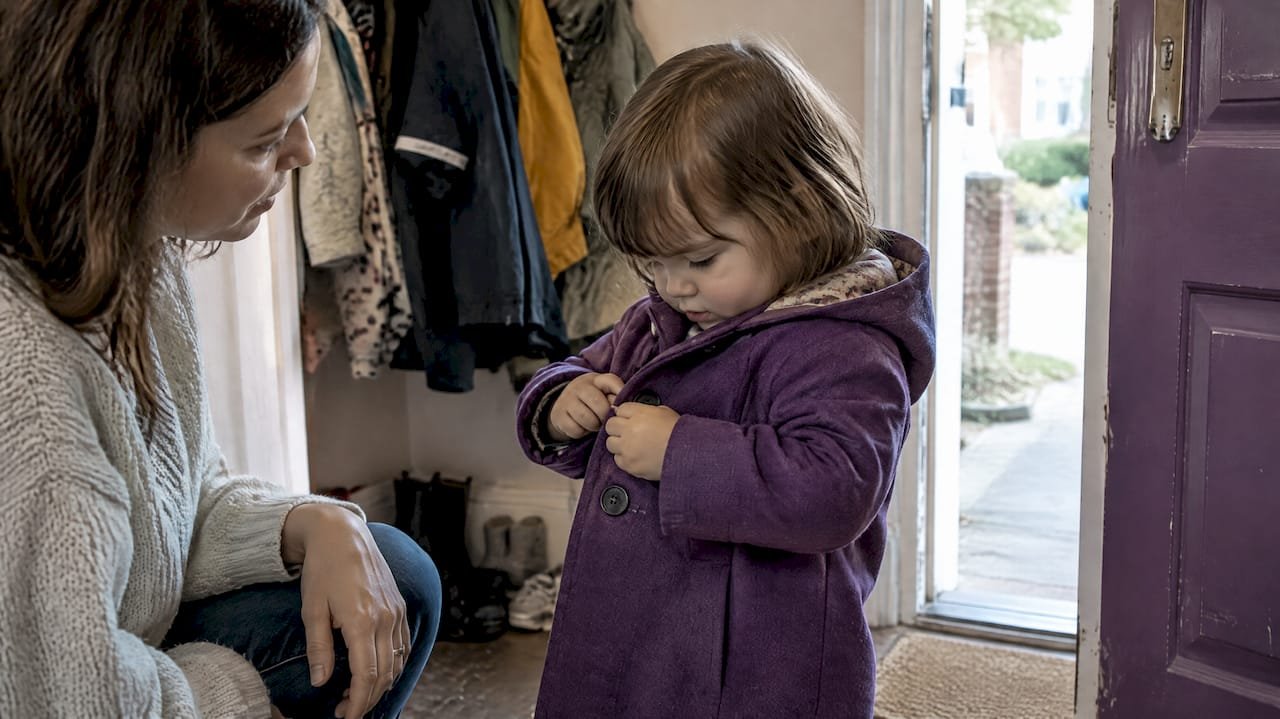
The best winter activities for toddlers are short and close to home: ten minutes outside in the cold light of the morning, then simple, cosy play indoors once it gets dark at four. You do not need a craft cupboard or a snowy garden. A frosty puddle, a torch, a tray of ice and a pile of blankets will carry you through most of the season.
Winter days can feel long with a little one: the light goes early and the park trip becomes a battle with coats and wet gloves. This guide gives you outdoor games you can finish before fingers get cold, indoor play for the dark hours, ice and frost experiments, ideas by age, and what to know about staying warm and safe.
If you mostly need ideas for a wet afternoon stuck at home, our easy indoor activities and rainy day ideas cover that. This page is about the season itself: cold air, short days, frost and winter light.
TL;DR
- Toddlers still need around 3 hours of activity a day in winter, spread across the day and including some outdoor play, according to the NHS.
- Go out early, keep it short (10 to 20 minutes), and come back in before anyone gets cold or wet.
- Use the dark: torch games, shadow play and window-light hunts turn early sunsets into something to look forward to.
- Ice and frost make free sensory play. Stay right next to your child, and keep small frozen objects for over-3s only.
- Thin layers, a hat and mittens work best outside. Take bulky coats off before buckling your child into a car seat.
Table of Contents
- Why winter play matters, even when it is cold and dark
- Short outdoor games for cold days
- Cosy indoor play for dark afternoons
- Ice and frost experiments
- Winter play by age
- Keeping warm and safe this winter
- Make it a daily habit with Mooshie
- Our view
- FAQ
- Sources
- Recommended
Why winter play matters, even when it is cold and dark
The NHS physical activity guidelines for under-5s say toddlers aged 1 to 2 should be active for at least 180 minutes a day, and that this should include playing outdoors. Pre-schoolers aged 3 to 4 need the same 180 minutes, with at least an hour of it more energetic. Babies who are not yet walking should be active throughout the day, including tummy time and floor play.
That sounds like a lot in December, but light activity counts. Standing, toddling round the kitchen and carrying shopping bags all add up. The aim is a day without long stretches of sitting still, not three hours of organised games.
The other reason winter play matters is connection. The Harvard Center on the Developing Child describes “serve and return”: your child points, babbles or looks, and you respond. Those small back-and-forth moments shape how the brain is wired. A dark afternoon with a torch and a parent who is paying attention is a very good setting for them.
Short outdoor games for cold days
Wrap up, go out while it is light, and plan to be back inside before your toddler gets chilly. Ten to twenty minutes is plenty for most under-4s, on a pavement, in a park or in a small garden.
- Breath clouds. On a cold morning, show your child how your breath makes a little cloud. Take turns: big puffs, tiny puffs, dragon puffs. Say: “Look, my breath is a cloud! Can you make a cloud too?” Blowing games also work the mouth muscles used for speech.
- Frost hunt. Look for frost on car roofs, leaves, fences and spider webs. Let your child touch it with a mitten, then with one finger, and talk about how it feels. “Crunchy. Cold. Sparkly.” Pick one word and repeat it each time you find more.
- Crunch walk. Frozen grass, frosty leaves and crisp gravel all make different sounds. Walk across each and ask, “Which one is the loudest crunch?” Hold hands on anything icy.
- Puddle ice check. After a cold night, find a shallow puddle on a path and gently tap the top with a boot. Is it ice, or is it water? Only do this with shallow puddles on solid ground, and never on ponds, lakes or rivers.
- Bird watch. Birds are easier to see in winter because the branches are bare. Stand still for one minute and count the birds you can see or hear. For younger toddlers, just pointing and saying “bird!” is the whole game.
- Follow my footprints. On frosty or wet ground, walk ahead and leave footprints for your toddler to step in. Then swap. Big steps, tiny steps, stamping steps. This builds balance and coordination.
- Early sunset walk. Around half past three, take a short walk to watch the sky change colour and the street lights come on. Count the lights as they switch on, or spot the first window with a light inside.
If you have more time, our page on big-movement play has more running, climbing and balancing games that work in a coat.
Cosy indoor play for dark afternoons
When the light goes before tea time, lean into it. Darkness makes ordinary things exciting for a toddler. These ideas use what you already have at home.
- Torch hunt. Turn off the main light, give your child a torch (or hold it together) and hunt for teddies you have hidden around one room. Say: “Shine it high. Shine it low. Where is Bear?” Use a torch with a screwed-in battery cover, and keep loose batteries well out of reach.
- Shadow animals. Shine a torch or lamp at a plain wall and make shadow shapes with your hands. A toddler can wave, clap or wiggle fingers. Older children can guess what you are making.
- Blanket den. Drape a sheet or blanket over two chairs and climb in with books and a torch. Dens feel safe and special, and they invite quiet talk.
- Hibernating bears. Talk about animals that sleep through winter. Your child curls up under a blanket as a sleeping bear while you tiptoe round. When you say “Spring!” they wake up, stretch and roar.
- Indoor snowball throw. Roll up pairs of white socks into “snowballs” and throw them into a laundry basket. Step back a little each time it works. This is good for aim, counting and turn-taking.
- Warm and cold sort. Gather a few clothes: a hat, a scarf, a sunhat, sunglasses, a jumper, a T-shirt. Sort them into “cold day” and “hot day” piles.
- Window light hunt. After dark, look out of the window together for lights: street lights, car lights, lit windows, the moon. Name the colours you see. Give each light a little wave.
- Dance to warm up. Put on a song and do a “warm up dance”: rub your hands, stamp your feet, jump, then flop. Repeat with fast and slow music. It is an easy way to add some active minutes on a day you cannot go out.
Want a ready-made circuit for the living room? Our 10-minute indoor obstacle course uses cushions and chairs.
Ice and frost experiments
Ice is free, safe to touch for short spells, and endlessly interesting to a toddler. Lay a towel under a baking tray and keep sessions short so little hands do not get too cold. Stay right next to your child the whole time.
- Giant ice block. Freeze water in a plastic tub overnight, then turn the block out onto a tray. Let your child touch it, slide it and watch it shrink. One large block is safer than small cubes for babies.
- Ice rescue (3+ only). Freeze a few small toys in a tub of water. Give your child warm water in a cup and a spoon to free them. Small toys are a choking risk, so this one is for over-3s, and stay right next to them.
- Melt race. Put one ice cube on a plate by the window and one on a plate near (not on) a warm radiator. Check every few minutes. Which melts first? Ask, “Why do you think that one is winning?”
- Coloured ice painting. Add a drop of food colouring to water in an ice tray, freeze, then let your child slide the cubes across thick paper. Watch the colours mix as they melt. Expect some mess, and use an apron.
Ice play is water play once it melts, so the usual rule applies: never leave them alone near water, even a shallow tray. For more ideas built around touch and texture, see our sensory play ideas.
Winter play by age
6 to 12 months
At this age, winter play is about new sensations and your voice. Hold your baby at the window to watch rain, frost or falling leaves and describe what you see. Let them touch a cold spoon, then a warm towel, and name the difference. Wrap up for a short pram walk and chat as you go. Plenty of floor time indoors matters too, and the NHS Best Start in Life baby moves page has ideas for encouraging rolling, sitting and crawling. Our baby activities for 6 to 12 months page has more.
1 to 2 years
New walkers love the crunch walk, footprint following and the sock snowball throw. Keep language simple: one or two words at a time (“cold”, “ice”, “more”). Hibernating bears is a good fit because it is all about doing and repeating. Keep trips out short: they get cold quickly and cannot always tell you.
2 to 3 years
Two-year-olds can start to compare and sort, so warm and cold sorting, the melt race and the window light hunt work well. They also love being in charge of the torch. Ask simple “which” questions: “Which one is colder?” “Which light is the brightest?”
3 to 4 years
Pre-schoolers are ready for small experiments and a little bit of planning. Try the ice rescue, guessing games with shadow animals. Ask them to predict what will happen, then check. “What do you think the ice will look like after lunch?” Counting birds or street lights adds some early maths.
Keeping warm and safe this winter
- Layers beat one big coat. The American Academy of Pediatrics recommends several thin layers, plus a hat, mittens and warm boots. Change wet clothes straight away and take indoor breaks to warm up.
- Coats off in the car seat. Bulky coats and snowsuits should not go under car seat straps, because the padding squashes in a crash and leaves the harness loose. The AAP’s winter car seat tips suggest buckling up in thinner layers and putting the coat or a blanket over the top.
- Watch small hands and faces. Young children lose heat faster than adults and may not want to stop playing. Check fingers, ears and noses, and head inside if they feel very cold.
- Stay off frozen water. Ice on ponds, lakes and canals can look solid and still break. Admire it from the path and hold hands near the edge.
- Nap and night-time temperature. Indoors it is tempting to turn the heating up. For babies, the Lullaby Trust recommends a room temperature of 16 to 20°C for sleep, with light bedding or a well-fitting sleep bag.
- Vitamin D. Between October and early March we cannot make enough vitamin D from sunlight in the UK. The NHS advises that children aged 1 to 4 have a daily 10 microgram vitamin D supplement all year round. Ask your health visitor or pharmacist if you are not sure what your child needs.
- Festive hazards. Candles, button batteries in decorations and remote controls, and hot drinks within reach are all more common in winter. Keep them high up and out of reach.
Planning December? Our Christmas activities for toddlers has festive ideas, and our toddler activities by age hub has year-round play.
Make it a daily habit with Mooshie
Winter is when the “what shall we do now?” feeling hits hardest. Mooshie Moments picks one short game a day for your child’s exact age and stage, using things you already have at home. It gives you simple steps, the actual words to say and what the game is helping your child practise. You hold the phone, and your child never touches it.
On the days you are running on very little sleep, the app’s SOS button lets you choose a game to burn some energy or wind down, including ones where you barely have to move. Mooshie is free to download on iPhone, with optional in-app purchases. Get Mooshie Moments on the App Store.
Our view
Winter does not need a packed activity plan. A short walk in the cold, a torch after tea and a tray of ice will do more for your child than a cupboard of new toys. What matters most is the time you spend paying attention to them, chatting about what they see and letting them lead. Some days that will be twenty minutes of play. Some days it will be five. Both count.
FAQ
Is it OK to take a toddler outside in cold weather?
Yes, for most ordinary UK winter days. Dress them in thin layers with a hat, mittens and warm boots, keep trips short, and come in if they are wet or very cold. Outdoor play is part of the daily activity the NHS recommends for under-5s.
How long should toddlers play outside in winter?
There is no set time. For most toddlers, 10 to 20 minutes at a stretch works well, with a break indoors to warm up. Two or three short trips can be easier than one long one.
What can I do with my toddler on a dark winter afternoon?
Use the dark. Torch hunts, shadow animals, a blanket den with books and a window light hunt all work well after sunset. Add one active game, like a dance to warm up, to help them burn some energy before tea.
Is ice play safe for babies?
A large block of ice on a tray, with you right beside them, is a gentle way for babies to explore cold. Avoid small cubes or chips of ice that could be a choking risk, keep sessions short so hands do not get too cold, and dry them off afterwards.
Should my toddler wear a coat in the car seat?
No. Bulky coats and snowsuits can make the harness too loose to protect your child in a crash. Buckle them in wearing thinner layers, then put the coat on backwards over the straps or tuck a blanket over the top.
Do toddlers need vitamin D in winter?
The NHS advises a daily 10 microgram vitamin D supplement for all children aged 1 to 4, all year round, not only in winter. Babies’ needs depend on how they are fed, so check with your health visitor or pharmacist.
Sources
- Physical activity guidelines for children under 5 years (NHS)
- Playtime activities and bonding with your toddler (NHS Best Start in Life)
- Baby moves (NHS Best Start in Life)
- Vitamin D (NHS)
- Your baby’s room temperature (The Lullaby Trust)
- Winter safety tips (American Academy of Pediatrics, HealthyChildren.org)
- Winter car seat safety tips (American Academy of Pediatrics, HealthyChildren.org)
- Serve and return (Harvard Center on the Developing Child)
Recommended
- Rainy-Day Fixes: Easy Indoor Activities Toddlers Love
- Christmas Activities for Toddlers: Easy Ideas at Home
- Autumn Activities for Toddlers and EYFS
- Sensory Play Ideas for Babies and Toddlers
- Toddler Activities by Age: 1 to 3 Years
Want play ideas matched to your child's age?
Mooshie Moments gives you simple, guided play ideas for ages 6 months to 4 years. Try 3 free activities a week.
Download free on the App StorePart of our guide: Toddler activities by age · Compare toddler activity apps
More like this
Best Camping Activities for Toddlers: Easy Ideas That Work
The best camping activities for toddlers: simple, screen-free ideas using things you already have, plus campsite safety basics and tips for short…
Camping With Toddlers: Activities That Work at the Campsite
Easy camping activities for toddlers using what you already have: nature play, campfire-free games, rainy-day ideas and safe-play tips for UK campsites.
Christmas Activities for Toddlers: Easy Ideas at Home
Easy Christmas activities for toddlers using things you already have at home: sensory trays, simple crafts, games and traditions, plus safety tips…