Baby Activities for 6 to 12 Months

SCREEN-FREE PLAY · 6 MONTHS TO 1 YEARS

Baby Activities for 6 to 12 Months

Baby activities for 6 to 12 months, month by month, using things already at home. Pick tonight's idea from the Mooshie Moments app and start playing.

  • Free to download
  • No account needed
  • No screen time for your child
QR code to download Mooshie MomentsOn a laptop?
Scan to get Mooshie on your iPhone.
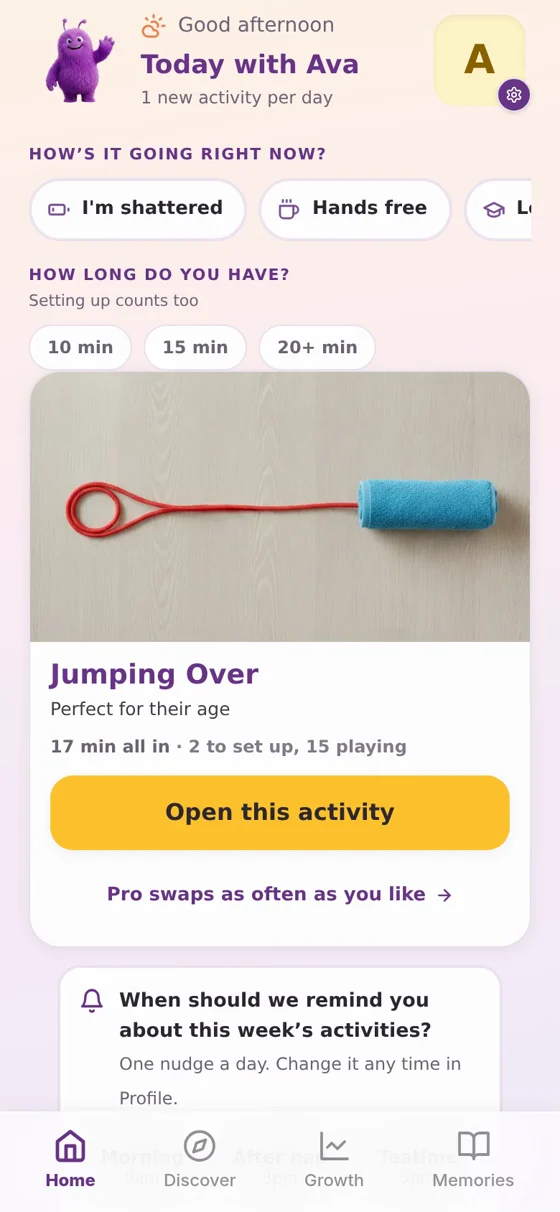
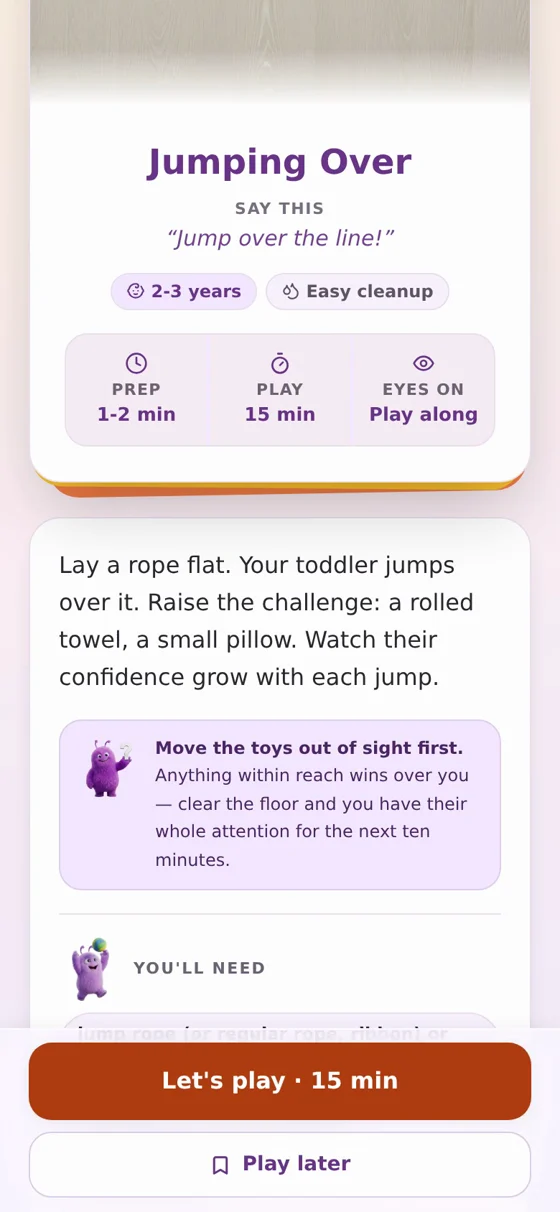
Mooshie Today screen with mood and time options and today's activityMooshie activity screen with Say this words to use
12free ideas on this page
5,918activities for 6 months to 4 years
Say thisthe exact words on every activity
0child details uploaded, ever

Baby activities for 6 to 12 months work best when you follow whatever their body is currently obsessed with, whether that’s sitting up, grabbing, or posting everything they own into their mouth. This stretch of the first year moves fast: a baby who can barely prop themselves on their arms in month six is often cruising round the furniture by month twelve.

Below are twelve activities from the Mooshie Moments app, grouped loosely by month, for babies from 6 to 12 months. Mooshie starts at 6 months, so if your baby is younger, these will be waiting when they’re ready. Each activity uses things you already have at home, takes 10 to 20 minutes, and comes with the exact words to say.

Babies learn with their whole body

At this age, learning rarely looks like sitting still and concentrating. It looks like mouthing a spoon, dropping a toy for the tenth time, or squealing at a gust of wind. Watch for these emerging skills as you play, roughly in this order across the months:

Sitting

without support, freeing both hands for exploring.

Reaching and grasping

with increasing precision, moving from a whole-hand swipe to a proper grip.

The pincer grip

, picking up small (but not swallowable) items between finger and thumb.

Object permanence

, understanding that something still exists even when it’s out of sight.

Crawling and pulling to stand

, opening up the whole room as a place to explore.

Mouthing everything is normal and how babies gather most of their early information, so keep anything smaller than a 50p coin well out of reach.

6 to 7 months

6 to 12 months10 minutes

1. Belly down swim

Lay your baby tummy down on a blanket and gently guide their arms in a slow swimming motion, one at a time. This helps them feel where their limbs are and how they move, groundwork for the coordinated arm and leg movement crawling needs later.

You’ll need: a blanket on the floor

How to play
  1. Lay your baby tummy down, arms by their sides.
  2. Guide one arm forward slowly, saying “arm forward!”
  3. Bring it back, then do the other side.
  4. Keep a steady rhythm for four or five cycles, then let them rest.
Say this: “Arm forward!” · “Swim, swim, swim!” · “Moving so smoothly!”
6 to 12 months10 minutes

2. Soft vs hard

Hold a soft stuffed toy and a hard toy side by side and guide your baby’s hand between the two, naming the difference each time. Comparing opposite textures like this helps a baby’s brain start to build categories: some things squish, some things don’t.

You’ll need: a soft toy, a hard toy like a rattle or wooden spoon

Say this: “Soft, squish-squish!” · “Hard and firm!” · “Feel the difference?”
6 to 12 months10 minutes

3. Three-sound surprise

Sit facing your baby with three sound-makers and let them hear each one before handing it over so their own hand makes the noise. That shift, from watching you to causing the sound themselves, is an early lesson in cause and effect.

You’ll need: a rattle, a metal teaspoon, a sheet of tissue or greaseproof paper

How to play
  1. Shake the rattle and say “listen, shake shake.”
  2. Tap the spoon, then crinkle the paper.
  3. Hand one item over and say “your turn.”
  4. Swap items round and stop when they tire of it.
6 to 12 months10 minutes

4. Fabric parachute

Hold a light scarf up high and let it drift slowly down onto your baby’s face. Watching something fall this slowly is unusual for a young baby, and the moment it lands gives a small, safe surprise they’ll often ask for again straight away.

You’ll need: a light scarf

Say this: “Wow, look at that!” · “What happens next?” · “Let’s find out!”

8 to 9 months

6 to 12 months15 minutes

5. Water cup splashing

Set two shallow basins side by side, one with a little water in, and let your baby scoop with a small cup and pour it across. The concentration this takes, moving water without spilling, is genuine effort for developing hands, and the splash is the reward for trying.

You’ll need: two basins, a small cup, a waterproof mat or towels

How to play
  1. Set two basins on a waterproof mat, one filled with a couple of inches of water.
  2. Hand over a small cup and show one scoop and pour.
  3. Let them scoop and pour repeatedly.
  4. Stay within arm’s reach throughout and empty the water afterwards.
Say this: “Scoop and pour!” · “Did you see that splash?” · “More, more, more!”
6 to 12 months10 minutes

6. More-more chant with toy

Give your baby one soft toy, then ask “more?” and add a second, then a third, letting the pile build on their lap before taking them away one at a time. The pause before each new toy teaches anticipation: something is coming, they just don’t know exactly when.

You’ll need: three or four soft toys

Say this: “More!” · “Two teddies.” · “All done.”
6 to 12 months10 minutes

7. Sock pull-off

Pull a sock halfway off and let your baby finish the job themselves. Grabbing the heel and pulling is precise pincer-grip work, the same kind of hand control that will later help with buttons and zips.

You’ll need: nothing but the socks they’re already wearing

How to play
  1. Sit your baby on your lap.
  2. Pull one sock halfway off.
  3. Let them pull the rest.
  4. Repeat with the other sock.
6 to 12 months10 minutes

8. Crinkle cloth book sound hunt

Open a crinkle book page by page and hunt for the crinkle sound together, then let your baby find and make it themselves. It’s a good one for the car, a waiting room or a flight, giving busy hands a job and your baby a small, repeatable win.

You’ll need: one fabric crinkle book

Say this: “Where’s the crinkle?” · “You found it!” · “Again!”

10 to 12 months

6 to 12 months20 minutes

9. The ribbon pull

Thread ribbons through the holes of a colander and knot the ends so they stay put, then let your baby grab and pull. Every tug slides the ribbon a little further through, which rewards a stronger, more deliberate grasp than earlier in the year.

You’ll need: a colander, 5 to 8 ribbons around 30cm long

How to play
  1. Thread ribbons through the colander holes and knot both ends securely.
  2. Let your baby grab and pull from different sides.
  3. Add a small bell to a ribbon for extra interest, if you like.
  4. Supervise closely so nothing wraps around a wrist or neck.
6 to 12 months10 minutes

10. Slow bike bicycle legs

Lay your baby on their back and slowly draw one knee up towards their chest, holding for a couple of seconds before lowering and swapping sides. Moving through this range gently can ease trapped wind, and the slow pace, with a proper pause between legs, is where the connection happens.

You’ll need: a soft floor or change mat

Say this: “Nice and slow.” · “And the other side.”
6 to 12 months10 minutes

11. Cloud top baby airplane

Lying on your back, lift your baby up to arm’s length and hold them there, swaying gently rather than bouncing them about. Being moved calmly through space like this, with steady eye contact, feeds the sense of balance and body awareness a baby is busy building all through this stretch.

You’ll need: a rug on the floor

How to play
  1. Lie back on a rug, holding baby securely under the arms and ribs.
  2. Raise them to arm’s length and stop, arms locked and steady.
  3. Sway a few centimetres side to side, slow as breathing.
  4. Bring them down after ten seconds or so, before your arms tire.
6 to 12 months10 minutes

12. Wind on face

Step outside on a windy day and hold your baby facing into it, turning slowly so it catches different sides of their face. Feeling something you can’t see, moving air against your skin, is a small but genuine sensory stretch for a baby this age.

You’ll need: a breezy day outside

Say this: “Wind!” · “Whoooosh.” · “Big breath.”

Hundreds more ideas like these are waiting in the app.

Plus one picked for your child every day, matched to their age and how today is going.

LOVED BY FAMILIES

Parents and experts on Mooshie

“I used to spend 30 minutes looking for an activity on Pinterest, get overwhelmed, and just turn on the TV. Mooshie takes 5 seconds.”
Sarah J.Mum of a 2-year-old
“Finally, an app that tells me to put my phone away. The activities are actually doable with stuff I have in my junk drawer.”
Mark D.Dad of two
“As a pediatric OT, I love that these activities build core developmental skills without feeling like ‘homework’ for parents.”
Dr Emily R.Paediatric occupational therapist
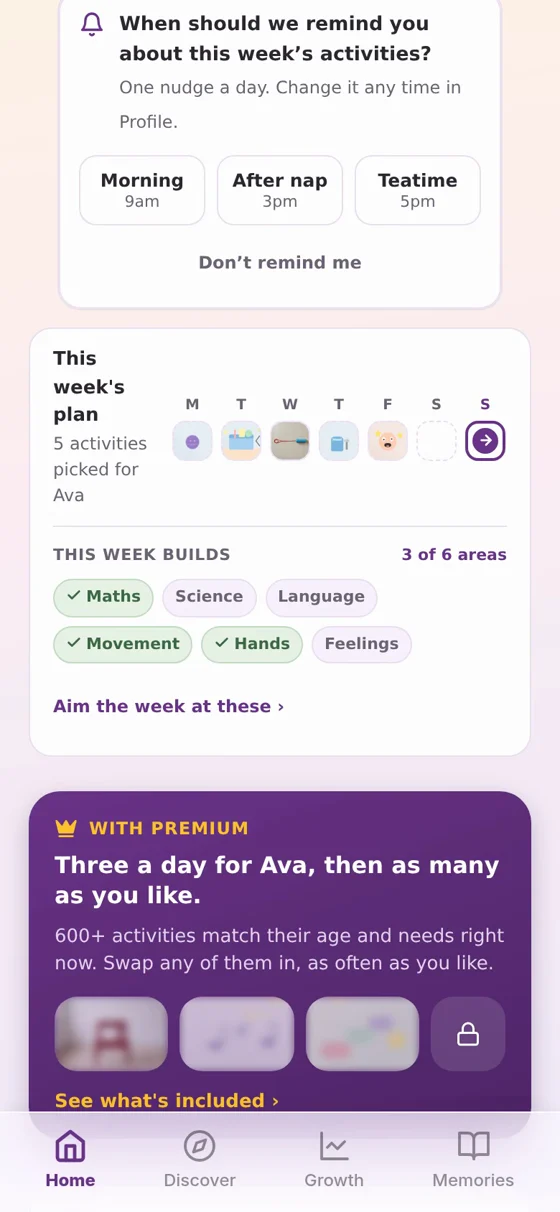
This week's plan showing five activities and the areas they build
HOW MOOSHIE HELPS

How Mooshie helps in the first year

The Mooshie Moments app starts at 6 months and has 5,918 activities running all the way to age 4, using things already at home. It picks one activity a day to match your baby’s age and stage, and how much time you’ve got, from a quick 10 minutes to 20 or more.

  • Every activity has “Say this” phrases, prep and play times, and a parent tip, so you know exactly what’s coming before you sit down.
  • Tap “We’re done” afterwards to see “What that built”, the skills your baby just practised, and add a photo to save it to Memories.
  • A weekly plan of five activities shows which of six areas the week is building: maths, science, language, movement, hands and feelings.

It’s for you, not your baby: check the idea in 30 seconds, then put the phone away. Free to download, one new activity a day free, no account needed.

Questions parents ask

What age can babies start structured play activities?

Mooshie’s activities begin at 6 months, once many babies are sitting with support and reaching more purposefully. Before that, plenty of face-to-face talking, tummy time and simple sensory chat is genuinely valuable, even without a formal activity attached.

What are the best activities for a 9 month old?

Look for anything involving scooping, pouring, grabbing and hiding, since object permanence and hand control are developing fast around this age. Water cup splashing and the crinkle book sound hunt above both suit this stage well.

Is it normal for babies to put everything in their mouth?

Yes, mouthing is one of the main ways babies explore texture and shape at this age. Keep anything smaller than a 50p coin out of reach, and supervise closely with anything new.

How long should activities be for a 6 to 12 month old?

Around 10 minutes is usually plenty, and often less. Follow your baby’s cues: if they turn away or get fussy, that’s their way of saying they’re done for now.

My baby seems behind on sitting or crawling. Should I worry?

Babies reach these milestones across a wide range of ages, so a little later than a book or app suggests usually isn’t cause for concern on its own. If you have specific worries about your baby’s development, your health visitor is the right person to talk to.

Mooshie is a play app, not medical advice. If you’re worried about your child’s development, speak to your health visitor or GP.

Make memories. Build skills. Play together.

Your first moment is ready as soon as you tell us their age.

Mooshie MomentsFree on iPhone
Get it free