
The Best Treasure Basket Ideas for Babies and Toddlers
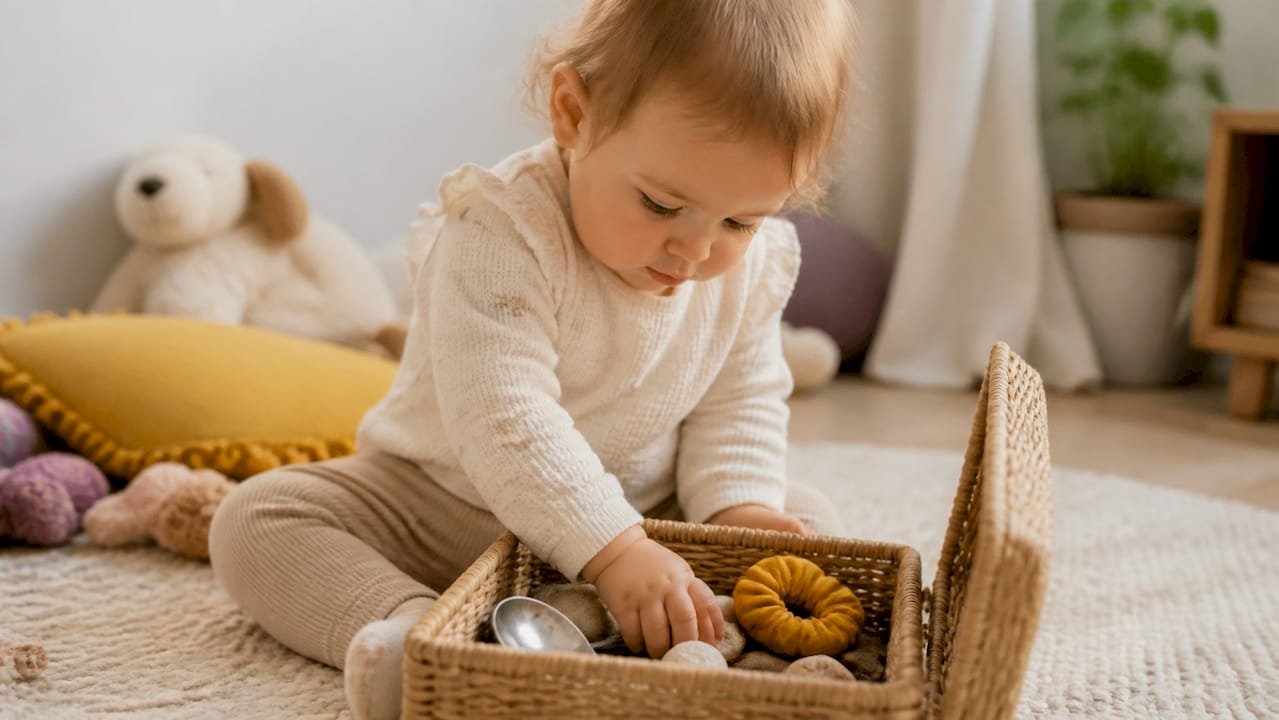
A treasure basket is a shallow, sturdy container filled with a safe number of everyday objects that your baby can freely explore using all their senses. Two rules apply every single time: every item must pass a choking-hazard check, and an adult must be present and watching throughout the session.
Here is a quick grab-and-go list to get you started today:
- Natural: smooth pebble, large pinecone, lemon, loofah, large shell
- Metal: wooden-handled spoon, small whisk, set of keys, bell
- Brushes: pastry brush, nail brush, large makeup brush
- Textiles: velvet scrunchie, square of silk, small wool ball
- Household: wooden coaster, small wicker ball, cork, wooden peg
The single most important rule: if an item fits inside a toilet paper roll, it is a choking hazard and must stay out of the basket entirely. Supervise every session without exception.
Choose a low, wide basket and start with 8–10 items. That is genuinely all you need to give your baby a rich, sensory play session today.
Key Takeaways
A treasure basket works best when items are safe, varied across sensory categories, and rotated regularly while you observe quietly and name what your baby discovers.
| Point | Details |
|---|---|
| Start with 8–15 safe items | Choose a shallow, sturdy basket and include natural, metal, brush, textile, and household objects. |
| Apply the choking-hazard rule every time | Any item that fits inside a toilet paper roll must be removed before the session begins. |
| Supervise and stay quiet | Sit behind your baby, intervene only for safety, and resist directing or demonstrating play. |
| Rotate items every one to two weeks | Swap out ignored objects to keep engagement high and use observations to guide new selections. |
| Mooshiemoments personalizes the prompts | The app matches treasure basket activity ideas to your child’s age and your available time, with language tips included. |
Table of Contents
- What are treasure baskets and why do they help your baby?
- How do you set up a treasure basket correctly?
- What items should you put in a treasure basket?
- How do you keep a treasure basket safe and hygienic?
- How should you present the basket and support play?
- How often should you rotate items and what themes work well?
- Quick treasure basket prompts from Mooshie Moments
- Why simple play is always enough
- Mooshiemoments makes treasure basket play even easier
- Sources
What are treasure baskets and why do they help your baby?
A treasure basket is an open-ended collection of household and natural objects that supports sensory exploration, concentration, and the discovery of material properties. The concept sits at the heart of what early-years educator Elinor Goldschmied called heuristic play, a term she developed in the 1980s to describe babies’ natural drive to investigate the physical world through touch, taste, smell, sound, and sight.
Goldschmied’s approach, later woven into Montessori-aligned early-years practice, rests on one core idea: babies learn more from a wooden spoon than from a brightly colored plastic rattle, because the spoon offers real sensory data: weight, temperature, grain, sound when tapped. Three concrete benefits follow from this.
Sensory pathways. Handling objects with varied textures, weights, and temperatures builds the neural connections that underpin later fine-motor and cognitive skills.
Concentration. Because no one is directing the play, babies set their own pace. Sessions of focused, uninterrupted exploration tend to be longer and deeper than adult-led activities.
Early vocabulary. When you sit nearby and quietly name what you observe (“cold,” “smooth,” “heavy”), you link sensory experience to language at exactly the moment the baby is feeling it. That timing is what makes the vocabulary stick.
How do you set up a treasure basket correctly?
Choosing the right container
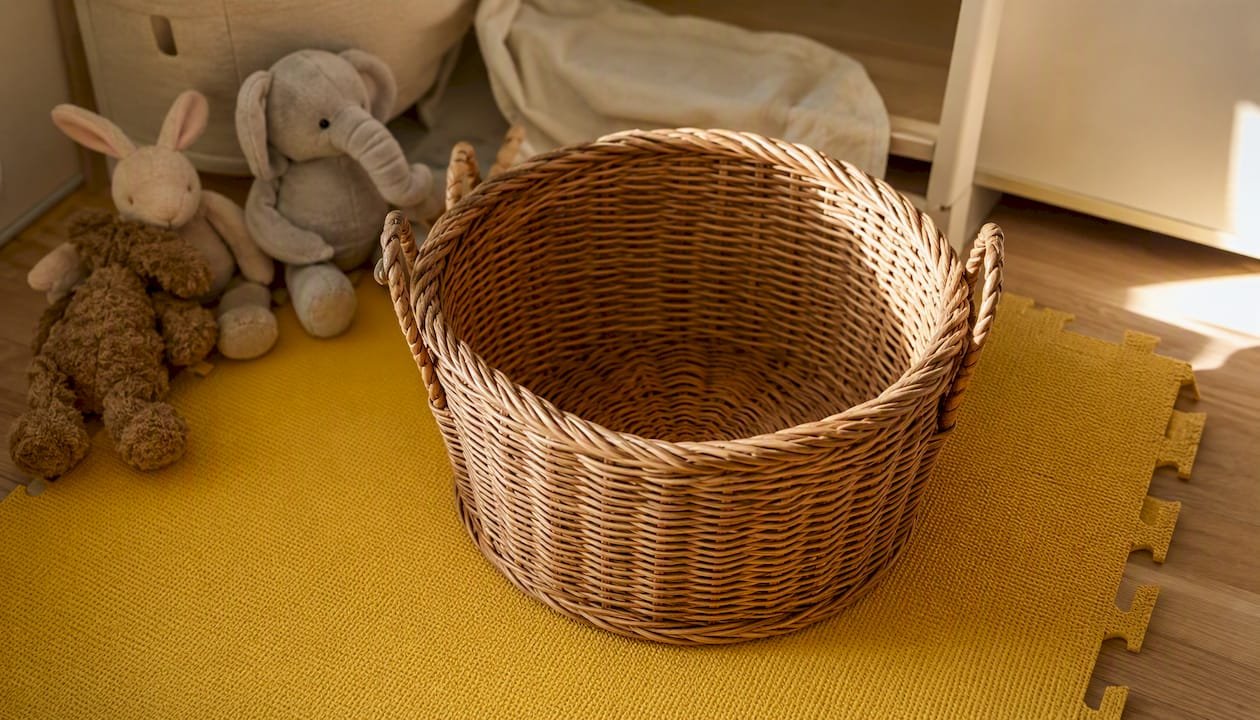
A low, shallow, sturdy basket is the standard choice. Natural wicker or willow works well because it is firm, has no sharp edges when intact, and adds its own texture. Avoid plastic bins (too light, tips easily) and deep containers (baby cannot see or reach the bottom items). The basket should sit flat on the floor without rocking.
How many items to include
A practical starter range is a handful of items for home sessions. Heuristic-play practitioners sometimes build collections of 50–60 objects stored separately and rotated into the basket, but for a first introduction at home, fewer items keep the experience focused rather than scattered. Refresh the selection regularly to sustain interest.
Placement and environment
Create a distraction-free zone. Turn off background media, lay a soft blanket or play mat on the floor, and place the basket within easy reach of a seated baby. Sit behind or slightly to the side of your baby, not in front, so you are available without becoming the focus. Removing your baby’s shoes and socks adds an extra layer of tactile input through the feet.
Items to avoid
- Anything that fits inside a toilet paper roll (choking risk)
- Items with loose labels, stickers, or detachable parts
- Batteries, magnets, or anything with small components
- Long-handled tools that could poke an eye or throat during mouthing
- Fragile items that could shatter (glass, thin ceramics)
- Anything with sharp or rough edges
Pro Tip: Before adding any new item, hold it firmly and try to pull it apart with both hands. Then rub it against your palm. If it sheds, splinters, or has a loose part, it stays out of the basket.
What items should you put in a treasure basket?
The goal is variety across sensory properties: weight, texture, temperature, sound, smell, and reflectivity. The table below shows the six core categories, a rationale for each, and representative items you can source at home today.

| Category | Why it belongs | Example items |
|---|---|---|
| Natural | Real textures, smells, and weights that plastic cannot replicate | Smooth pebble, large shell, pinecone, lemon, loofah, cork, dried gourd |
| Metal | Temperature contrast, reflectivity, and sound when tapped | Wooden-handled spoon, small whisk, set of keys, bell, metal tea strainer |
| Brushes | Varied bristle textures across one familiar shape | Pastry brush, nail brush, large makeup brush, shaving brush, paintbrush |
| Textiles | Soft contrast to hard objects; introduces pattern and weight | Velvet scrunchie, silk square, wool ball, small piece of burlap, ribbon loop |
| Household | Familiar shapes with surprising sensory properties | Wooden coaster, wicker ball, wooden peg, small tin (lid removed), cork mat |
| Noisy/reflective | Sound and visual feedback reward exploration | Bell, small tin with dried beans sealed inside, unbreakable mirror tile, crinkle fabric |
Common sensory categories recommended by practitioners include natural objects, metal objects, brushes, and textiles, and these four alone give you a well-balanced basket.
A few items deserve a specific mention for their developmental value:
- Wooden spoon. One object, three sensory lessons: the weight of wood versus metal, the sound it makes when tapped on the basket rim, and the temperature difference between the handle and the bowl.
- Lemon. Smell is the most direct sensory pathway to memory. A lemon in the basket introduces a sharp, distinctive scent alongside a bumpy texture and a satisfying weight.
- Unbreakable mirror tile. Babies at 6–9 months are fascinated by their own reflection. A small, smooth mirror tile (acrylic, not glass) rewards every glance with visual feedback.
Safety reminders by category:
- Natural items: wash before use, inspect for splinters, and replace any item that begins to deteriorate
- Metal items: check edges carefully; a bent spoon or cracked tin lid can cut
- Textiles: trim any loose threads before adding to the basket; check regularly for fraying
- Brushes: confirm bristles are firmly attached and not shedding
How do you keep a treasure basket safe and hygienic?
Safety is not a one-time check. It is a habit you build into every session.
Before each session:
- Run the toilet-paper-roll size test on any new item
- Check existing items for cracks, loose parts, or sticky residue
- Remove anything that has been chewed heavily and needs cleaning
Cleaning by material:
- Wood: wipe with a damp cloth and mild soap; air-dry fully before returning to the basket. Never soak wood.
- Metal: wash with warm soapy water, rinse well, dry immediately to prevent rust.
- Textiles: machine-wash on a gentle cycle; check for shrinkage or fraying after washing.
- Natural finds (shells, pebbles, cones): scrub with a stiff brush under warm water; allow to dry completely before use.
Aim to clean mouthed items after every session. Natural finds brought in from outdoors should be cleaned before their first use, not just inspected.
Safety callout: batteries, button magnets, and small detachable parts are the three highest-risk items in any home environment. None of them belong anywhere near a treasure basket, even if the object they are part of seems large enough to be safe.
Heuristic-play guidance is clear: safety and supervision are non-negotiable when using household items, even ones that seem obviously harmless. A small whisk, for example, is developmentally useful but requires close monitoring during mouthing.
How should you present the basket and support play?
The caregiver’s role in a treasure basket session is deliberate non-interference. That sounds simple. In practice, it takes real restraint.
A short session process
- Place the basket on the blanket and settle your baby in a comfortable seated position in front of it.
- Sit behind or to the side, close enough to intervene but not close enough to become the focus.
- Stay quiet. Let your baby choose the first object.
- Observe without commenting on choices or suggesting what to do next.
- Speak only to name what you notice: “smooth,” “cold,” “heavy,” “shiny.”
- Intervene only if safety requires it or if your baby signals they are done.
Sessions of 10–20 minutes are common for babies who are engaged. End the session when your baby loses interest, not before.
What to watch for
- Which properties draw repeated attention (shiny surfaces, heavy objects, items that make sound)?
- Does your baby transfer objects between hands, mouth them, bang them, or stack them?
- Are there items that get ignored every session? Those can rotate out.
These observations directly inform your next basket. Watching which properties attract your child guides more personalized future selections.
Language tips
Pro Tip: Use one or two descriptive words at the moment your baby is handling an object: “cold metal,” “rough brush,” “smooth stone.” Simple, descriptive commentary links sensory experience to language far more effectively than longer explanations. Avoid asking questions or showing your baby what to do with an object.
What to avoid: instructions (“put it in the basket”), problem-solving prompts (“can you shake it?”), and praise that interrupts focus (“good job!”). All three redirect attention away from the object and toward you.
How often should you rotate items and what themes work well?
Rotation schedule
Run short sessions several times a week, 10–20 minutes each. Refresh at least a few items every one to two weeks, or sooner if you notice your baby ignoring certain objects. Regular rotation keeps engagement high and gives you a natural opportunity to add seasonal or themed items.
A simple one-week plan:
- Monday/Wednesday/Friday: same basket, observe and note which items get the most attention
- Weekend: swap out two or three ignored items for new ones from a rotation box
Keep a small box of spare items nearby so swapping takes under two minutes.
Theme ideas
Themed baskets work best for babies around 9 months and older, once they have a baseline of varied sensory experience. Themes scaffold language and early categorization.
- Kitchen (wooden spoon, pastry brush, small whisk, cork, tea strainer)
- Nature (pebble, shell, pinecone, lemon, dried gourd, feather)
- Noisy (bell, sealed tin with beans, crinkle fabric, metal keys)
- Reflective (unbreakable mirror tile, metal spoon, foil-wrapped cork)
- Textiles (velvet, silk, wool, burlap, ribbon loop, soft sponge)
- Color-themed (gather items in one color family to introduce color vocabulary)
For very young infants, skip themes and offer simple, varied sensory inputs instead.
Two sample baskets by age
Sitting baby, approximately 6–9 months (8–10 items):
| Item | Why it is included |
|---|---|
| Smooth river pebble | Weight and cool temperature contrast |
| Large shell | Curved shape, smooth interior, rough exterior |
| Wooden-handled spoon | Temperature, weight, sound when tapped |
| Metal bell | Immediate sound reward for movement |
| Pastry brush | Soft bristles, light weight, familiar shape |
| Velvet scrunchie | Soft texture, stretchy, safe to mouth |
| Cork | Light, buoyant, distinctive smell |
| Unbreakable mirror tile | Visual feedback, reflectivity |
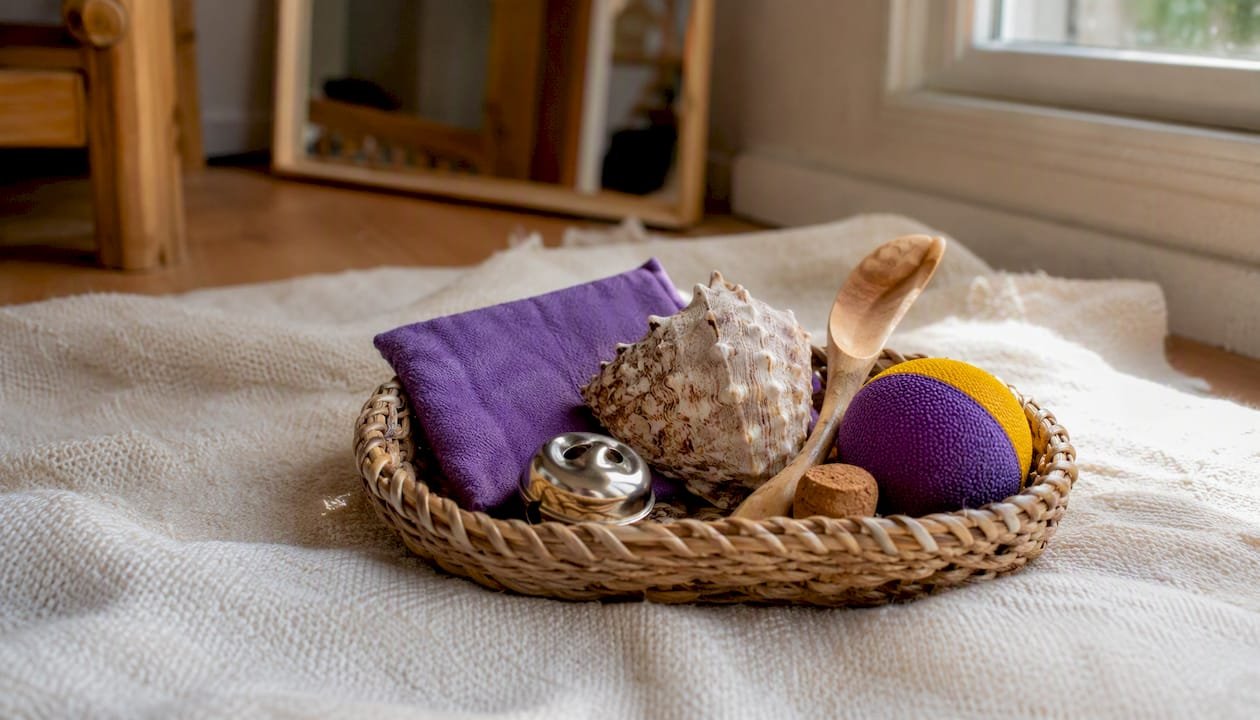
Older baby, approximately 9–15 months (12–15 items):
Add to the above: lemon, small whisk, silk square, wool ball, wicker ball, shaving brush, sealed tin with dried beans. At this age, babies begin transferring objects between containers and combining items, so the larger collection rewards more complex play.
Quick treasure basket prompts from Mooshie Moments
Mooshiemoments builds activity prompts around exactly the kind of play a treasure basket supports: short, screen-free, and tied to what your child can do right now. Here are three ways to use the app alongside your basket:
- 5-minute prompt (rushed morning): Pick three contrasting items from the basket (one heavy, one soft, one noisy) and name each one as your baby handles it. The developmental focus is sensory discrimination and early vocabulary, and it takes no setup beyond what is already in the basket.
- 15-minute exploration (quiet afternoon): Offer the full basket and sit back. Use the Mooshiemoments app to pull up the observational prompts for your baby’s age so you know exactly what schemas and grasping patterns to watch for.
- 20-minute themed session (weekend): Build a kitchen-themed basket and use the app’s age-matched language tips to narrate the session. The developmental payoff is early categorization and a richer descriptive vocabulary.
Mooshiemoments personalizes every prompt by your child’s age and your available time, so the activity always fits your day rather than the other way around. Browse screen-free activity ideas on the Mooshiemoments blog for more inspiration between basket sessions.
Why simple play is always enough
There is a quiet pressure in parenting culture to make every activity count, to buy the right toy, follow the right method, and document the right milestone. Treasure baskets push back against all of that. A lemon, a spoon, and a shell in a wicker basket can hold a baby’s attention longer than most purpose-built toys, and the research behind heuristic play has supported that observation for decades.
The habit I recommend most is keeping a small “rotation box” on a shelf near the play area. Drop interesting household objects in as you find them: a new cork, a different brush, a smooth stone from a walk. When it is time to refresh the basket, you have options ready without any planning. That two-minute swap is often the difference between a basket that stays fresh and one that gets ignored by week three.
The other thing worth saying plainly: you do not need to perform during these sessions. Sitting quietly behind your baby while they explore a wooden spoon is genuinely enough. Your presence is the safety net. The learning happens on its own.
Mooshiemoments makes treasure basket play even easier
The basket itself costs almost nothing to put together. What takes more effort is knowing which items suit your baby’s exact stage, what to say during the session, and how to keep the activity fresh week after week.
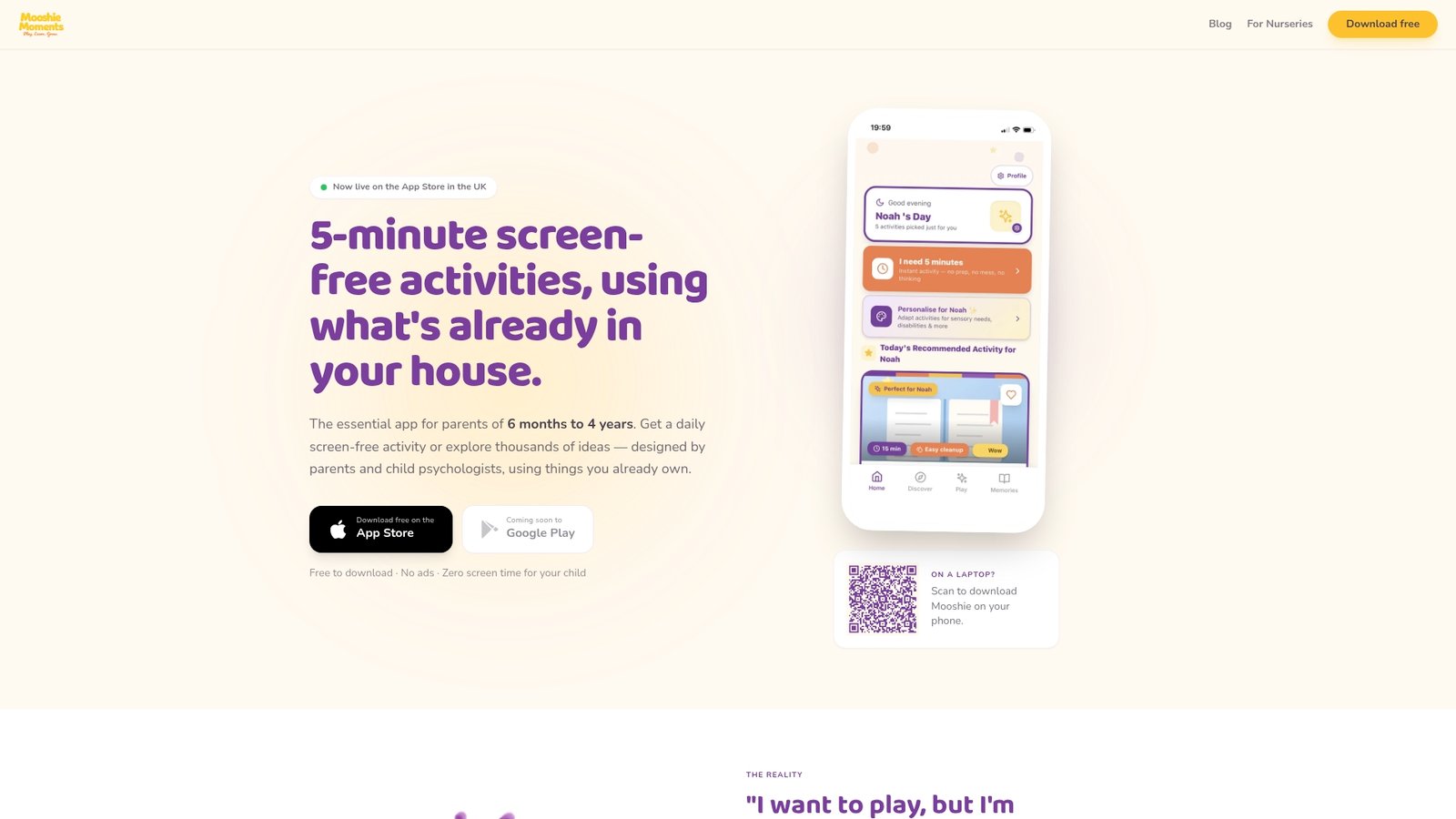
Mooshiemoments gives you age-personalized activity prompts built around household items, including treasure basket sessions, in under five minutes. You tell the app your child’s age and how much time you have, and it gives you a ready-to-use prompt with developmental context and language tips included. No prep, no purchases, no screen time for your child. For nurseries and early years settings, the app also offers EYFS-aligned partnership packs and printable resources that make treasure basket activities easy to share with families. Download the app and try your first screen-free activity prompt today.
Sources
- Sensory Play: The Enchantment of Treasure Baskets – Education North Tyneside
- Treasure baskets – heuristic play for babies
- Treasure basket ideas: The complete guide
- Treasure baskets – heuristic play for babies
- Heuristic Play- Treasure Baskets – The Imagination Tree
Recommended
More like this

Five Minute Routine Activities to Help Speech Delay in UK Toddlers
Quick, routine based activities UK parents can use in 5–15 minutes to support a toddler with speech delay. Evidence backed techniques and…
Three Minute Mess Free Sensory Play For UK Parents
Quick, reusable sensory activities UK parents can set up in minutes. Sealed bags, sticky wall art, safety checks, storage tips, and Mooshie…
10 Quiet Bin Ideas UK Parents Can Build in 5 Minutes
Practical, EYFS-aligned quiet-bin ideas UK parents can assemble in five minutes. Includes 10 ready bins, a five-bin rotation, safety checks, and quick...