
Best Baby Stroller Activities: Simple Ideas for Every Walk
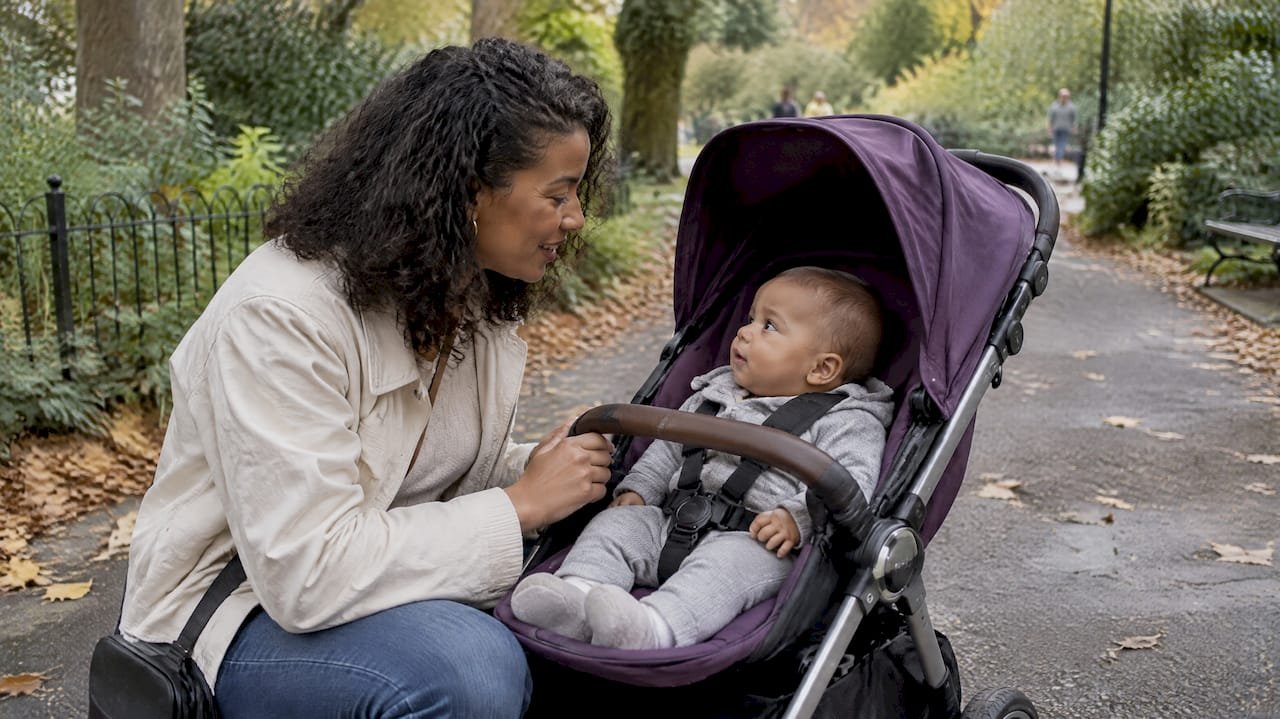
The best baby stroller activities cost nothing and need no gear. They turn the walk you are already taking into play: looking closely at a leaf, naming what you pass, singing a song, stopping to feel the grass. The trick is matching the idea to your child’s stage and your energy on the day. That is what we built Mooshie for: quick, screen-free ideas that use everyday things, chosen by your child’s age and the time you have. Below you will find ideas for every stage, the safety checks that matter, and a simple plan you can use tomorrow.
TL;DR
- The best stroller activities are simple and free: look closely, touch, talk, sing and stop to explore.
- Babies who are not yet sitting should not spend long periods propped up in a seat: the NHS says no more than 20 minutes at a time in reclining seats or seats that prop a baby up.
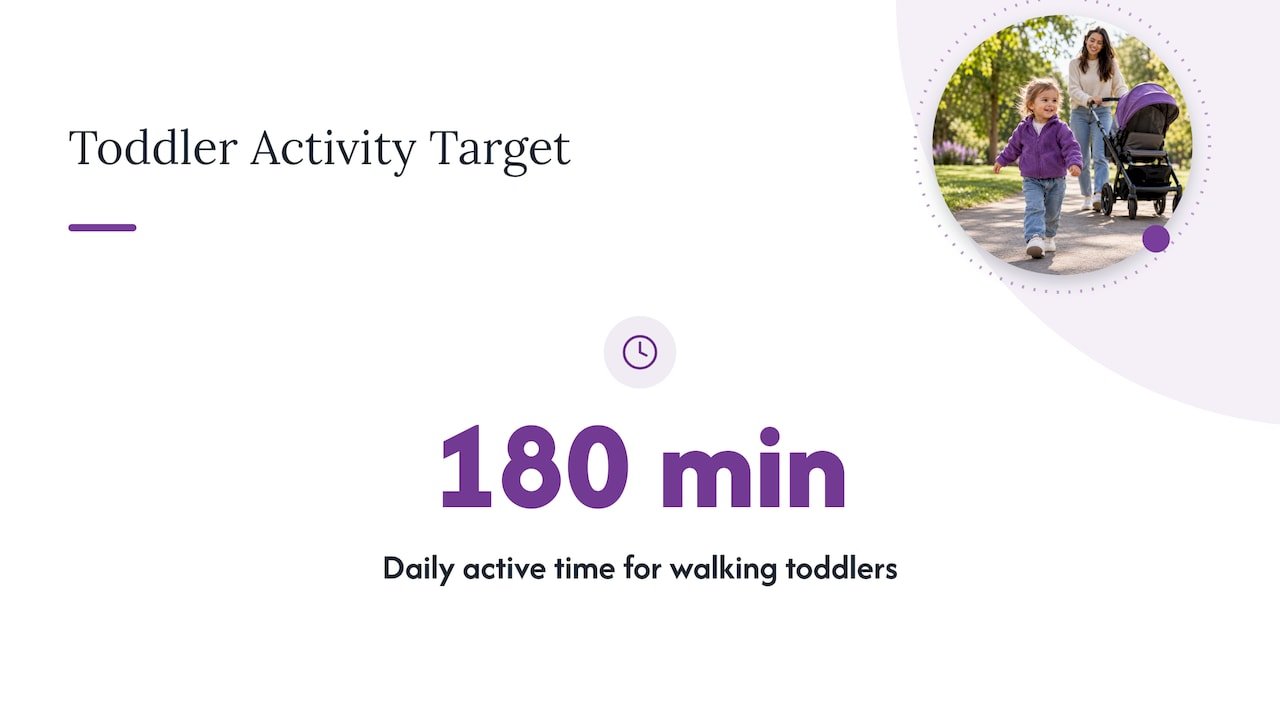
- Once your child walks, let them walk beside you. The NHS advises at least 180 minutes of physical activity a day for toddlers.
- Check for hazards, temperature, shade and shelter before you start, then follow your child’s lead.
- Short, repeated games beat long, planned ones, especially on tired days.
Table of Contents
- Why a stroller walk is worth using for play
- Before you set off: comfort and safety checks
- Activities for young babies
- Activities for babies who sit and reach
- Activities for toddlers: more walking, less riding
- Turn the route into simple sensory games
- Talk, sing and listen as you go
- Adapting the walk to your child’s stage
- Our view: ideas that fit the day you are having
- Take the ideas with you
- FAQ
- Sources
Why a stroller walk is worth using for play
A walk is one of the easiest play sessions you will ever run. There is no setup, no cleaning up and no shopping list. You are outside, there is always something new to look at, and your child has your full attention.
That attention is what matters. The NHS notes that caregivers are role models, and that joining in shows children that being active is enjoyable (NHS: how to keep your baby or toddler active). Talking about what you see, pointing, copying sounds and pausing to look are all ways of playing together without anything in your hands.
The top results for this search are full of products: activity bars, clip-on toys, soft books. They can be fun, but you do not need any of them. A baby is just as interested in a tree as in a plastic giraffe, and a tree is already there.
If you have ten spare minutes and a tired brain, that is plenty. We write a lot about short play for exactly this reason, and you will find more outdoor ideas in our guide to screen-free outdoor activities for UK toddlers.
Before you set off: comfort and safety checks
A two-minute check makes every activity below calmer. Guidance for early years outdoor play suggests looking at the immediate area for hazards such as sharp stones, litter and animal droppings, and taking practical, proportionate precautions rather than avoiding the outdoors (Thrive Outdoors: connecting babies and young children to nature).
The same guidance gives a short list worth keeping in your head:
- Temperature: check whether your child is too warm or too cold, and check again part way through.
- Sun: provide shade if it is very sunny.
- Rain: use waterproofs or find shelter if it is wet.
- Hands: wash hands before eating, especially after touching grass, bark or puddles.
How long in the seat?
The NHS says long periods in reclining carriers or seats, or seats that prop a baby up, can delay their ability to sit independently. It suggests using these for no more than 20 minutes at a time (NHS: how to keep your baby or toddler active).
In practice that makes stops part of the plan. Plan a pause every so often to lift your baby out, lie them on a blanket, or sit them on the grass. Those pauses are where many of the best activities happen anyway.
Activities for young babies
For the smallest babies, the walk is mostly about looking, listening and hearing your voice. Keep it gentle and short, and watch your baby’s face for the signs that they have had enough.
Face-to-face chat. Parent-facing seats make this easy. Say what you see, pause, and wait. When your baby coos or makes a face, answer it. The charity Words for Life explains that responding to a baby’s sounds and gestures with back-and-forth communication teaches them how to have a conversation (Words for Life: exploring the outdoors).
Tree-top watching. Stop beneath a tree and lie your baby on a blanket so they can look up at the leaves and branches. Words for Life suggests exactly this. Describe the movement as you go: the leaves are wiggling, the branch is swaying.
Lift and look. If your baby is staring at tree bark or a gate or a bright door, lift them closer so they can look properly or touch. Words for Life recommends this as a way to support a baby’s learning by following what they are already interested in.
Sound spotting. Stop and listen together: a bird, a bus, a dog, wind in the hedge. Say the sound back to your baby in a playful voice. Two or three sounds in a short stop is plenty.
A song for the route. Pick one short song and use it for a particular spot, such as the crossing or the park gate. Repetition helps young babies know what comes next, and it gives you something to do when your mind is blank.
Activities for babies who sit and reach
Once your baby sits and reaches, the stroller becomes a viewing platform. Their hands are busy, so let them be.
Pass and name. Hand your baby a leaf, a smooth bit of cloth or a safe item from your bag and name it. Take it back and offer another. This is a simple turn-taking game, and it works in a queue at a crossing as well as in the park.
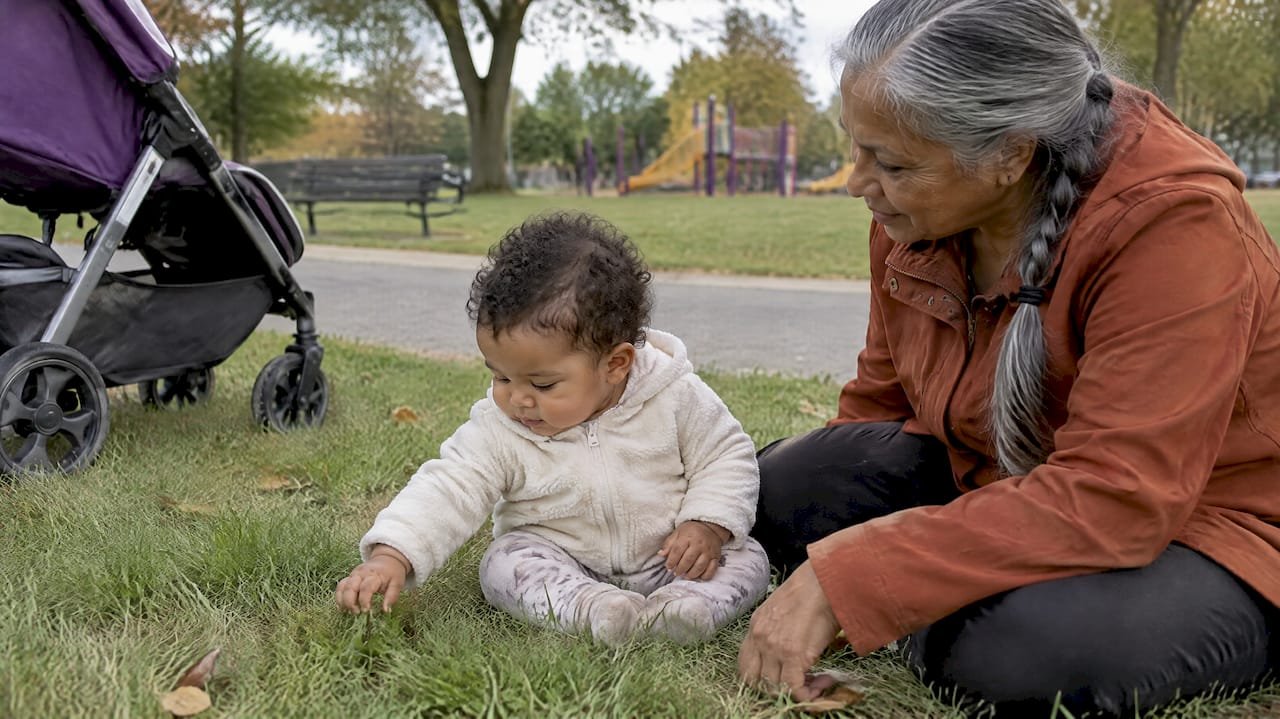
Texture stops. Pause at a hedge, a wall or a patch of grass. Let your baby feel the surface with their hands, with you narrating: rough, soft, cold, bumpy. Grass is a favourite, and Words for Life specifically mentions letting babies feel its texture.
Peekaboo at the corner. Duck behind the hood or a scarf at a quiet spot and pop out. It needs no preparation and it is hard to get wrong.
Book on the bench. Reading books with a baby from an early age can help with future learning, and the NHS says sharing books supports bonding and emotional wellbeing (NHS: baby and toddler play ideas). A sturdy board book in the bag turns a bench stop into a quiet few minutes.
Let them explore. If your baby is crawling, stop somewhere safe and let them crawl. Words for Life notes that the larger space and uneven ground outdoors help build strength and coordination. Check the area first for sharp stones, litter and droppings, then step back and watch.
Activities for toddlers: more walking, less riding
Here is the big change for toddlers: the best stroller activity is often getting out of the stroller. The NHS says toddlers who can walk should be physically active for at least 180 minutes a day, spread throughout the day, and suggests letting them walk with you rather than always using the buggy (NHS: how to keep your baby or toddler active).
That 180 minutes includes everything: pottering round the house, climbing, dancing, playing in the garden. A walk is just one slice. But it is a good slice, because toddlers love to stop and investigate.
Hand-in-hand stops. Walk holding your toddler’s hand and stop wherever they stop. Words for Life points to looking at ants and investigating puddles as great stops. Crouch down to their level and name what they find.
Stroller as a base. Use the stroller to carry snacks, spare layers and the tired legs, and use the walk for movement. When your toddler flags, they can ride for a bit, then hop out again.
Push-and-park. Ask your toddler to help you park the stroller at the end of the walk, stop, and lock the brake together. Little jobs make them feel part of the trip.
Stomp, tiptoe, hop. Change how you travel along a straight bit of path. Big stomps to the lamppost, tiptoes to the gate. It takes no kit and it works on balance and coordination. For more of this kind of play, see our gross motor activities for toddlers and park games that need no gear.
Puddle rules. If it is wet and your child is dressed for it, a puddle is a whole activity. Waterproofs and spare socks mean you can say yes.
Turn the route into simple sensory games
Everything on your route can become a game. You do not need to plan it. You just notice what your child notices and add a word, a sound or a touch.
Colour hunt. Pick a colour on the way out: spot something red, such as a post box, a door or a bus. For babies you do the spotting and say the colour. For toddlers, ask them to point.
Big and small. Find a big leaf and a small leaf. Compare. Find a big dog and a small dog. This builds early language for size without a single worksheet.
Bark, leaf and grass. Words for Life suggests inviting babies to look closely at bark, leaves and branches and to feel grass. A toddler can collect two or three leaves to carry home and sort by size or shape.
Count the steps. Count steps to the corner out loud. Toddlers will often join in with the numbers they know and ignore the ones they do not, which is fine.
Sound walk. Stop once and ask your toddler what they can hear. Then try copying each sound together.
In autumn the ground is full of material: conkers, leaves, acorns, twigs. Our autumn activities for toddlers and EYFS and nature play ideas have more to try, and our guide to sensory play ideas works with things you already own.
Talk, sing and listen as you go
The most useful thing you can do on a walk costs nothing: talk with your child, not just at them. Back-and-forth matters more than the words you pick. Say something, wait, and respond to whatever comes back, whether it is a gurgle, a point or a full sentence.
Words for Life also offers downloadable walk-and-talk cards with ideas for conversations while you are out and about, which is handy if your mind goes blank at the school gates.
A few simple habits help:
- Describe what you are doing. We are crossing the road. Now we are going to turn left.
- Describe what your child is looking at. You are looking at the big bus.
- Ask one question, then wait. Count to five in your head before you fill the silence.
- Repeat favourite songs. Familiar songs give your child a chance to join in.
- Add one word. If your toddler says dog, you say big dog.
If your family speaks more than one language at home, walks are a relaxed place to use each of them. You can read more about the best age to learn a new language if you are thinking about how and when to introduce another one.
For more short, connection-focused ideas, our list of bonding activities for toddlers is built around two to fifteen minute slots.
Adapting the walk to your child’s stage
Stage matters more than age. The Early Movers booklet from the Scottish Out of School Care Network says physical development is age-related but not age-determined, so it makes sense to watch what your child can do and adapt (Early Movers: practical ideas for physically active play). The same booklet reminds us to be patient, to let children practise new skills again and again, and never to rush a child into a new skill.
That means some days your crawler will want to crawl on the same patch of grass for ten minutes. Let them. Repetition is how skills settle.
Here is a quick way to match ideas to your child:
| Stage | Best stroller-walk ideas | What you do |
|---|---|---|
| Young baby | Face-to-face chat, tree-top watching, sound spotting | Talk, pause, respond; keep stops short |
| Sitting and reaching | Texture stops, pass and name, peekaboo, a board book | Offer safe things to touch; narrate |
| Crawling | Grass or a safe patch to explore | Check the ground, then step back |
| Early walker | Hand-in-hand stops, puddles, ants, leaves | Follow where they stop |
| Confident toddler | Colour hunt, stomp and tiptoe, counting steps | Let them walk; ride only when tired |
And a simple ten-minute plan for a tired day:
- Minute 0 to 2: Check the weather and the hazards. Put on the right layers.
- Minute 2 to 6: Walk and talk. Pick one thing to name.
- Minute 6 to 9: Stop at one spot for a texture, a sound or a puddle.
- Minute 9 to 10: Sing the same song you always sing as you head home.
That is a full session. You do not need more.
Our view: ideas that fit the day you are having
Most parents we speak to do not lack love or effort. They lack a spare idea at 4pm when everyone is tired. That is why we built Mooshie around quick play that uses everyday things, with no shopping and no screen time for your child.
A stroller walk is a perfect example. The best moments are small: a leaf held up close, a puddle, a song you sing every day. What helps is having one idea ready, chosen for your child’s age, the time you have and how much energy you have left.
We also think you should know why an idea works. Every activity in Mooshie explains the developmental reason in plain language, so a simple moment feels more meaningful. The aim is real play and bonding, not another thing to scroll.
Our hope is that you finish a walk feeling that it counted.
samit
Take the ideas with you
If you want a fresh idea for every walk, garden afternoon or rainy hour, Mooshie is a mobile app for parents and caregivers of children aged 6 months to 4 years. It gives you a large library of quick, screen-free activities that use common household items, personalised by your child’s age, the time you have and your energy level. Each one comes with an expert-reviewed explanation of the developmental why, plus coaching tips.
It is free to download, and you can try it on mooshiemoments.com. Grandparents, aunties and uncles can use it too, which makes it easy to share a good idea with whoever is doing the next walk.
FAQ
What are the best activities to do with a baby in a stroller?
The best ones are simple and need no extras: talking and singing, pausing to look at leaves or bark, listening for sounds, and letting your baby feel grass. Respond to every coo and gesture, because back-and-forth communication teaches babies how conversations work. Short stops work better than one long ride.
How long can a baby stay in a stroller seat?
The NHS says that reclining seats, carriers and seats that prop a baby up should be used for no more than 20 minutes at a time, because long periods can delay a baby’s ability to sit independently. Plan stops to lift your baby out, lie them on a blanket or sit them on the grass.
Should my toddler walk or ride on a walk?
Let them walk when they can. The NHS advises that toddlers who can walk should be active for at least 180 minutes a day, spread across the day, and suggests letting them walk with you rather than always using the buggy. The stroller is still useful as a base for snacks, layers and tired legs.
Do I need toys or an activity bar for a stroller walk?
No. Things along your route, such as leaves, grass, bark, puddles and ants, give babies and toddlers plenty to look at, touch and talk about. A board book is a handy extra if you want a quiet stop.
What should I check before a stroller activity outdoors?
Look over the area for sharp stones, litter and animal droppings, check your child is not too warm or cold, bring shade for strong sun and waterproofs or shelter for rain, and wash hands before eating.
Sources
- NHS: How to keep your baby or toddler active
- NHS: Baby and toddler play ideas
- Words for Life: Exploring the outdoors with your baby or toddler
- Thrive Outdoors: Connecting babies and young children to nature
- Early Movers: Practical ideas for physically active play
Recommended
- Busy Parents: 12 No Prep Shopping Activities for Toddlers
- Best Park Games for Toddlers: 12 Easy Ideas, No Gear Needed
- Nature Play Ideas for Toddlers: 12 Simple Activities to Try
- Ten Minutes: Screen Free Outdoor Activities for UK Toddlers
Want play ideas matched to your child's age?
Mooshie Moments gives you simple, guided play ideas for ages 6 months to 4 years. Try 3 free activities a week.
Download free on the App StorePart of our guide: Baby activities · Compare toddler activity apps
More like this
Heuristic Play Ideas: Simple Home Activities That Work
Discover engaging heuristic play ideas to spark your toddler's curiosity using simple household objects. Start exploring today!
6 Month Old Activities: 12 Easy, Development-Led Ideas
Discover 12 fun and engaging activities for your 6-month-old that enhance motor skills, attention, and communication through playful interaction.
High Chair Activities: Easy Ideas for Every Age
Discover six quick and easy high chair activities that entertain and engage your little one, using everyday items from your home.