
6 Month Old Activities: 12 Easy, Development-Led Ideas
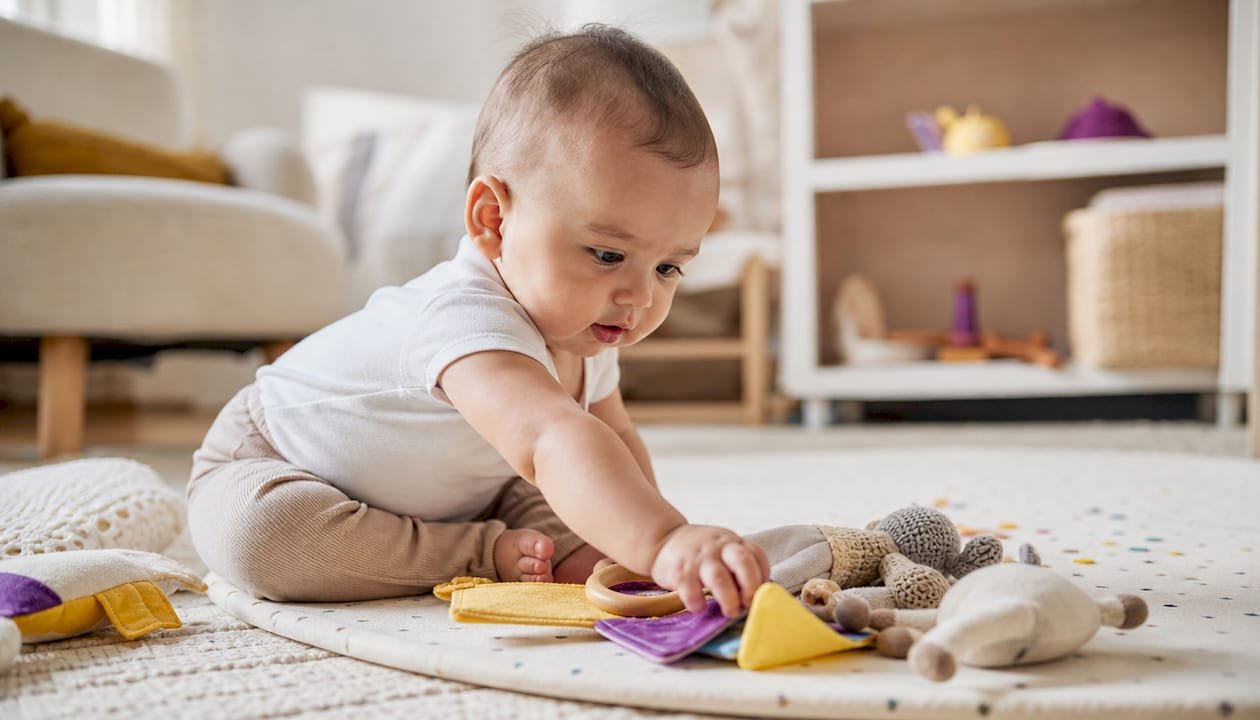
Try short, playful activities across sensory, motor, and social domains, and you’ll cover everything your 6-month-old needs today. These little bursts of play build strength, attention, and communication far better than one long, forced session. Here’s what to try right now:
- Tummy time on a blanket, aiming for short periods at a stretch
- A song with hand movements, like patting your baby’s knees to the beat
- A simple hide-and-find game with a scarf over a toy
- A reaching game, holding a toy just out of arm’s length
Pro Tip: Watch your baby’s face, not the clock. If they’re smiling and locked in, keep going. If they turn away or fuss, that’s your cue to pause.
Key Takeaways
Short, frequent, baby-led play across sensory, motor, and language domains builds more developmental value than long, scheduled sessions.
| Point | Details |
|---|---|
| Prioritize frequency over duration | Several short bursts of play beat one long forced session for keeping engagement high. |
| Rotate, don’t accumulate | Swap toys weekly to maintain novelty without buying anything new or adding clutter. |
| Watch for the meltdown threshold | Stop at turning away or fussing rather than pushing through to full frustration. |
| Use routines as free practice | Narrate diaper changes, baths, and meals to add language practice with zero extra time. |
| Let an app do the picking | Mooshiemoments suggests screen-free activities by age and available time when you’re short on ideas. |
Table of Contents
- 12 Easy 6 Month Old Activities to Try Right Now
- Sensory Play Ideas Using Textures, Water, and Household Items
- Motor and Movement Activities for Building Strength
- Language and Social Games That Build Early Communication
- Everyday Routines That Double as Play
- Outdoor Sensory Walks and Safe Active Play
- Safety Rules and How Long a Play Session Should Last
- Three 10-Minute Play Sessions You Can Copy Today
- DIY Toys and Household Items Worth Trying
- Why These Activities Actually Support Development
- What I’ve Learned Watching Babies at This Age
- A Faster Way to Find Today’s Activity
- Sources
12 Easy 6 Month Old Activities to Try Right Now
You don’t need special gear for any of these. Grab what’s already in your living room and pick two or three to rotate through the day.
- Tummy time on a mirror. Prop a small mirror in front of your baby during floor time to build neck and shoulder strength while they admire “the other baby.”
- Crinkle bag reach. Fill a sealed sandwich bag with foil, tape it shut, and let your baby bat and grab it for sensory and motor practice.
- Sock puppet chat. Slip a sock over your hand and “talk” back and forth to build early social turn-taking.
- Kitchen drawer band. Give wooden spoons and a metal bowl for cause-and-effect banging and sound exploration.
- Peekaboo with a muslin cloth. Builds object permanence and gets a laugh nearly every time.
- Tripod sitting with pillows. Prop your baby upright, surrounded by cushions, to build core strength.
- Texture basket. Fill a basket with a washcloth, a silicone spatula, and a soft sock for safe touch exploration.
- Rolling chase. Roll a soft ball just out of reach to encourage early crawling motivation.
- Water tray splash. A shallow layer of water on a baking tray, supervised closely, offers new sensory input.
- Book time. Point to pictures and name them out loud, even for 60 seconds.
- Dance hold. Sway and bounce gently to music, supporting head and body.
- Copy the sound. Repeat your baby’s babbles back to them to model early language.
Sensory Play Ideas Using Textures, Water, and Household Items
Before you set anything out, run a quick check: clean surface, full attention on your baby, and nothing smaller than a toilet paper tube within reach. The Center on the Developing Child at Harvard notes that simple interactive play like this trains attention and working memory well before formal learning starts.
- Soft fabric squares of different textures (velvet, terry cloth, silk scarf) for touch exploration
- A sealed water bag with glitter, taped shut and taped again for safety
- A noisy container, like a lidded jar with dry pasta inside
- High-contrast picture cards, black and white or bold primary colors
Pro Tip: Keep a small rotating “toy library” instead of leaving everything out at once. Swapping items weekly keeps novelty high without adding clutter.
Motor and Movement Activities for Building Strength
Supervised floor-based tummy time supports upper-body and core development, and chest-to-chest or lap-time holds work as gentle stand-ins on days your baby resists the floor.
- Start with chest-to-chest tummy time, your baby lying on your chest while you recline slightly.
- Move to floor-based tummy time on a firm mat, building duration gradually across the day.
- Prop your baby in tripod sitting, pillows behind and to the sides for safety.
- Hold a toy just out of reach to encourage reaching, pivoting, and eventually scooting.
Holding a toy slightly out of reach and using tripod sitting support strengthens the neck, shoulders, and core muscles your baby will rely on for crawling later.
Language and Social Games That Build Early Communication
Back-and-forth vocal play is one of the simplest ways to support the milestones expected by six months, including responding to sounds and beginning to babble.
- Try fingerplays like “Eensy Weensy Spider,” slowing down the words your baby seems to enjoy most.
- Play peekaboo, waiting for your baby to initiate before hiding again.
- Narrate routines out loud: “Now we’re putting on your sock. One foot, two foot.”
- Copy your baby’s babble sounds back to them, then pause and wait for a response.
Pro Tip: Following your baby’s lead works better than sticking to a script. If they repeat a sound, repeat it back and let them lead the next round.
Everyday Routines That Double as Play
Diaper changes, bath time, and meals already happen several times a day, which makes them free practice slots.
- Diapering: “Up go your legs! Now we wipe, now we fasten.”
- Bath time: pour water from a cup and name “splash” and “pour.”
- Meals: offer a spoon and let your baby grab for it, naming “spoon” each time.
- Dressing: play peekaboo with a shirt as it goes over your baby’s head.
- Pick one routine today and add a single narrated phrase to it.
- Watch for engagement, and stop the extra chatter if your baby seems tired or overstimulated.
Outdoor Sensory Walks and Safe Active Play
A stroller walk offers sights and sounds no living room can match. Point out a dog barking, a rustling tree, or a passing bus, and name each one.
- Try a “texture walk,” letting bare feet touch grass or a soft picnic blanket outside.
- Point out distant, moving objects like birds or cars to build visual tracking.
- Dress in layers, apply sun protection, and skip outings in extreme heat or cold.
Pro Tip: Outdoor time naturally expands vocabulary because there’s simply more to name than at home.
Safety Rules and How Long a Play Session Should Last
Before any session, run through a quick mental checklist: no small parts, firm supervision, a soft flat surface, and toys sized bigger than your baby’s fist.
Short, frequent interactions beat one long forced session. The NHS recommends building tummy time gradually into daily routines rather than pushing for one marathon stretch. Watch for signs your baby has had enough: turning away, fussing, or arching their back. Stopping before that meltdown threshold keeps play positive and something your baby will want to return to.
- Choose soft, supervised surfaces for all floor play
- Remove anything smaller than a toilet paper tube from reach
- Stop at the first sign of fussing rather than pushing through it
Three 10-Minute Play Sessions You Can Copy Today
Session A, active mood:
- Minutes 0 to 2: tummy time warm-up on a mat
- Minutes 2 to 6: reaching game with a favorite toy
- Minutes 6 to 10: free floor movement and rolling
Session B, calm mood:
- Minutes 0 to 3: lap song with gentle bouncing
- Minutes 3 to 7: book reading, naming pictures
- Minutes 7 to 10: gentle arm and leg massage
Session C, mixed mood:
- Minutes 0 to 3: supervised tummy time
- Minutes 3 to 6: mirror play, propped sitting
- Minutes 6 to 10: peekaboo, with a fallback to quiet cuddling if energy dips
DIY Toys and Household Items Worth Trying
You likely have everything you need already sitting in a kitchen drawer.
- Sealed sensory bags: hair gel or water in a double-taped freezer bag
- Baking-sheet water play, a shallow layer under close supervision
- Stacking cups from your recycling for grasping practice
- Soft fabric bundles tied at the ends for easy gripping
- Noisy sealed containers, like a lidded tub with dry rice inside
Check each item for secure seals and no detachable pieces before handing it over, and swap toys weekly to keep interest high without buying anything new.
Why These Activities Actually Support Development
Play at this age does real architectural work in a growing brain, not just filling time.
Interactive games like hide-and-find and fingerplays help babies practice attention, working memory, and self-control well before they ever sit in a classroom.
The CDC ties back-and-forth play and daily reading directly to expected 6-month milestones, and UNICEF’s list of learning activities makes the same case for combining sensory exploration with caregiver interaction. None of this requires perfection. Following your baby’s own pace matters more than hitting every activity on a list.
- Back-and-forth play builds attention and memory
- Reading daily supports language milestones
- Sensory exploration strengthens parent-child bonding
What I’ve Learned Watching Babies at This Age
The activities that stick aren’t the elaborate ones. They’re the two-minute bursts of eye contact and silly sounds that fit into a day already full of laundry and naps. Simple, repeated, and led by the baby usually beats scheduled and structured.
A Faster Way to Find Today’s Activity
Some days you have ten minutes and full energy. Other days you have three minutes and none. Mooshiemoments is built around exactly that gap, suggesting screen-free activities matched to your child’s age, your available time, and how much energy you’ve actually got left.
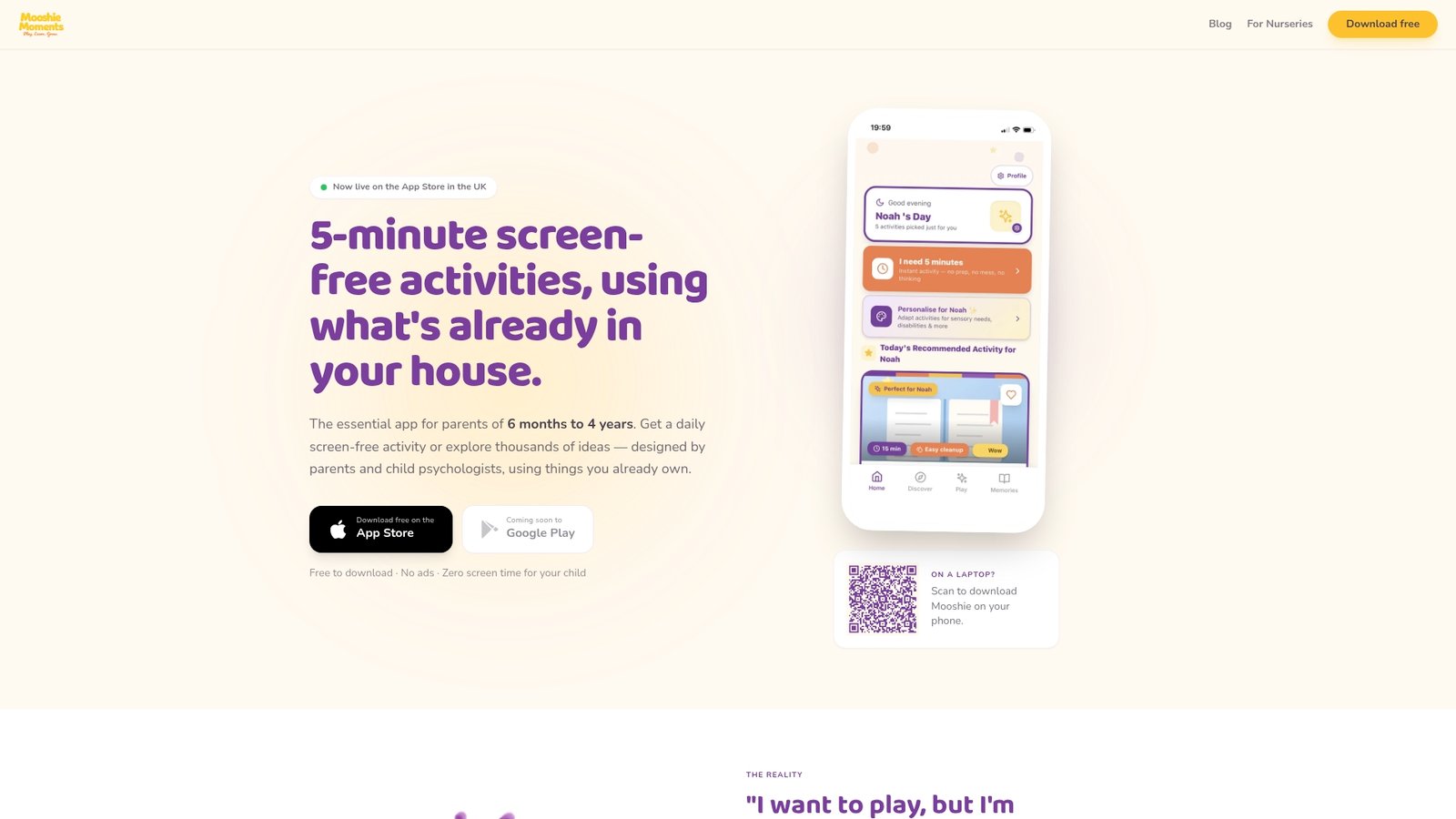
The app pulls from research-backed activity categories like the ones above, filtered by minutes you have and items already in your home, so you’re not standing in the living room trying to remember what worked last week. Early years settings use a version of this too, with nursery partnership packs built around EYFS-aligned resources. If you want the next activity idea handed to you instead of hunted for, try Mooshie Moments and see what it suggests for your baby right now.
Sources
- Baby moves – Best Start in Life – NHS
- Development 0-6 months | Derbyshire Family Health Service
- 6 games to play with babies (6 months) | Center on the Developing Child, Harvard University
- Milestones by 6 Months | Learn the Signs. Act Early. | CDC
- 21 learning activities for babies and toddlers | UNICEF
Always check with your health visitor or pediatrician for guidance specific to your baby.
Recommended
More like this

Five Minute Routine Activities to Help Speech Delay in UK Toddlers
Quick, routine based activities UK parents can use in 5–15 minutes to support a toddler with speech delay. Evidence backed techniques and…
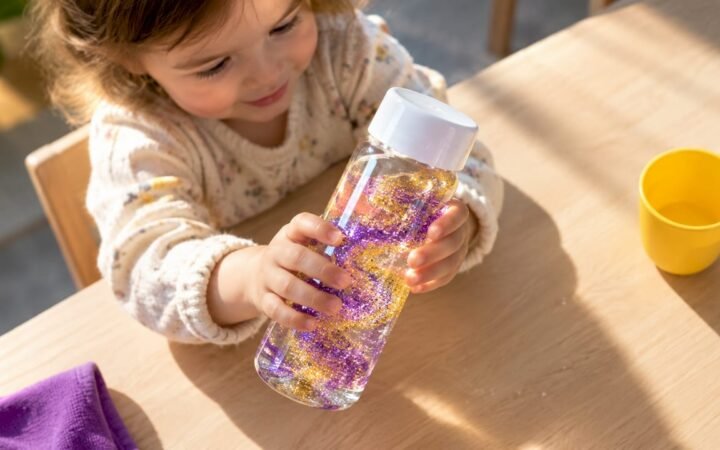
Three Minute Mess Free Sensory Play For UK Parents
Quick, reusable sensory activities UK parents can set up in minutes. Sealed bags, sticky wall art, safety checks, storage tips, and Mooshie…
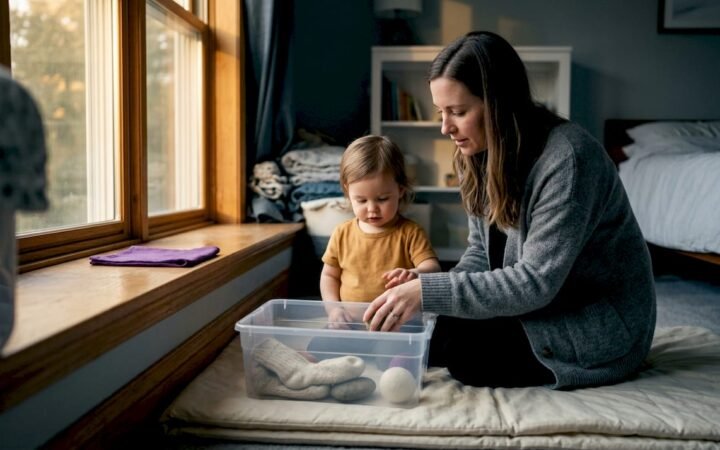
10 Quiet Bin Ideas UK Parents Can Build in 5 Minutes
Practical, EYFS-aligned quiet-bin ideas UK parents can assemble in five minutes. Includes 10 ready bins, a five-bin rotation, safety checks, and quick...